 Lynden Siding
 Composite Decking Built for Kendall's Climate, Not Just Its Looks
Kendall sits in the part of Whatcom County where the weather doesn't ease up for long stretches of the year. Homes out here deal with driving rain, damp air off the surrounding farmland and river bottoms, and a moss season that seems to start earlier and end later every year. A deck that looks great on installation day but wasn't built for that reality will show it within a couple of seasons — soft spots, discoloration, mildew streaking, boards that cup or gap. Composite decking, installed correctly for this specific climate, is one of the more reliable ways to get a low-maintenance outdoor space that actually holds up here.
This page is about one thing: composite decking for homes in and around Kendall. Not a generic rundown of composite products, but what actually matters when you're building a deck that has to survive Whatcom County's wet season year after year.
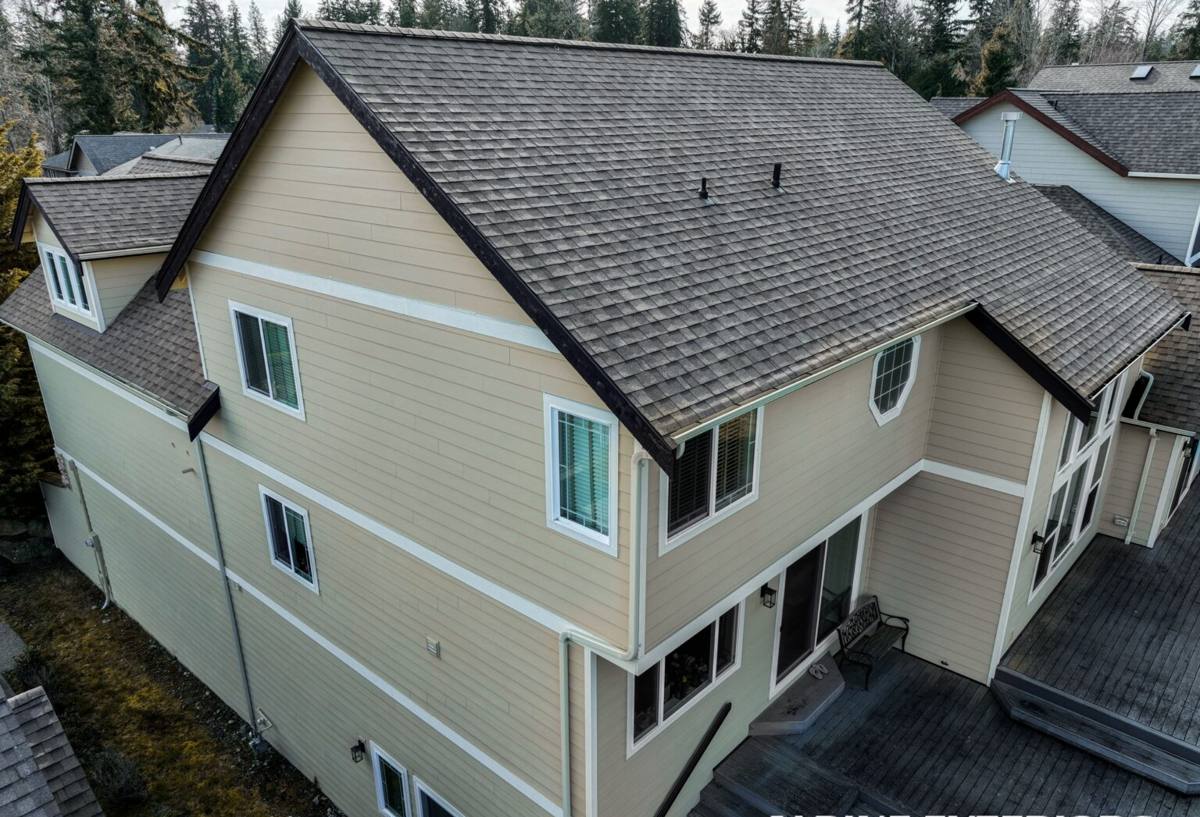
What Kendall's Weather Actually Does to a Deck
Driving rain and standing moisture
Rain in this part of the county doesn't just fall straight down — wind-driven rain gets up under rail caps, behind fascia boards, and into any gap that wasn't flashed or sealed properly. Over time, that moisture finds the weak points in a deck: end grain on wood, unsealed cut edges, fasteners that were never rated for exterior use, or a substructure that wasn't given anywhere to drain.
Moss, algae, and shaded ground-level decks
Between tree cover, fence lines, and the general dampness of the region, moss and green algae growth on decking is a fact of life for a lot of Kendall properties, especially lower decks close to grade or decks that sit in shade most of the day. Composite boards resist rot the way wood can't, but they still need airflow underneath and a surface texture that doesn't trap standing water, or moss will find a foothold on any decking material.
Freeze-thaw and seasonal movement
Whatcom County gets real cold snaps mixed in with its wet stretches. Materials that absorb moisture and then freeze are the ones that crack, split, or heave fasteners loose. Composite decking handles that cycle far better than untreated or poorly sealed wood, but the framing underneath — the part nobody sees — still has to be built to shed water and move with the seasons instead of trapping it.
Composite vs. Wood vs. PVC: What Actually Holds Up in This Climate
There's no single "best" decking material for every situation, but for a climate like Kendall's, the trade-offs are worth laying out honestly.
| Material | Moisture Resistance | Moss/Mildew Behavior | Long-Term Maintenance |
|---|---|---|---|
| Pressure-treated wood | Absorbs moisture; needs sealing/staining | Prone to moss and algae without regular cleaning | Annual sealing, sanding, board replacement over time |
| Composite (capped) | Very low absorption; core resists rot | Resists staining better; still needs periodic cleaning | Occasional wash; no sealing or staining |
| Composite (uncapped) | Moderate absorption at cut edges | More prone to surface staining over time | Cleaning plus more care at exposed edges |
| PVC/cellular decking | Essentially moisture-proof | Resists staining well | Low; higher upfront material cost |
For most homeowners in Kendall, capped composite hits the right balance — it costs less than full PVC, resists moisture and staining far better than wood, and doesn't demand a yearly maintenance weekend to keep it looking decent. We install boards from established manufacturers such as Trex, TimberTech, and Fiberon, matched to the homeowner's budget and the specific conditions of the site — sun exposure, shade, drainage, and how close the deck sits to grade.
What a Correct Composite Deck Installation Actually Involves
The substructure comes first
Composite boards are only as good as what's underneath them. Joist spacing, joist tape or flashing to protect the framing from moisture, and proper beam sizing all matter more with composite decking than with wood, because composite boards behave differently under load and thermal expansion. Cutting corners on the framing is the single biggest reason composite decks fail early — not the boards themselves.
Fasteners and board layout
Hidden fastener systems give a cleaner look and eliminate the screw-head pattern that traps water and grime, but they have to be installed with the correct gapping for the specific board profile and expected temperature swing. Get the gapping wrong and boards either buckle in the heat or open unsightly gaps in cold weather.
Flashing and ledger attachment
Where the deck attaches to the house is the single most common source of long-term water damage on any deck, composite or not. Proper ledger flashing, correct fastener spacing, and a flashing detail that actually sheds water away from the rim joist are non-negotiable — this is where driving rain does the most damage if it's skipped or done half-heartedly.
Airflow and drainage underneath
A deck built low to the ground or over a patio needs a plan for where water goes once it passes between the boards. Without adequate airflow underneath, moisture sits, moss and mildew set up shop on the underside, and framing rots from below where nobody sees it until it's a real problem.
Our Process for a Kendall Composite Deck
- On-site assessment. We look at the existing structure (if there is one), grade and drainage around the deck footprint, sun/shade exposure, and how the deck ties into the house.
- Substructure evaluation. If we're replacing an old deck, we check ledger condition, footings, and framing before anything new goes on top. Rot or undersized framing gets addressed, not covered up.
- Material selection. We walk through composite board options, colors, and price points based on your budget and how the deck will actually be used.
- Framing and flashing. Joists, beams, ledger flashing, and drainage details are built to spec before a single composite board is installed.
- Board installation. Hidden fasteners where the product allows for it, correct expansion gapping, and clean picture-framed edges where applicable.
- Finish details. Fascia, stair treads, and railing are installed and checked for level, plumb, and secure attachment.
- Final walkthrough. We go over the finished deck with you, including basic care so it stays looking right through Kendall's wet months.
Living with a Composite Deck in This Climate
Composite decking is genuinely low-maintenance compared to wood, but "low-maintenance" doesn't mean "no maintenance" — especially with the moss and moisture Whatcom County throws at outdoor surfaces for a good chunk of the year.
- Sweep off leaves, needles, and organic debris regularly — they hold moisture against the board surface and feed moss growth.
- Rinse or wash the deck a couple of times a year with a mild soap and soft-bristle brush, especially shaded sections.
- Avoid pressure washing at close range or high pressure on composite boards — it can damage the cap layer on some products.
- Keep gutters and downspouts near the deck clear so runoff isn't dumping directly onto or under the decking.
- Check underneath the deck once a year for debris buildup that's blocking airflow.
- Trim back overhanging branches and vegetation that keep sections of the deck in constant shade and dampness.
Cost Factors for a Kendall Composite Deck
Composite decking costs more upfront than pressure-treated wood, but the honest way to think about it is total cost over the life of the deck, not just the install invoice. What actually moves the price on a given project:
| Factor | Why It Matters |
|---|---|
| Deck size and layout | Square footage, stairs, and multi-level designs all add material and labor |
| Substructure condition | Replacing rotted framing or undersized footings adds cost but isn't optional |
| Board tier (capped vs. uncapped) | Fully capped boards cost more but resist staining and moisture better |
| Railing system | Composite, cable, or metal railing varies significantly in price |
| Site access and grade | Sloped lots or limited equipment access can add labor time |
| Drainage and flashing needs | Proper flashing and under-deck drainage protect the investment long-term |
We give straightforward, itemized estimates so you know what you're paying for and why — not a single lump number with no explanation behind it.
Why It Matters to Hire a Crew That Already Works in Kendall
Kendall isn't downtown Bellingham, and it isn't Lynden proper either — it's a more rural stretch of Whatcom County, with the property layouts, well and septic considerations, and longer driveways that come with that. A crew that already works this area knows how to plan material delivery and equipment access on rural lots, understands Whatcom County permit requirements for decks and structural attachments, and has already seen how the local rain and moss cycle treats different decking products over multiple seasons — not just on a spec sheet, but on decks they've actually built and followed up on.
That local experience shows up in the details: how framing is flashed against wind-driven rain, how much airflow a low deck needs given the shade on a specific lot, and which board profiles hold up best against the moss and mildew this climate produces. It's the difference between a deck that's built to a general specification and one that's built for the property it's actually going on.
Get a Free, No-Pressure Estimate
If you're weighing composite decking for a home in Kendall, we're happy to walk the site, look at what you're working with, and give you a straightforward estimate — no pressure, no upsell. Use the form below to get started.