 Lynden Siding
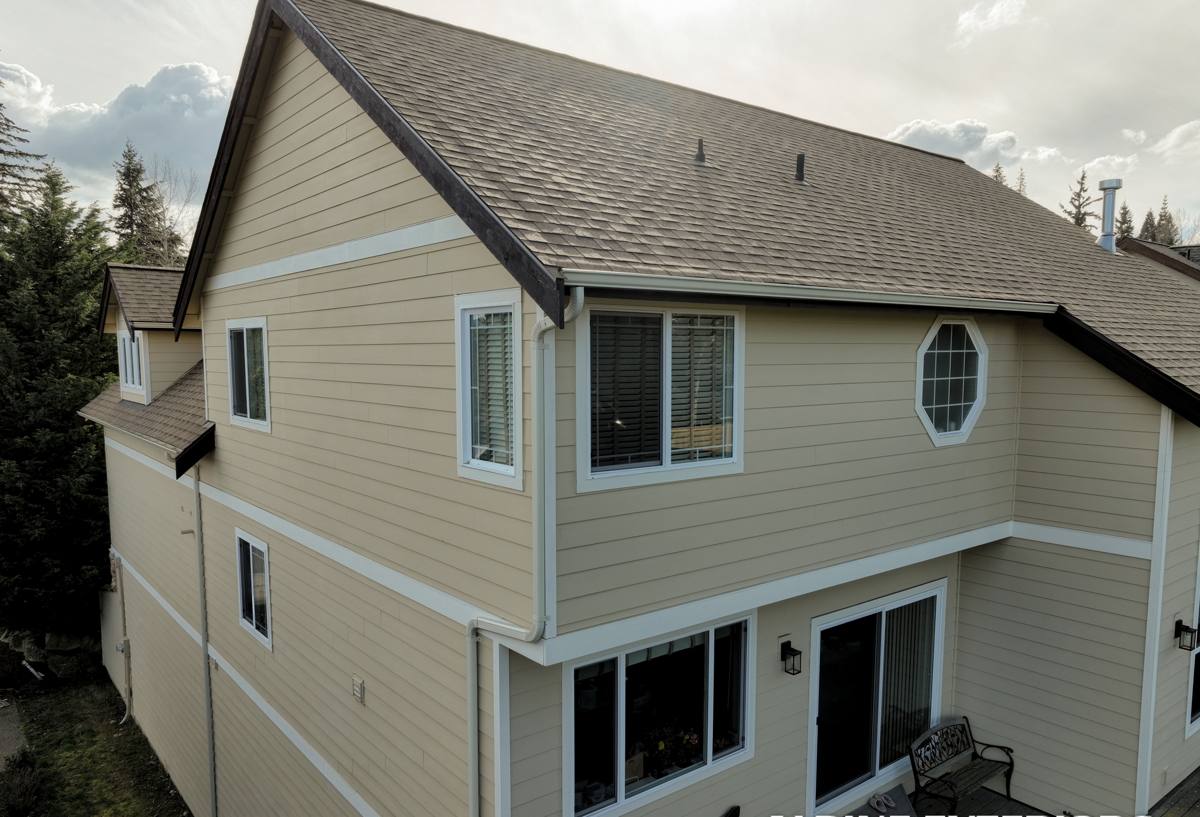
 James Hardie Siding, Installed for Kendall's Actual Weather
Kendall sits in a part of Whatcom County that takes a specific, sustained kind of weather beating. Salt-tinged air moves through on a regular basis and works on anything metal or unprotected. Rain doesn't arrive politely from above, it gets pushed sideways and up under trim and lap joints by wind. And a moss and mildew season that runs long and mild rather than short and severe keeps moisture sitting against exterior walls for months at a stretch. That combination is exactly why we install James Hardie fiber cement siding and nothing else, and why the way it goes on a Kendall home specifically matters more than the fact that the product is Hardie in the first place.
This page is about James Hardie siding for Kendall specifically: what the local climate actually demands from a siding system, what a correct installation looks like, and what our process involves from first estimate to final walkthrough. If you're comparing quotes or trying to understand why one bid looks different from another, this is meant to give you the real information rather than a sales pitch.
What Kendall's Climate Actually Does to Exterior Walls
None of the three stressors below is dramatic by itself. It's the combination, repeated year after year, that separates siding that lasts thirty years from siding that starts showing problems in eight or ten.
Salt Air
Salt-laden air accelerates corrosion on fasteners, trim hardware, and any exposed metal, and it breaks down lower-grade factory finishes faster than the same product would wear in a drier inland market. A coating system rated for a generic national climate doesn't necessarily hold up the same way here, and that gap tends to show up slowly, as fading or chalking, rather than as one obvious failure.
Wind-Driven Rain
Rain that's being pushed sideways by wind finds seams, lap joints, and trim edges that would stay dry in a straight-down rain event. That's a much harder test on caulked joints, unsealed field cuts, and any material that depends on an intact surface coating to keep water out.
A Long Moss Season
Mild, steady moisture through most of the year means moss and mildew get active on shaded or tree-lined exposures and stay active longer than in a climate with a sharp dry season. Organic growth on a siding surface holds moisture against the wall behind it, and that trapped moisture is where a lot of long-term rot and paint failure actually starts, not from the rain itself.
Why James Hardie Fits This Specific Climate
James Hardie siding is fiber cement, a cured blend of Portland cement, sand, and cellulose fiber. It's inorganic, so it doesn't have a wood-based or foam core that can absorb water, swell, or feed rot and insects the way organic siding materials can. It's also non-combustible, which is worth something even in a wet coastal county, and its factory finish is engineered to hold up under conditions like Kendall's rather than a generic dry-climate baseline.
The HZ5 Product Line
James Hardie builds different product lines for different climate zones, and HZ5 is engineered for regions with sustained moisture exposure and freeze-thaw cycling, which describes Whatcom County's winters more accurately than a product line built primarily for hot, dry regions. That's a concrete engineering distinction, not a marketing label, and it's a direct reason the product performs the way it does here.
ColorPlus Factory Finish
Instead of being painted on site, ColorPlus finish is baked onto the board in multiple coats at the factory, under controlled conditions, before it ever reaches Kendall. That finish carries its own warranty separate from the substrate warranty and is formulated specifically to resist fading and hold color consistency against UV and salt air exposure better than a field-applied paint job managed on someone's ladder.
What a Correct Hardie Installation Involves Here
Fiber cement's real-world performance depends heavily on installation quality. A rushed or out-of-spec install can undercut even a well-engineered product, and the details below matter more in Kendall's conditions than they would in a milder, drier market.
Clearances and Drainage
Manufacturer-specified clearances at grade, roofline, and deck surfaces keep splash-back and standing moisture away from board edges, which is a bigger deal in a climate with this much sustained rainfall than in most of the country. A rain screen or drainage gap behind the siding lets any moisture that does get past the surface drain and dry out instead of sitting against the wall assembly.
Flashing at Windows, Doors, and Penetrations
Most siding failures we see don't start in the open field of a wall, they start at a window head, a door trim detail, or a penetration for a vent or fixture. Correct flashing directs wind-driven rain away from those seams instead of trusting caulk alone to hold water out indefinitely.
Fastening and Factory-Cut Edges
Fastener type, placement, and depth need to follow manufacturer specification exactly, since incorrect fastening is one of the more common causes of cracking and premature finish failure. Factory-cut edges preserve the ColorPlus finish's full protection, and any field cuts need to be sealed to spec rather than left exposed to the weather.
Certified Installation
We send certified installers to every job rather than treating fiber cement as an interchangeable swap for whatever a crew is used to hanging. The material itself resists moisture and combustion well, but it can still underperform if the details around it are wrong, which is exactly why installation quality gets more attention on this page than the product specs do.
Choosing the Right Hardie Profile for a Kendall Home
James Hardie makes several distinct siding profiles, and the right one for a given home depends on its style, exposure, and how much of the wall assembly needs protecting from direct weather.
| Hardie Profile | Typical Use | Fit for Kendall Conditions |
|---|---|---|
| HardiePlank Lap Siding | Traditional horizontal lap look, most common residential choice | Strong all-around performer; detailing at each lap joint matters more here given wind-driven rain |
| HardiePanel Vertical Siding | Modern vertical look, often paired with board and batten trim | Fewer horizontal laps for water to work into, a practical advantage on more exposed elevations |
| HardieShingle | Staggered or straight-edge shingle appearance | Works well aesthetically but has more seams overall, so flashing and installation detail carry extra weight |
| Board and Batten | Vertical panels with battens covering the seams | Battens add a layer of seam protection against wind-driven rain, a genuine benefit in this climate |
There isn't a single "best" profile independent of the home. A one-and-a-half story Kendall property with a lot of tree cover and shaded north-facing walls has different priorities than an open, wind-exposed lot, and we walk through that with you as part of the estimate rather than defaulting to whatever's easiest to install.
Cost Factors Worth Understanding
Two bids for what looks like the same siding job can differ by thousands of dollars, and the gap is almost always a real difference in scope rather than one contractor padding a number.
| Factor | What It Affects |
|---|---|
| Existing siding removal vs. overlay | Whether hidden sheathing damage or rot gets found and repaired before new siding goes on |
| House wrap and drainage plane | How well moisture that gets behind the siding actually drains and dries |
| Profile and trim selection | Material cost, seam count, and how much detailing the crew has to execute correctly |
| Flashing scope at openings | How thoroughly windows, doors, and penetrations are protected from wind-driven rain |
| Fascia, soffit, and trim work | Whether the full building envelope is addressed or just the flat wall field |
| Wall height, pitch, and access | Staging, labor time, and safety requirements on the specific property |
A written estimate that itemizes these components tells you far more than one lump-sum figure, and it's worth asking any contractor to walk through what's actually included before comparing numbers side by side.
How Our Process Works
We keep the process straightforward because a job of this size deserves clear expectations at every stage rather than surprises partway through.
- In-person assessment: We walk the exterior in person, checking existing siding condition, sheathing access points, and problem areas like window trim and wall-to-deck transitions.
- Written estimate: You get an itemized bid covering removal, house wrap, flashing, profile and trim selection, and cleanup, not a single vague number.
- Scheduling around weather: We build reasonable flexibility into the timeline, since wet-season delays are a normal part of exterior work in this region.
- Removal and sheathing check: Old siding comes off and the sheathing underneath gets inspected before anything new goes up, so hidden moisture damage doesn't get buried again.
- House wrap, flashing, and Hardie installation: Each layer goes on to manufacturer specification, with extra attention at openings, corners, and wall-to-roof or wall-to-deck transitions.
- Final walkthrough: We review the finished exterior with you and do a full site cleanup before calling the job complete.
Why Hiring a Crew That Already Works Kendall Matters
A crew that regularly installs siding in and around Kendall has already seen how salt air corrodes underspecified fasteners, how wind-driven rain finds its way through a poorly flashed window, and which exposures hold moss longest through the wet season. That's practical knowledge that shows up in the small decisions made throughout a job, decisions a crew unfamiliar with this specific stretch of Whatcom County might not think to make at all.
It also matters after the job is finished. A workmanship warranty is only as good as the company standing behind it, and a contractor with an ongoing, established presence in the area is the one you can actually reach if a question comes up a few years down the road, not just during the sale.
A Practical Checklist Before You Choose a Siding Contractor
- Do they specify the exact Hardie profile and product line in the estimate, not just "fiber cement siding"?
- Is house wrap or drainage plane installation explicitly included, not assumed?
- Does the bid detail flashing work at windows, doors, and penetrations?
- Are the installers certified for fiber cement installation, and can they explain manufacturer clearance requirements without hesitating?
- Do they carry current WA contractor licensing, liability insurance, and workers' compensation?
- Does the bid separate the material warranty from their own workmanship warranty?
- Can they point to real, recent siding work in or near Kendall?
Warranty and Long-Term Value
James Hardie backs its siding with a transferable, non-prorated limited warranty on the substrate, plus a separate finish warranty covering ColorPlus color retention. Transferability is a practical benefit, not just fine print: if you sell the home before the warranty period runs out, that coverage generally passes to the next owner, which matters increasingly to buyers who ask direct questions about a home's exterior and its moisture history in a market like this one. Weighed against the ongoing repainting and recaulking that organic siding materials need to keep up with the same climate, the upfront cost difference narrows considerably over the life of the siding.
If you'd like an honest, no-pressure look at your Kendall home's siding and a written estimate to compare against anything else you've received, we're glad to come take a look. Use the form below to request a free estimate.