 Lynden Siding
 Board & Batten Siding Built for Laurel's Weather
Laurel sits in the part of Whatcom County where Salish Sea air, low winter sun, and heavy tree cover combine to make siding work harder than it does in drier parts of the state. Homes here deal with salt-laden air moving in off the water, driving rain that hits walls sideways instead of straight down, and a moss season that can stretch across most of the year on shaded elevations. Board and batten siding — with its clean vertical lines and strong shadow relief — is a popular look for Laurel homes, but it only performs well when the materials and the installation account for what this climate actually does to a wall assembly.
We install board and batten exclusively in James Hardie fiber cement. This page covers what that means in practice: why the style suits homes in and around Laurel, what a correct installation involves, and what to expect if you're planning a project here.
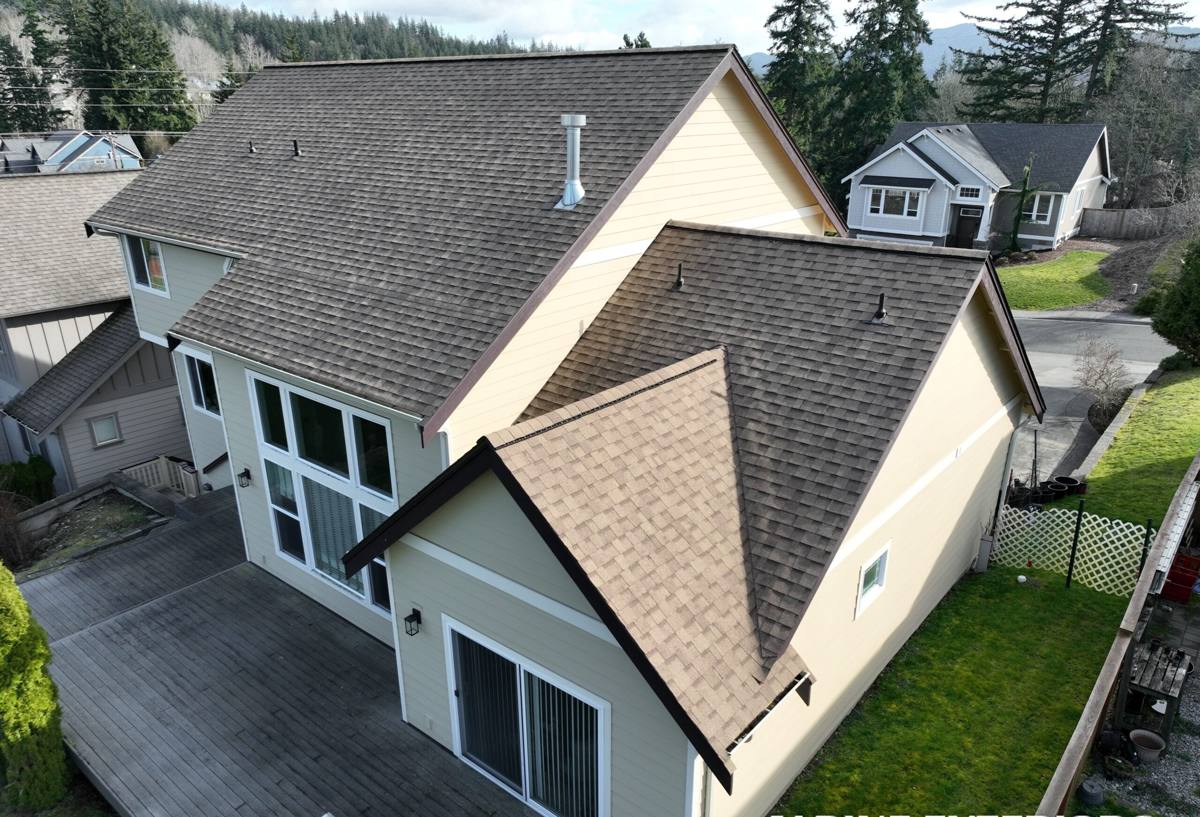
Why This Climate Is Hard on Vertical Siding
Salt Air and Coastal Exposure
Air carrying salt off the Salish Sea accelerates corrosion on fasteners, flashing, and any metal trim components, and it breaks down paint film faster than inland exposure does. Board and batten relies on a lot of exposed vertical edges and fastener lines, so material choice and hardware matter more here than they would on a fully sheltered inland lot.
Driving Rain on Vertical Seams
Wind-driven rain doesn't just run down a wall — it gets pushed sideways and upward into seams, especially on vertical siding where the joints run with the direction water travels when the wind pushes it. Every seam, batten edge, and trim intersection on a board and batten wall is a place water can be forced into if it isn't detailed correctly.
A Long Moss and Algae Season
Shaded, damp walls in this area can stay wet for days after a storm, and north-facing or tree-covered elevations often carry moss and algae growth nearly year-round. That growth holds moisture against the siding surface, which is exactly the condition that causes cheaper or improperly finished materials to swell, delaminate, or lose their finish over time.
What a Correct Board & Batten Installation Involves
Weather-Resistive Barrier and Drainage Gap
Behind every board and batten wall we install, there's a weather-resistive barrier and a drainage gap — typically furring strips or a rainscreen product — that lets any moisture that gets past the siding drain and dry out instead of sitting against the sheathing. In a climate with this much driving rain, a wall that can't dry out is a wall that eventually rots from the inside, regardless of how good the siding on the outside looks.
Panel Layout, Seams, and Expansion Gaps
James Hardie panels expand and contract slightly with temperature and moisture, and the manufacturer specifies exact gap widths at seams, corners, and trim. Skipping those gaps — or caulking a seam that should be flashed instead — is one of the most common shortcuts that leads to cracked caulk lines and water intrusion within a few years. We follow Hardie's fastening and clearance specs on every panel, not just the visible ones.
Flashing, Battens, and Fastening
Battens need consistent spacing and solid attachment into framing, not just into the panel. Flashing goes above every horizontal trim break and at any roof-to-wall intersection, including kick-out flashing where a roofline meets a wall — a detail that's easy to miss and expensive to ignore once water starts tracking behind the siding. Given the salt air here, we use corrosion-resistant fasteners rather than standard hardware.
Basic Board & Batten Install Checklist
- Weather-resistive barrier installed and lapped correctly, with all penetrations sealed
- Drainage gap or rainscreen behind the siding, not siding fastened directly to the barrier
- Manufacturer-specified expansion gaps at every seam, corner, and trim intersection
- Flashing above windows, doors, and horizontal trim breaks
- Kick-out flashing at every roof-to-wall intersection
- Corrosion-resistant fasteners driven to Hardie's spec, not overdriven or underdriven
- Factory-finished panels with field-touch-up only at cut edges, not full-panel field painting
James Hardie Board & Batten Options
James Hardie offers a couple of ways to get the board and batten look, and the right one depends on the home's style and how crisp or traditional you want the shadow lines to read.
| Product | Look | Notes |
|---|---|---|
| HardiePanel Vertical Siding with battens | Classic board and batten — flat panel with applied battens over the seams | Available in smooth or cedar-mill texture; the most common choice for traditional and farmhouse-style homes |
| Hardie Artisan Vertical Siding | Tighter, more refined shiplap-style vertical reveal | Premium product line with a more precise factory finish; suited to homes where the siding is a bigger part of the architectural statement |
Both come with James Hardie's factory-applied ColorPlus finish, which holds color and resists the fading and chalking that field-applied paint struggles with under this much sun and moisture cycling.
Why We Only Install James Hardie
We don't install vinyl, LP SmartSide, cedar, primed spruce, or other fiber cement brands, and that's a deliberate standard, not an oversight. Vinyl can warp and shows every wave in a wall, especially on vertical applications where sightlines are less forgiving. Wood and primed wood products need ongoing paint maintenance and are more vulnerable to the rot risk that comes with our rain and moss exposure. Engineered wood products carry moisture-sensitivity trade-offs at cut edges and seams that matter a lot in a climate this wet. James Hardie's fiber cement is non-combustible, engineered in HZ product lines for regional climate exposure, backed by a strong transferable warranty, and — when installed correctly — holds up to salt air, driving rain, and moss pressure better than the alternatives we've chosen not to carry. We'd rather install one product well than several products with compromises we'd have to explain later.
Our Process for Laurel Projects
- On-site assessment of the current wall assembly, including a check for hidden moisture or rot behind existing siding
- Review of elevations — which walls take the most wind-driven rain and which stay shaded and damp longest, since those drive detailing decisions
- Installation of weather-resistive barrier and drainage gap
- Panel and batten layout planned around window and door openings for clean, minimal seams
- Installation to James Hardie's fastening, clearance, and flashing specifications
- Trim, corner, and touch-up work using Hardie-matched materials
- Final walk-through so you know exactly what was done and what maintenance to expect
Signs Your Current Siding May Need Replacing
- Moss or algae staining that comes back quickly after cleaning
- Soft, spongy, or delaminating panels, especially near the ground or under eaves
- Paint peeling or caulk cracking and separating at seams and trim
- Visible rot at corners, trim boards, or window sills
- Rust streaking below fasteners or metal trim
- Gaps opening up between boards or battens that weren't there when the siding was installed
What Affects Board & Batten Cost in Laurel
| Factor | Why It Matters |
|---|---|
| Home size and wall complexity | More corners, gables, and roof-to-wall transitions mean more flashing and trim detail work |
| Condition of the existing wall | Rot or moisture damage found during removal has to be repaired before new siding goes on |
| Batten spacing and reveal style | Tighter batten spacing and premium lines like Artisan take more material and labor than standard panel-and-batten |
| Trim and corner detailing | Custom trim around windows, doors, and roof intersections adds time relative to plain runs of wall |
| Access and stories | Multi-story sections and steep or complicated roof lines affect scaffolding and staging time |
We walk through these specifics on-site rather than quoting off general averages, since two homes of similar size in Laurel can have very different actual costs depending on wall condition and detailing.
Maintenance in This Climate
James Hardie's factory finish cuts down on maintenance, but it doesn't eliminate it entirely — nothing does in a climate this damp. Shaded and north-facing walls should be rinsed periodically to keep moss and algae from building up, and it's worth a yearly look at caulking around trim and penetrations to catch any cracking early. Keeping vegetation trimmed back from siding helps walls dry out faster after rain, which matters more here than almost anywhere else in the state.
Why Hire a Crew That Already Works in Laurel
A lot of what makes board and batten siding hold up here isn't the product — it's the details, and those details change based on which direction a wall faces, how much shade it gets, and how exposed it is to wind off the water. A crew that already works this specific corner of Whatcom County knows which elevations need extra attention to flashing and drainage before the first panel goes up, instead of learning that after a callback. That local familiarity, paired with installing a single product system correctly every time, is what keeps a board and batten job looking right for decades instead of years.
If you're weighing board and batten for a home in or around Laurel, we're happy to take a look and walk you through what your specific walls need — no pressure, no obligation. Use the form below to request a free estimate.