 Lynden Siding
 Building a Deck That Actually Holds Up in Laurel
A deck in the Laurel area has to earn its keep. Between the long stretch of wet months, the salt-tinged marine air that drifts in off the Sound, and moss season that seems to start earlier every year, an outdoor structure here works harder than it would almost anywhere else in the state. We build and repair decks for homes in and around Laurel and Lynden, and the pattern is always the same: decks that were built to a generic national spec start showing problems within a few years, while decks built for this specific climate keep performing for decades. This page walks through what that difference actually looks like — the materials, the framing details, and the process — so you know what you're paying for and why it matters here.
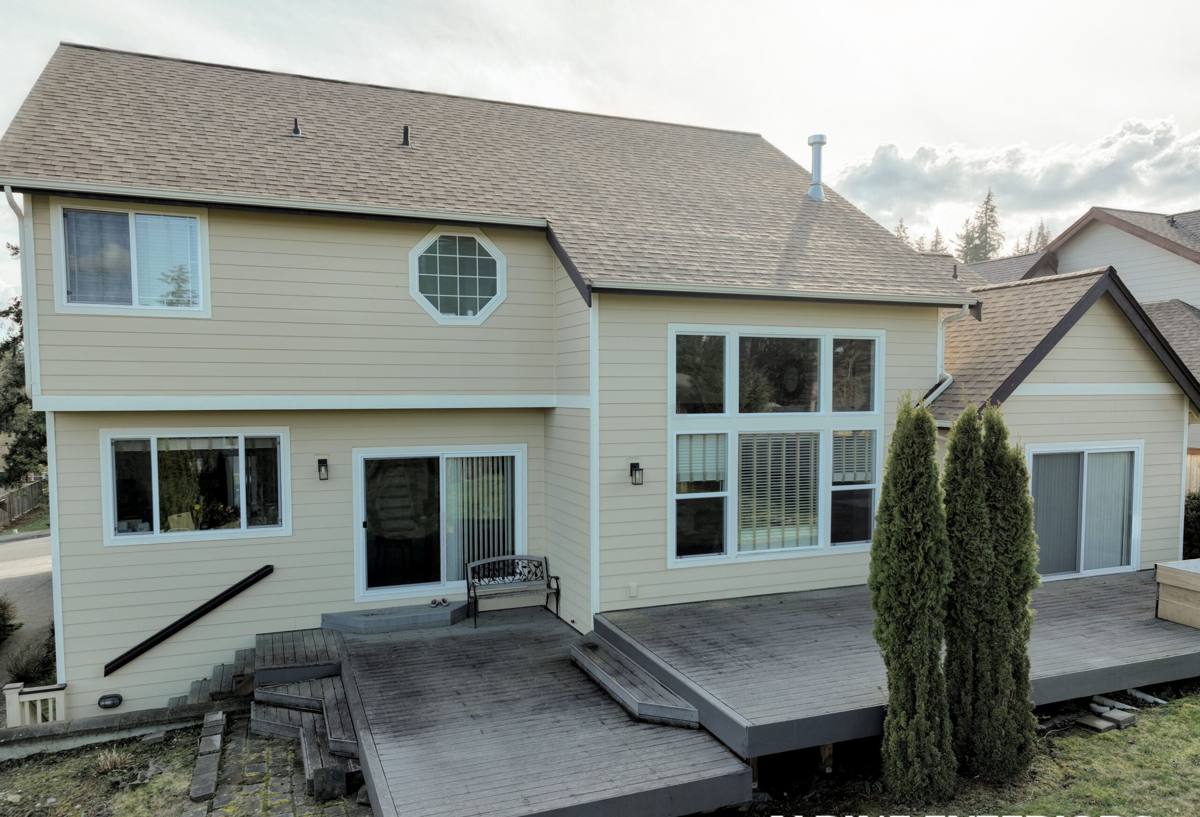
What Whatcom County Weather Does to an Ordinary Deck
Most deck failures we get called out to inspect aren't dramatic. They're slow. Wood that never fully dries out between rain events starts to soften at the joints. Fasteners that were fine for a drier climate begin to weep rust stains into the boards. None of it happens overnight, which is exactly why so many decks look fine right up until they aren't.
Moisture That Never Really Leaves
Whatcom County gets long stretches where humidity stays high and full sun is rare, especially through fall and winter. A deck built without attention to drainage and airflow underneath will hold moisture against the framing for weeks at a time. That's where rot starts — not on the visible surface, but in the ledger board, the joist ends, and the posts, out of sight until a board finally gives.
Moss, Algae, and the Slip Hazard Nobody Talks About
A long moss season isn't just a cosmetic issue. Moss and algae hold moisture against wood fibers, accelerate decay, and turn a deck surface slick within a single wet season if it's shaded or doesn't get airflow. We factor this into board spacing, orientation, and material choice from the start, rather than leaving it as a maintenance problem for the homeowner to fight every winter.
Choosing the Right Decking Material for This Climate
There's no single "best" decking material — there's a best match for your budget, your maintenance appetite, and how exposed your particular lot is to shade, wind, and moisture. Here's how the common options actually compare once you factor in what this part of Whatcom County does to a deck over time.
| Material | Upfront Cost | Maintenance Needs | Moisture & Moss Resistance | Realistic Lifespan |
|---|---|---|---|---|
| Pressure-treated lumber | Lowest | Annual cleaning, periodic sealing | Fair — depends on upkeep | 15–20 years with maintenance |
| Cedar | Moderate | Regular oiling or sealing to hold color and resist decay | Good naturally, but needs consistent care here | 15–25 years with maintenance |
| Capped composite | Higher | Occasional washing, no sealing or staining | Very good — doesn't absorb moisture like wood | 25–30+ years |
| PVC decking | Highest | Lowest of all options | Excellent — fully synthetic, no wood fiber to hold moisture | 30+ years |
We're honest with homeowners about trade-offs rather than steering everyone to the most expensive option. Pressure-treated lumber is a perfectly reasonable choice if you're willing to stay on top of cleaning and sealing on a real schedule — the failures we see with treated wood almost always trace back to maintenance that got skipped for a year or two, not the material itself. Composite and PVC cost more up front but remove most of that ongoing burden, which matters if your deck sits in a shadier, damper spot on the lot.
What a Correctly Built Deck Actually Involves
The parts of a deck that determine whether it lasts are almost entirely the parts you never see once it's finished. Surface boards get all the attention, but framing, fasteners, and flashing are what separate a deck that's still solid in fifteen years from one that needs major repair in five.
Footings Set Below Frost Depth
Footings need to be sized and set to local depth and bearing requirements, not eyeballed. Undersized or shallow footings shift over time as the ground around them saturates and drains through the wet season, and a deck that rocks or settles unevenly is almost always a footing problem, not a surface one.
Ledger Board Attachment and Flashing
Where a deck attaches to the house is the single most common source of hidden rot we find on older decks in this area. A ledger board needs proper flashing that directs water away from the house band board rather than trapping it behind the deck framing. This detail is invisible once the deck is built, which is exactly why it's worth asking your contractor directly how they handle it.
Fasteners and Hardware Built for Wet Climates
Standard fasteners corrode faster in a climate with this much sustained moisture and marine-influenced air. We use coated or stainless fasteners and corrosion-resistant structural hardware throughout, not just on the visible top surface. Rust streaking down a deck board is a cosmetic symptom of a fastener that was never right for the climate in the first place.
How Our Deck Building Process Works
Every project runs through the same sequence, whether it's a straightforward ground-level deck or a larger multi-level build:
- On-site visit to assess the lot, existing structure (if any), drainage, sun exposure, and how the deck will connect to the house.
- A written estimate covering material options, framing approach, and a realistic cost range — no pressure to decide on the spot.
- Permit handling where required, including footing layout and any inspections the jurisdiction calls for.
- Demolition and removal of the old structure, if this is a replacement, with attention to what condition the framing and ledger connection were actually in.
- Footings, framing, and ledger flashing — the structural work that determines everything else.
- Decking, railings, and stairs installed to spec, with fastener and hardware choices matched to the material.
- Final walkthrough so you understand what maintenance, if any, your specific deck will need going forward.
Railings, Stairs, and Code Requirements
Railings and stair details aren't optional extras — they're governed by building code for good reason, and they're also where a lot of DIY and budget decks cut corners. Guard height, baluster spacing, and stair rise-and-run all have code minimums that exist specifically to prevent falls, and they get checked at inspection if a permit is involved. Beyond code minimums, railing material matters in this climate for the same reasons decking material does: a wood railing that isn't maintained will loosen and weather faster than a metal or composite system, and a loose railing is one of the first things we get called about on older decks.
Whether a permit is required for your specific project depends on the deck's height, its attachment to the house, and your jurisdiction. We handle that determination and the permit process itself as part of the job, so it isn't something you have to research or manage yourself.
Maintaining a New Deck Through Whatcom County's Wet Season
Even the best-built deck still needs some seasonal attention — the goal of good construction is to minimize that burden, not eliminate it entirely. Here's the realistic minimum we recommend to homeowners, regardless of which material you choose:
- Clear leaves, needles, and debris from between boards and off the surface before they trap moisture through the fall and winter.
- Check and clean any gaps or drainage channels underneath the deck so water keeps moving rather than pooling against framing.
- Inspect for moss or algae buildup each fall and address it early, before it has a full wet season to take hold.
- Look at fastener heads and any visible hardware once a year for early rust staining — it's cheaper to address early than after it's spread into the board.
- For wood decks, keep to an actual sealing or staining schedule rather than "whenever it looks like it needs it" — by the time it looks dry, moisture has often already gotten in.
- Check railings and stair connections for looseness, especially after the first full winter of freeze-thaw and saturation cycles.
Why It Matters to Hire a Crew That Already Works in Laurel
A deck contractor who mostly works drier inland climates or fair-weather regions of the country will default to specs that are fine there and inadequate here. The moisture management, fastener selection, and footing depth that hold up through a Whatcom County winter aren't universal defaults — they're decisions shaped by what actually happens to a structure on the ground in this area over years of driving rain and moss season. Working regularly in and around Laurel and Lynden means we've already seen how different lots, exposures, and shade patterns behave here, and we build accordingly rather than guessing.
It also means straightforward, local accountability. If a question comes up after the project is done, you're dealing with a crew that's still working in your neighborhood, not a company that moved on to a different region.
If you're planning a new deck or replacing one that's showing its age, we're happy to take a look and walk you through your options. The estimate is free, there's no pressure, and you'll get a straight answer about what your specific lot and budget call for — just fill out the form below to get started.