 Lynden Siding
 Siding Installation for Laurel-Area Homes
Laurel sits in the rural stretch between Lynden and Bellingham, where farmland, timber, and older acreage homes meet the kind of weather that never really gives a house a break. If you own a home out here, you already know the drill: long wet stretches from fall through spring, humid air that never fully dries out between storms, and a moss season that seems to start earlier every year. Siding in this part of Whatcom County isn't just cosmetic — it's the thing standing between your framing and a climate that actively wants to grow something on it.
We're a Lynden-based crew, and Laurel is inside our regular service area — not a stretch job we take once and never see again. That matters more than most homeowners realize until they've dealt with a contractor who installed siding and vanished. We explain what we install, why we only install one product system, and what a correct installation actually looks like for a home in this specific area.
What Laurel's Climate Does to Siding
Driving Rain and Wind-Driven Moisture
Laurel gets exposed to weather systems moving in off the Strait of Georgia and Puget Sound, and that often means rain that isn't falling straight down — it's being pushed sideways into walls, under trim, and into any gap a lesser installation left open. Siding here has to shed water actively, not just sit there and look weatherproof. Butt joints, corner details, and flashing above windows and doors take a real beating over a Whatcom County winter.
Salt Air Off the Sound
Even set back from the water, Laurel gets enough marine influence carried inland that salt-laden air is a real factor on metal fasteners, trim, and paint systems. Salt air accelerates corrosion on anything not rated for it and breaks down cheaper coatings faster than inland siding ever experiences. It's a slow, cumulative problem — the kind that doesn't show up in year one but shows up hard by year eight or ten if the materials weren't chosen for it.
Moss, Algae, and a Long Wet Season
Between the tree cover common on Laurel's larger lots and the moisture that lingers for months, north-facing and shaded walls are prime real estate for moss and algae growth. Once organic growth gets a foothold in a porous or absorbent siding surface, it holds moisture against the wall even longer, which speeds up rot, paint failure, and — on the wrong materials — swelling and delamination. The siding you choose either resists this cycle or feeds it.
Why We Only Install James Hardie
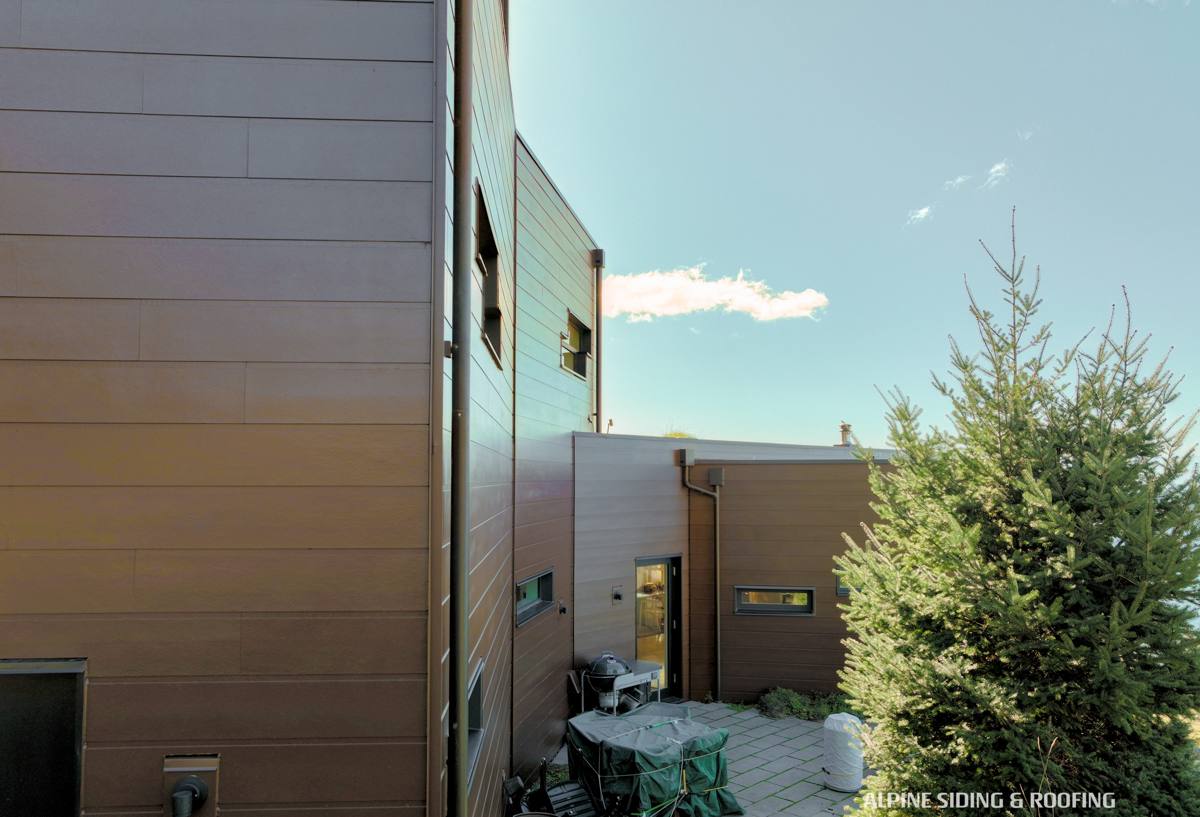
We made a decision a while back to stop installing every product a homeowner might ask for and instead standardize on one system we trust to hold up in this exact climate: James Hardie fiber cement. That's not a marketing position — it's a practical one, based on watching how different materials actually perform on homes in Whatcom County over years, not just at installation.
- Non-combustible core — fiber cement doesn't feed a fire the way wood-based or foam-backed products can, which matters for insurance conversations and peace of mind alike.
- Engineered for wet, moderate climates — Hardie's HZ5 product line is specifically formulated for the Pacific Northwest's moisture and freeze-thaw pattern, not a one-size-fits-all national spec.
- ColorPlus factory finish — baked-on color that resists fading and chalking far longer than field-applied paint, and doesn't require the repainting cycle wood or engineered wood siding does.
- Moisture behavior — fiber cement doesn't swell, rot, or delaminate the way wood-based composite products can when they take on water repeatedly, which is exactly what Laurel's climate throws at a wall.
- Warranty structure — a strong, transferable manufacturer warranty backs the product, which matters if you sell the home down the road.
We don't install LP SmartSide, vinyl, Cemplank, Allura, primed spruce, or cedar. Each of those has legitimate uses and, in some cases, real upsides — cedar looks great, vinyl is cheap, engineered wood installs fast. But we've chosen to put our name behind one system we can stand fully behind rather than offer five products and let quality vary by what a homeowner picks. If you want to understand the specific trade-offs of any of those alternatives, we're glad to walk through them honestly — we just won't be the crew installing them.
What Correct Installation Actually Involves
Fiber cement siding is only as good as the installation behind it. Hardie's own warranty is tied to installation meeting their published specifications — this isn't a product you can install "close enough" and expect full performance from.
Water Management Starts Behind the Siding
Before a single plank goes up, the wall needs a correctly lapped weather-resistive barrier, properly integrated flashing at every window, door, and penetration, and a drainage plane that lets any incidental moisture escape rather than pool against the sheathing. In a high-rain area like Laurel, this step is where most long-term failures actually originate — not in the siding material itself.
Fastening and Clearances
Hardie specifies fastener type, spacing, and penetration depth for a reason — improper fastening is one of the most common causes of premature failure on fiber cement jobs done by crews unfamiliar with the product. Ground clearance, deck and roof line clearances, and gaps at trim all need to follow spec so water has somewhere to go instead of wicking into the plank edges.
Joint and Seam Treatment
Butt joints, especially on longer wall runs common on Laurel's larger properties, need to be treated correctly — sealed, flashed, or hidden behind a joint system depending on the design — so they don't become the first place moisture gets in.
Our Process on a Laurel Job
- On-site assessment — we look at your home's exposure: which walls take the worst weather, where moss and algae are already established, and where the existing siding or trim has already failed.
- Tear-off and sheathing check — we don't just cover up existing damage. If sheathing is soft or rotted underneath, we address it before new siding goes on.
- Weather barrier and flashing install — the unglamorous part that determines whether the job lasts fifteen years or fifty.
- Hardie panel or plank installation — installed to manufacturer spec for fastening, clearance, and joint treatment.
- Trim, caulking, and final detailing — the details that keep water out of corners and penetrations.
- Walkthrough — we go over the finished job with you before we consider it done.
Why a Local Crew Matters for Laurel Specifically
A siding job is only as good as the follow-through behind it. We work Lynden and the surrounding Whatcom County communities regularly, which means we're not driving in from Seattle or Everett for a one-off job and disappearing after the invoice clears. If a question comes up two years after installation — a caulking line that needs attention, a question about moss treatment on a shaded wall — we're a short drive away, not a phone number that's been disconnected.
Being local also means we've seen how homes in this specific area age. We know which orientations take the worst of the wind-driven rain, which lots hold moisture longest under tree cover, and what that means for maintenance recommendations after the siding is up.
Cost Factors on a Laurel Siding Job
| Factor | Why It Affects Cost |
|---|---|
| Home size and wall complexity | More corners, dormers, and wall breaks mean more cutting, flashing, and labor time |
| Tear-off vs. new construction | Removing and disposing of old siding, plus repairing any damaged sheathing found underneath, adds time and material |
| Existing moisture damage | Rot repair to sheathing or framing found during tear-off is priced separately from the siding itself |
| Trim and detail package | Corner boards, window trim style, and frieze details change both material and labor |
| Hardie product line and finish | Panel vs. lap siding, and standard vs. premium ColorPlus color options, carry different material costs |
| Site access | Longer driveways, tree-heavy lots, or difficult staging areas common in Laurel can affect labor time |
Signs Your Laurel Home Needs New Siding
- Persistent moss or algae staining that returns shortly after cleaning
- Soft spots, bubbling, or visible swelling, especially near the ground or roofline
- Paint that's peeling or chalking heavily despite being repainted in recent years
- Visible gaps, warping, or separation at seams and corners
- A musty smell or interior wall staining that suggests moisture intrusion
- Siding that's original to a home built more than 20-25 years ago, especially on wood-based products
If your Laurel-area home is showing any of these signs, or you're simply planning ahead before the next wet season sets in, we're happy to take a look and give you a straightforward, no-pressure estimate. Use the form below to get started.