 Lynden Siding
 Roofing in Maple Falls Comes With Its Own Set of Problems
Maple Falls sits up against the foothills of the North Cascades, tucked into heavier tree cover than most of the rest of Whatcom County. That changes what a roof has to deal with day to day. Homes here get less direct sun than properties out on the flats near Lynden, which means roofs stay damp longer after a storm, moss and lichen get a stronger foothold, and needle and leaf litter builds up in valleys and gutters faster than most homeowners expect. Add in the driving rain that comes through the county for much of the fall, winter, and spring, and you have a climate that is genuinely tougher on a roof system than the marketing brochures for most shingle products account for.
None of this means a roof in Maple Falls has to fail early or need constant attention. It means the installation has to be done with this specific environment in mind — the right underlayment, the right ventilation, the right attention to valleys and edges — rather than treated like a generic reroof job dropped in from a warmer, drier climate.
What a Full New Roof Installation Actually Involves
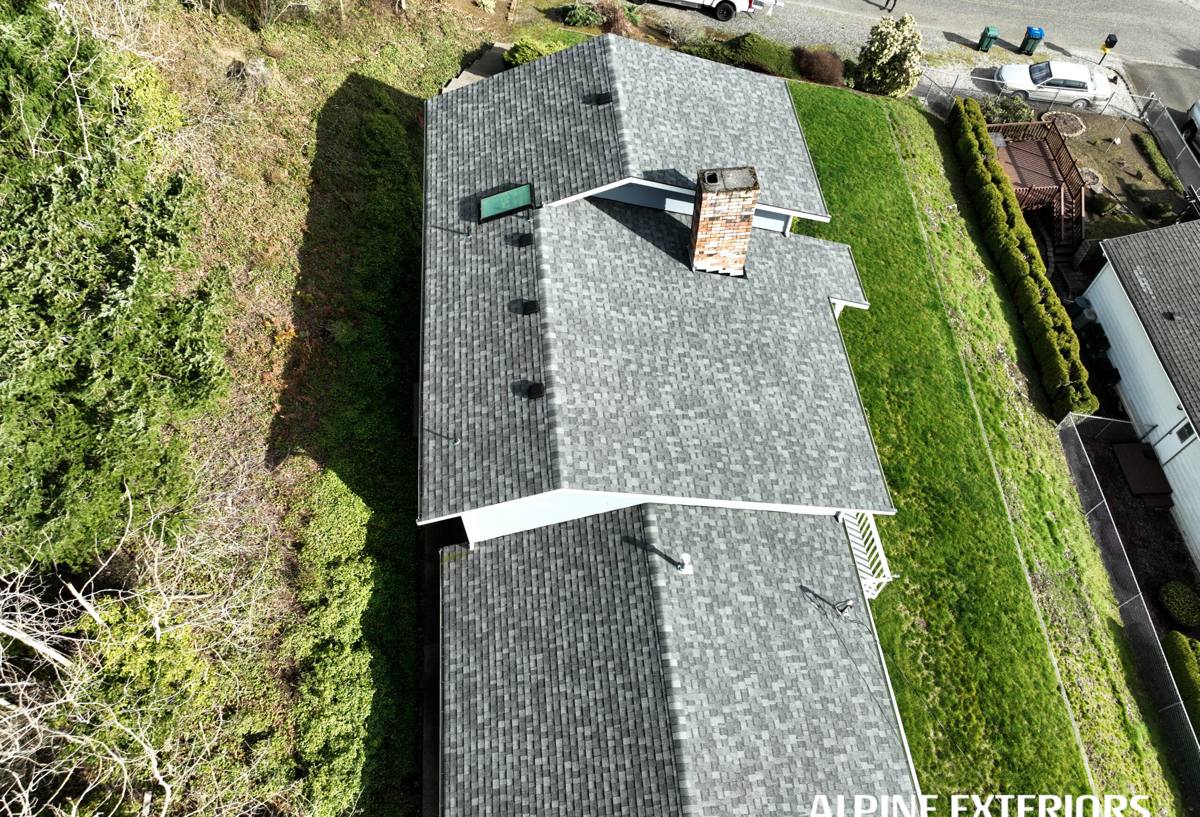
A proper new roof installation is more than laying new shingles over what's there. When we install a roof in Maple Falls, the work generally covers:
- Tear-off of the old roofing material down to the deck, unless a specific situation calls for an evaluated overlay
- Inspection and repair or replacement of any damaged, soft, or delaminated roof decking
- Installation of ice-and-water shield or self-adhering membrane in vulnerable areas — valleys, eaves, around penetrations
- A synthetic or felt underlayment across the full roof, matched to the pitch and exposure of the home
- New flashing at all valleys, walls, chimneys, and roof penetrations
- Proper intake and exhaust ventilation, not just a single ridge vent slapped on top of an unbalanced system
- Installation of the finish roofing material per manufacturer specification, including nailing pattern and fastener count
- Final cleanup, magnetic sweep for nails, and a walk-through
Skipping any one of these steps is how a roof that looks fine in year one starts leaking, rotting decking, or losing shingles in year five. In a wetter, shadier setting like Maple Falls, shortcuts show up faster than they would on a sun-baked roof elsewhere.
Decking and Ventilation Deserve More Attention Than They Usually Get
Two things get overlooked on a lot of reroof jobs, and both matter more in a heavily treed, damp setting: the condition of the roof deck underneath the old material, and whether the attic is actually venting the way it should. Soft or water-stained decking needs to be replaced, not covered over — plywood or OSB that's already absorbing moisture will keep absorbing it under new shingles. And a roof with poor attic ventilation traps moisture inside the structure, which accelerates the exact kind of mold, rot, and premature shingle aging that homeowners in shaded, damp areas are already fighting from the outside.
Why Moss Is a Bigger Deal Than It Looks
Moss on a roof isn't just cosmetic. It holds moisture against the shingle surface long after the rest of the roof has dried out, and its root structure works its way under shingle tabs and granules over time, lifting edges and creating small channels for water to travel. On a property with heavy tree cover like much of Maple Falls, moss isn't a maybe — it's something every roof in the area will deal with sooner or later.
A well-installed roof won't stop moss from ever appearing, but the right product choice, proper edge and ridge detailing, and adequate airflow under the roofing material all slow it down significantly. We also talk through moss-resistant options and realistic maintenance expectations with every Maple Falls homeowner before installation, rather than after the first green patches show up.
Choosing the Right Roofing Material for This Climate
There isn't one universally "best" roofing product — the right choice depends on the home, the budget, and how much upkeep the homeowner wants to take on. Here's how the common options stack up for a shaded, wet, moss-prone property like the ones in Maple Falls:
| Material | Moss/Moisture Behavior | Typical Lifespan | Maintenance Needs |
|---|---|---|---|
| Architectural asphalt shingle | Good with proper ventilation and edge detail; moss-resistant granule options available | 25–30 years | Periodic moss/debris removal |
| Standing seam metal | Sheds water fast, very poor surface for moss to grip | 40–60 years | Low; occasional gutter/valley check |
| Synthetic composite (shake-look) | Better moisture resistance than wood shake, holds up well under tree cover | 30–50 years | Low to moderate |
| Cedar shake | High maintenance burden in shaded, damp settings; requires regular treatment | 20–30 years with upkeep | High |
We don't install every product on that list on every home. Where a roof sits under heavy shade with limited sun exposure to dry it out, we'll steer homeowners away from materials that need aggressive upkeep to perform — not because the material is bad everywhere, but because it's a poor match for that specific site's conditions. That's a professional judgment call based on installation experience in this area, not a knock on any manufacturer.
How Driving Rain Changes the Details
Whatcom County gets sustained, wind-driven rain for stretches of the year, and roofs that aren't detailed for it will leak at the weak points long before the field of the roof ever fails. The places we pay the closest attention to on a Maple Falls install are the same places wind-driven rain finds first: valleys, roof-to-wall transitions, skylight curbs, and any low-slope section. We use self-adhering waterproof membrane in those zones, not just standard felt, and we make sure flashing laps in the correct direction so wind-blown rain can't work its way underneath.
This is also where a lot of underlayment shortcuts get exposed. Standard felt underlayment can be adequate on a simple, steep, well-exposed roof. On a roof with multiple valleys, dormers, or lower-pitch sections sitting under tree cover, we typically recommend a fully adhered synthetic or membrane underlayment across more of the roof, since it gives the deck real backup protection if wind-driven rain ever gets past the surface material.
Our Installation Process
1. On-Site Evaluation
We walk the roof, check the attic for ventilation and moisture signs, and look at the specific shading, tree cover, and drainage pattern of the property — not just the roof itself.
2. Straightforward Estimate
We explain material options, what the job actually involves, and why we're recommending what we're recommending, in plain terms. No pressure, no inflated scope.
3. Tear-Off and Deck Inspection
Old material comes off, the deck gets inspected board by board, and any compromised sections get replaced before anything new goes down.
4. Waterproofing and Underlayment
Ice-and-water membrane in vulnerable zones, full underlayment across the roof, matched to the specific pitch and exposure conditions of the home.
5. Roofing Installation
Material goes down to manufacturer spec — correct nailing pattern, correct exposure, correct flashing sequence at every penetration and transition.
6. Final Walk-Through
We review the finished roof with the homeowner, cover basic maintenance expectations for a shaded, moss-prone property, and clean the site thoroughly, including a magnetic sweep for stray fasteners.
Signs a Maple Falls Roof May Need Replacement, Not Just Repair
- Shingles that are cupping, curling, or losing significant granule coverage
- Moss buildup that keeps returning within months of cleaning
- Soft spots or visible sagging anywhere on the roof deck
- Daylight visible through the attic roof boards
- Water staining on interior ceilings, especially near valleys or chimneys
- A roof at or past 20–25 years old, regardless of how it looks from the ground
- Repeated leaks in the same location after prior repairs
A repair can buy time on an isolated issue, but once a roof is showing several of these signs at once, patching individual spots usually costs more over a few years than a properly sequenced full replacement — and it doesn't address the underlying ventilation or moisture issues driving the damage.
Why Local Installation Experience Matters
A crew that mostly works drier, more open sites will often under-detail a roof for a place like Maple Falls — standard underlayment where a membrane is warranted, minimal moss consideration, ventilation treated as an afterthought. A crew that regularly works in this part of Whatcom County knows which valleys need extra membrane, which roof lines collect debris fastest under tree cover, and how much ventilation a given attic actually needs to stay dry through a wet Pacific Northwest winter. That local pattern recognition is what keeps a roof performing at year fifteen and twenty, not just at the final walk-through.
If your roof in Maple Falls is showing its age, or you're planning ahead rather than waiting for a leak, we're happy to take a look and walk you through your options. Reach out for a free, no-pressure estimate using the form below.