 Lynden Siding
 When Storms Hit Maple Falls, Roofs Take the Brunt of It
Maple Falls sits in a part of Whatcom County where weather doesn't do things halfway. Wind funnels through the tree cover, rain comes in sideways for days at a stretch, and the same evergreen canopy that makes the area beautiful also means roofs are constantly dealing with falling limbs, needle buildup, and shade that never really dries out. When a storm rolls through, the damage isn't always a dramatic hole in the roof deck — more often it's a lifted shingle, a cracked ridge cap, or a flashing seam that got pried open just enough to let water start working its way in.
We've repaired roofs across Whatcom County long enough to know that storm damage out this way tends to look different than it does in a subdivision with open sky and no trees. That's the lens we bring to every Maple Falls roof we look at.
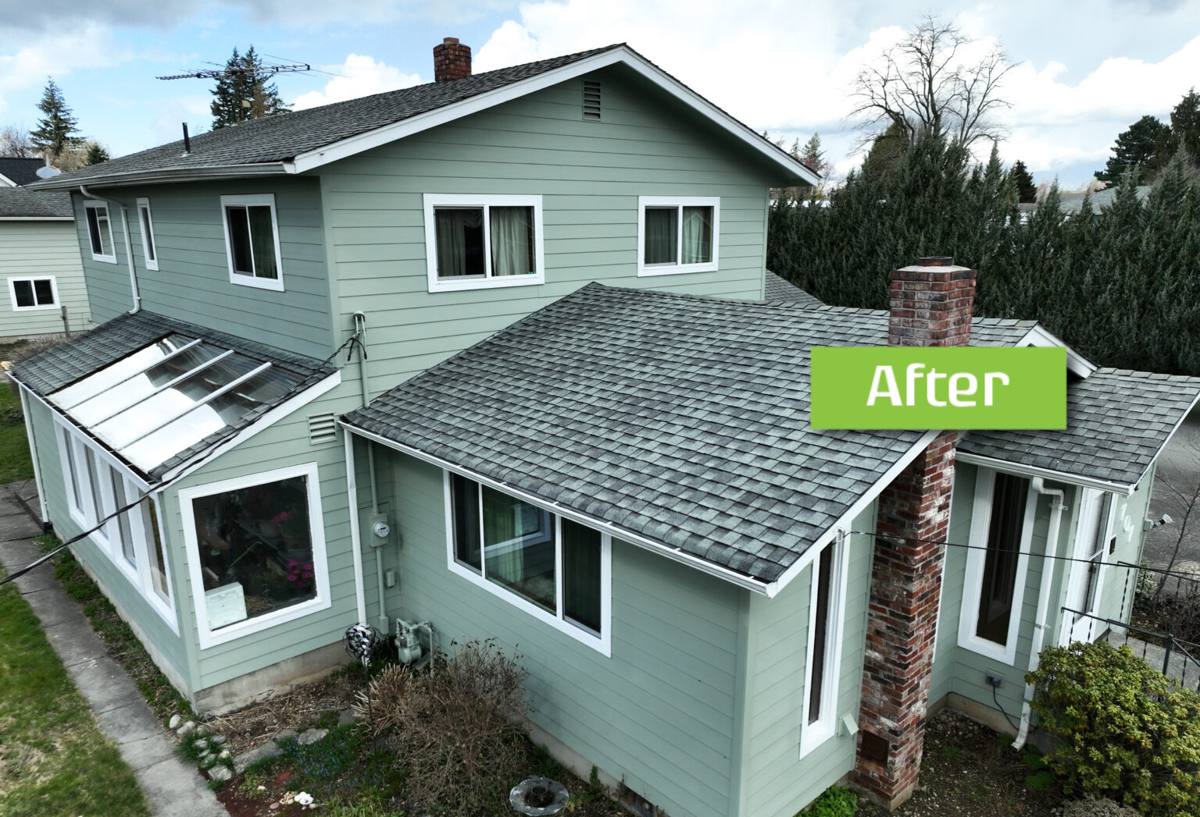
What Actually Damages a Roof Out Here
Wind and Wind-Driven Rain
Sustained wind loosens shingles at the tab and along ridge lines before it ever tears anything off outright. Once a shingle edge lifts even slightly, wind-driven rain gets pushed up and under it instead of running down and off — that's how a storm with no visible damage from the ground still ends up soaking an attic.
Falling Limbs and Debris
Homes near tree lines take direct hits from branches during wind events, and even small limbs can crack a shingle, dent metal flashing, or knock granules loose in a way that isn't obvious until a leak shows up weeks later. Larger trees or limbs can puncture decking outright and need to be treated as an emergency.
Moss, Shade, and Standing Moisture
Whatcom County's long wet season and heavy tree cover mean moss isn't a cosmetic issue here — it's a moisture problem. Moss holds water against the roofing material long after a storm has passed, which softens shingles, corrodes fasteners, and rots decking underneath. A storm that would be a non-event on a clean, sun-exposed roof can be the tipping point on a roof that already has moss working against it.
Driving Rain and Saltier Coastal Air
Weather systems that move through this part of Washington often carry moisture off the coast, and that combination of driving rain and salt-laden air accelerates corrosion on fasteners, flashing, and any exposed metal. It's a slower kind of damage than a fallen branch, but it's the reason flashing and fastener condition matter as much as the shingles themselves during a storm inspection.
Signs Your Roof Took a Hit
Not all storm damage is visible from the driveway. These are the things worth checking after any significant wind or rain event:
- Shingles that look lifted, curled, or out of alignment along any edge or ridge
- Granules collecting in gutters or at the base of downspouts
- New or worsening moss patches, especially on north-facing or shaded slopes
- Water stains or discoloration on ceilings, especially near exterior walls or chimneys
- Damaged, dented, or missing flashing around vents, valleys, or chimneys
- Debris — branches, needles, cones — piled in valleys or against roof-to-wall transitions
- Daylight visible through the attic roof deck
- A musty smell in the attic that wasn't there before
If you see any of these after a storm, it's worth getting a look before the next round of rain finds the same weak spot.
What a Proper Storm Repair Actually Involves
Stabilize First
If there's an active leak or exposed decking, the first job is stopping water intrusion — tarping the area properly so it survives more wind and rain, not just draping plastic over the problem. A poorly secured tarp can do more harm than the original damage if it flaps loose in the next gust.
Find the Actual Extent of the Damage
Storm damage often extends past what's visible from the ground. A real inspection means getting on the roof, checking the decking for soft spots, pulling back shingles near the damage to check the underlayment, and looking at flashing and fasteners in the surrounding area — not just patching the one spot that's obviously broken.
Repair the Roofing System, Not Just the Surface
A correct repair replaces damaged shingles and any compromised underlayment, addresses soft or rotted decking rather than roofing over it, and re-seats or replaces flashing that's been bent or pulled loose. Matching shingle color and profile as closely as possible matters too — a repair that stands out like a patch is usually a sign that only the top layer got attention.
Our Process, Start to Finish
- Call and initial triage — we ask what you're seeing and how urgent it is so active leaks get prioritized
- On-site inspection — a full look at the damage, the surrounding roof condition, decking, and flashing
- Written scope and estimate — what needs to be repaired, why, and what it will cost, before any work starts
- Temporary protection if needed — proper tarping or sealing to prevent further water intrusion
- Repair work — decking, underlayment, shingles, and flashing addressed as a system, not a patch job
- Final walk-through — we show you what was done and what to watch for going forward
Repair Costs: What Actually Drives the Range
Every storm repair is different, but the same handful of factors decide whether a job is on the lower or higher end of the range:
| Factor | Why It Matters |
|---|---|
| Extent of decking damage | Soft or rotted decking has to be cut out and replaced before new roofing goes on — this is usually the biggest cost swing |
| Roof pitch and access | Steeper roofs and homes with tight tree clearance take longer and require more safety setup |
| Age and condition of the existing roof | Older roofs nearing the end of their service life may need more than a spot repair to hold up |
| Matching materials | Discontinued or hard-to-match shingle lines can add cost and time to source |
| Moss and moisture damage found underneath | Repairs often reveal moss-related rot that wasn't part of the original storm event |
We give a written estimate after inspecting the roof in person — we don't quote storm repairs sight unseen, because the visible damage is rarely the whole story.
Insurance Claims: What Helps and What Hurts
Most storm damage claims move faster and cleaner when there's clear documentation of the damage and a straightforward repair scope. We provide photos, a written description of the damage, and a detailed estimate that your adjuster can work from. What slows claims down is vague documentation or repairs that get started before the damage is properly recorded — so if you suspect storm damage, it's worth getting an inspection before doing anything else, even temporary fixes beyond basic leak protection.
Why Local Experience in Maple Falls Actually Matters
A roof repair crew that mostly works flat, open subdivisions elsewhere in the county isn't necessarily used to the conditions Maple Falls throws at a roof — heavy tree cover, persistent shade, moss that comes back fast, and access that sometimes means working around long driveways and limited staging area. Knowing the difference between a shingle that failed from age versus one that failed because moss held moisture against it for two winters changes how we scope the repair. Working this area regularly also means faster response after a storm, when a lot of roofs in the same neighborhood are dealing with the same weather event at once.
Keeping the Next Storm from Doing the Same Damage
A storm repair is a good moment to address the conditions that made the damage worse in the first place, not just patch what broke. A few things worth doing on any Maple Falls roof, storm or no storm:
- Keep tree limbs trimmed back from the roofline where safely possible
- Clean gutters and valleys before the wet season builds up debris
- Have moss treated and removed before it spreads across a full slope
- Check flashing and fastener condition every year or two, not just after storms
- Address small leaks immediately — they rarely stay small in this climate
If a recent storm left you with a leak, missing shingles, or debris damage on your Maple Falls roof, we're happy to come take a look. The estimate is free, there's no pressure attached to it, and you'll walk away knowing exactly what's going on with your roof either way — just fill out the form below to get started.