 Lynden Siding
 Why Custer Roofs Wear Differently Than Roofs Inland
Custer sits close enough to the water that salt air is a real factor in how a roof ages, not just a talking point. Add Whatcom County's long stretch of wet months, wind off the water, and the shaded, damp conditions that let moss take hold for much of the year, and you get a climate that's genuinely harder on a roof than what homes twenty or thirty miles inland deal with. A roof system that would hold up fine in a drier part of the state can fail early here if it wasn't built with this specific combination of exposures in mind.
That doesn't mean Custer homes need exotic materials or a radically different approach. It means the details that are easy to skip — fastener choice, flashing quality, underlayment type, ventilation balance — matter more here than they would somewhere with a milder, drier climate. A new roof installation done right in this area accounts for all of it up front, not as an afterthought.
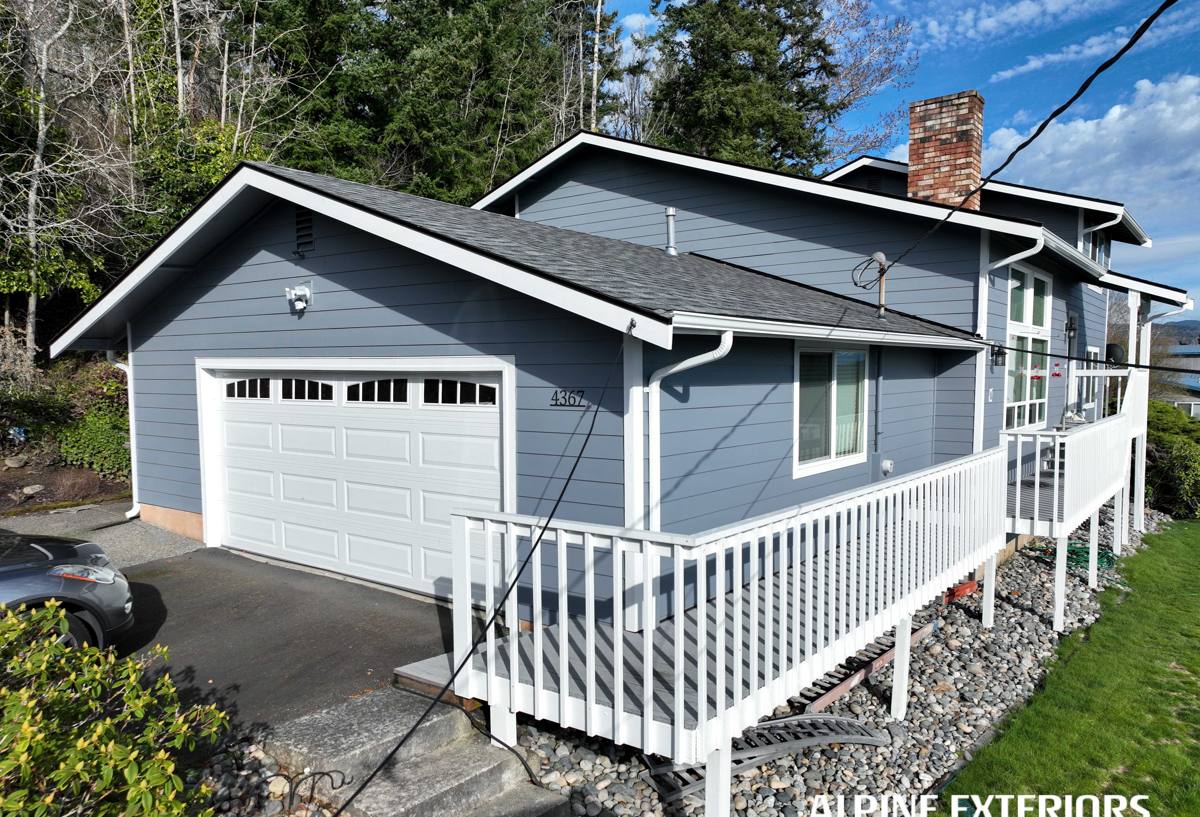
What a Correct New Roof Installation Involves Here
A new roof is more than shingles nailed to a deck. In a coastal, high-moisture area like Custer, the parts of the job that don't show up in a driveway photo are usually what determine whether the roof lasts 15 years or 30.
Corrosion-resistant fasteners and flashing
Salt-laden air accelerates corrosion on standard fasteners and thin flashing metal. We use fasteners and flashing rated for coastal exposure rather than the cheapest option that meets minimum code, because rust streaking and early flashing failure are two of the most common early-warning signs we see on roofs near the water that were built with standard-grade materials.
Ice-and-water shield at vulnerable points
Driving rain in this area doesn't just fall straight down — wind pushes it sideways and up under laps that would stay dry in calmer weather. We install self-adhering waterproof membrane at eaves, valleys, and around every penetration (vents, chimneys, skylights), not just the code-minimum locations, because those are exactly the spots where wind-driven rain finds a way in.
Proper underlayment
Old-style felt underlayment absorbs moisture and can wrinkle or degrade faster in a consistently wet climate. Synthetic underlayment sheds water better, resists tearing during install, and holds up longer while the roof covering does its job.
Balanced ventilation
An attic that can't breathe traps moisture from both sides — humid interior air rising up, and damp coastal air pressing in. That trapped moisture rots decking from underneath, long before the shingles on top show any sign of a problem. We check and correct intake and exhaust ventilation as part of every install, not as an upsell.
Our New Roof Installation Process
The process is straightforward, but we don't skip steps to save a day of labor. Here's what a full replacement looks like from start to finish:
- On-site inspection and estimate — we look at the existing roof, attic ventilation, and any trouble spots before quoting anything.
- Material selection — we walk through options based on your budget, the home's exposure, and how long you plan to own the house.
- Tear-off — old roofing is fully removed so the deck can be inspected, not covered over.
- Deck repair — any soft, rotted, or delaminated sheathing is replaced before anything new goes down.
- Underlayment and waterproofing — synthetic underlayment plus ice-and-water membrane at all vulnerable areas.
- Flashing — new flashing at valleys, walls, chimneys, and all penetrations.
- Roof covering installation — installed to manufacturer spec and local wind-exposure requirements.
- Ventilation check and correction — intake and exhaust balanced for the attic's actual size and use.
- Cleanup and magnetic sweep — job site cleared of debris and nails.
- Final walkthrough — we go over the finished roof and warranty paperwork together before we consider the job done.
Choosing the Right Roofing Material for Custer's Climate
There's no single "best" roofing material — the right choice depends on your budget, how long you're planning to stay in the home, and how much maintenance you want to deal with. Here's an honest comparison for this specific climate:
| Material | Coastal/Moss Performance | Typical Lifespan | Maintenance |
|---|---|---|---|
| Architectural asphalt shingle | Good with algae-resistant granules; needs periodic moss treatment | 25–30 years | Low to moderate |
| Standing seam metal | Excellent moss and moisture resistance; sheds water fast | 40–50+ years | Low |
| Synthetic/composite shingle | Good; resists moisture absorption better than wood | 30–40 years | Low |
| Cedar shake | Struggles in constant damp/shade; higher moss and rot risk | 20–30 years with upkeep | High |
We don't install cedar shake as our standard recommendation for shaded, damp lots in this area — not because it's a bad-looking product, but because the constant moisture cycling this climate produces shortens its life and raises the maintenance burden well above what most homeowners expect going in. That's a professional judgment call based on how the material behaves here, not a knock on the product itself.
Moss, Algae, and the Long Wet Season
Whatcom County's moss season isn't a two-month nuisance — on shaded roof planes it can be nearly year-round. Moss holds moisture directly against the roof surface, works its way under shingle edges, and lifts tabs enough for wind-driven rain to get underneath. Left unchecked, it shortens the life of an otherwise sound roof by years.
A new installation is the right time to get ahead of this. Algae-resistant shingle granules (usually copper- or zinc-infused) slow regrowth significantly compared to standard granules. On roofs with heavy tree cover, we'll also talk through zinc or copper strip installation at the ridge, which lets rain carry trace metal down the roof plane and discourages new moss growth over time.
Permits and Local Code Considerations
A full roof replacement in Whatcom County typically requires a building permit, and inspections are tied to the local wind-exposure and snow-load requirements for the area. We handle the permit process as part of the job so you're not stuck navigating county paperwork on your own, and we build to the load and fastening requirements that apply here — not a generic statewide minimum.
What Affects the Cost of a New Roof in Custer
| Factor | Why It Matters |
|---|---|
| Roof size and pitch | More surface area and steeper pitches increase labor and material needs |
| Number of layers to remove | Tear-off of multiple old layers adds labor and disposal cost |
| Deck condition | Rotted or soft sheathing found during tear-off requires replacement |
| Material choice | Asphalt, metal, and composite options span a wide cost range |
| Roof complexity | Valleys, dormers, chimneys, and skylights all add flashing work |
| Access and site conditions | Tree cover, driveway access, and staging space affect labor time |
We give a firm, itemized estimate after the on-site inspection — not a phone-quote guess — so you know what you're actually paying for before any work starts.
Why a Crew That Already Works in Custer Makes a Difference
Roofing crews that mostly work drier, inland areas don't always think in terms of salt exposure, sideways rain, or shaded-lot moss growth by default — because most of the jobs they see don't demand it. A crew that regularly works Custer and the surrounding Whatcom County coastline builds those details into every job as standard practice, not as an add-on you have to ask for.
That local experience also means we're not guessing at what actually fails on roofs out here. We've seen which flashing details hold up and which don't, which attic setups trap moisture, and which roof planes need extra moss protection because of tree cover and shade patterns common to this area. That's the kind of judgment that only comes from doing the work here repeatedly, not from a general roofing checklist.
What to Expect and Ask Before You Hire
- A written, itemized estimate — not a verbal ballpark
- Confirmation the contractor pulls the required Whatcom County permit
- Proof of current licensing and liability insurance
- A clear plan for deck inspection and how sheathing repairs are priced if found
- Specifics on underlayment type and where ice-and-water membrane will be installed
- Confirmation that ventilation will be checked and corrected, not just left as-is
- A written warranty covering both materials and workmanship, explained in plain language
- A realistic timeline that accounts for weather delays common to this area
Ready for an Honest Look at Your Roof?
If your roof is showing granule loss, moss buildup, curling edges, or you're just planning ahead before it becomes an emergency, we're happy to take a look. We'll give you a straightforward, no-pressure estimate based on what your roof actually needs — use the form below to get started.