 Lynden Siding
 Roofing in Everson: A Different Climate Than It Looks
Everson sits in Whatcom County, close enough to Lynden that most homeowners here already know our crews — but the roofing challenges on this side of the county don't get talked about as much as they should. It isn't just rain totals. It's the combination of persistent moisture, cooler shaded lots along the Nooksack corridor, and the marine-influenced air that moves through this part of Washington almost year-round. That combination is hard on roofs in ways that don't show up on a spec sheet.
A roof here doesn't fail because one big storm hit it. It fails slowly, from months of dampness that never fully dries out between rain events, from moss and organic growth that holds water against the shingle surface, and from attic moisture that condenses on cold sheathing because ventilation was never sized correctly in the first place. A correct installation has to account for all of that from day one — not patched in later.
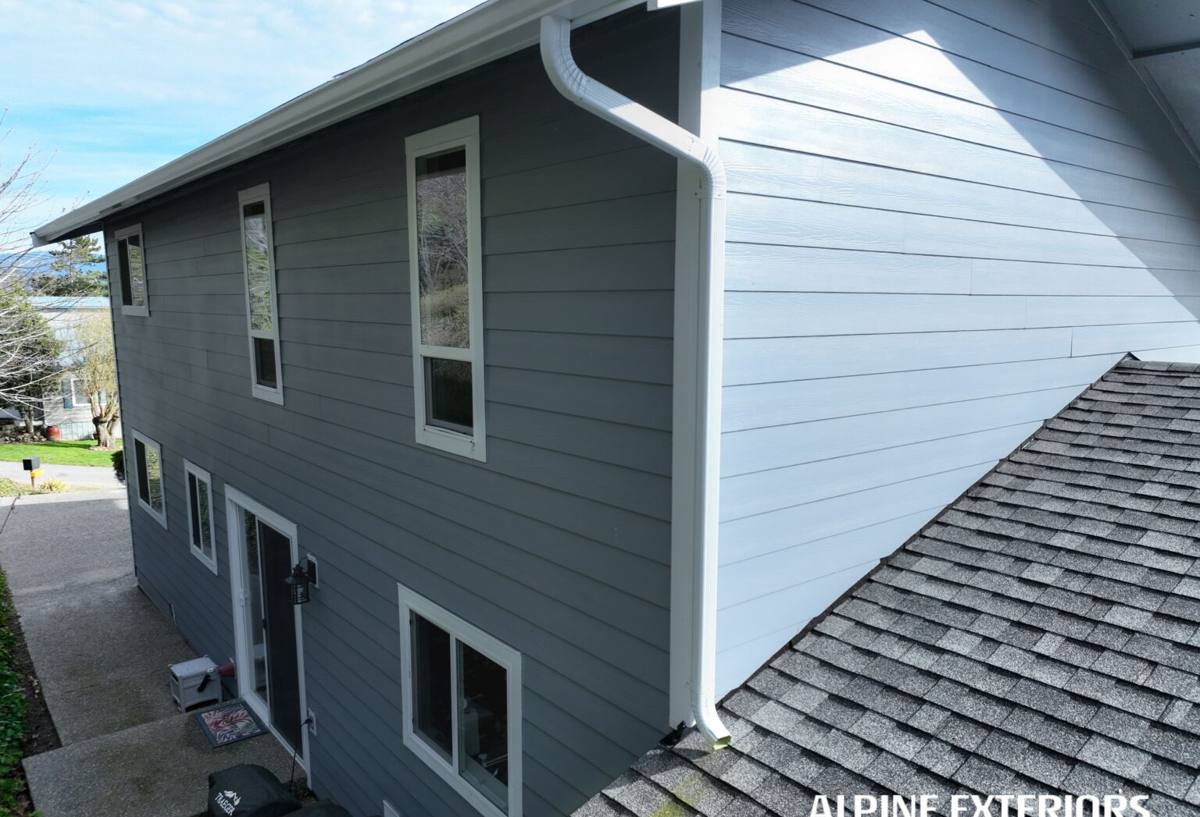
Signs an Everson Roof Needs Replacement, Not Another Repair
We get calls from homeowners who've had the same leak "fixed" two or three times. Repeated patching usually means the underlying issue is systemic — worn-out underlayment, failed flashing details, or a roof that's simply past its service life — not a single bad spot. Some signs that point toward full replacement rather than another repair:
- Granules collecting in gutters and downspouts, especially after wind or heavy rain
- Shingles that are cupping, curling at the edges, or visibly thinning
- Moss that returns within a season or two of cleaning, even after treatment
- Soft or spongy decking felt underfoot during inspection
- Daylight visible through the attic roof deck, or damp insulation below it
- A roof approaching or past 20-25 years old, regardless of visible damage
None of these alone is an emergency. Together, or combined with a roof's age, they're a strong signal that the materials and structure underneath have reached the point where patching stops being cost-effective.
What a Correct New Roof Installation Actually Involves
A new roof is not just new shingles laid over what's there. Done right, it's a full system, and skipping steps is exactly how homes end up with the same leak three years later. Here's what should happen on every job, whether it's a modest ranch or a larger two-story home:
Full Tear-Off, Not Overlay
We remove the existing roofing down to the deck. This lets us inspect the sheathing directly instead of guessing at its condition, and it avoids trapping moisture between two layers — a common cause of hidden rot in older Whatcom County homes.
Deck Inspection and Repair
Any soft, delaminated, or water-damaged plywood or OSB gets replaced before anything new goes down. Installing new roofing over compromised decking just hides a structural problem under a fresh surface.
Ice-and-Water Shield at Vulnerable Points
Eaves, valleys, and roof penetrations get a self-adhering waterproof membrane underneath the field underlayment. These are the spots where wind-driven rain and ice dams put the most pressure on a roof, and it's cheap insurance against the driving rain this area sees.
Synthetic Underlayment Across the Field
A modern synthetic underlayment sheds water better and holds up longer than old-style felt paper, which matters when a roof spends months of the year wet before it fully dries.
Proper Flashing Details
Step flashing at walls, counter-flashing at chimneys, and correctly lapped valley flashing are where most leaks actually originate — not in the field of the shingles themselves. This is the part of a roofing job that separates a careful crew from a fast one.
Ventilation Correction
Intake at the soffits and exhaust at the ridge, balanced to the attic's size. We'll cover why this matters so much in this climate below.
Ventilation and Moisture: The Part Most Roofs Get Wrong
This is worth its own section because it's the single most common defect we find on older roofs in this area, and it's invisible from the ground. An attic needs a continuous path of air moving from the soffits (intake) to the ridge or upper vents (exhaust). When that balance is off — often because insulation blocks the soffit vents, or there simply aren't enough exhaust vents for the attic's size — warm, moist household air gets trapped against the cold underside of the roof deck.
In a drier climate, that might cause minor issues. In Whatcom County, where outdoor humidity is already high for much of the year, poor attic ventilation accelerates deck rot, encourages mold, and can shorten the life of a new roof by years regardless of how good the shingles are. We check and correct ventilation on every replacement — it's not an upsell, it's part of doing the job correctly.
Roofing Material Options for Everson and Lynden Homes
Most homes in this area land on one of a few proven options. The right choice depends on your roof's pitch, your budget, and how much long-term maintenance you're willing to do.
| Material | Typical Lifespan | How It Handles Local Moisture | Maintenance |
|---|---|---|---|
| Architectural asphalt shingles | 25-30 years | Good with proper underlayment and ventilation; algae-resistant granules help slow staining | Occasional moss removal, gutter cleaning |
| Standard 3-tab shingles | 15-20 years | Lower wind and moisture resistance than architectural; shows wear faster in shaded, damp areas | More frequent moss and algae treatment |
| Standing seam metal | 40-50+ years | Sheds water and moss buildup very well; minimal surface for organic growth to take hold | Low; periodic fastener and seam checks |
| Composite/synthetic shake | 30-50 years | Resists moisture absorption better than real wood shake; consistent performance in wet climates | Low to moderate |
We don't install every product on the market, and that's intentional. Some roofing materials look good on a brochure but come with maintenance demands, moisture sensitivities, or installation tolerances that don't hold up well to a wet, shaded Whatcom County lot over decades. We'd rather recommend something that performs quietly for 25+ years than something that needs constant attention to avoid problems.
Our Installation Process, Step by Step
- On-site inspection and estimate — we walk the roof (or use elevated imagery where needed), check the attic, and measure for an accurate material take-off.
- Material selection — we walk you through options based on your roof's pitch, sun/shade exposure, and budget, without pushing a single "one size fits all" product.
- Scheduling around the weather — we plan installation during dry windows whenever possible and stage materials to keep the deck protected if conditions shift mid-job.
- Tear-off and deck inspection — old roofing removed, decking checked and repaired as needed.
- Underlayment and flashing installation — ice-and-water shield, synthetic underlayment, and all flashing details installed before a single shingle goes down.
- Roofing material installation — installed to manufacturer specifications, which is what keeps the warranty valid.
- Ventilation check and correction — intake and exhaust balanced for your attic.
- Cleanup and magnetic sweep — job site and yard cleared of debris and stray nails.
- Final walkthrough — we go over the finished roof with you before calling the job done.
What Drives the Cost of a New Roof
Every roof is priced individually after inspection, but a few factors consistently move the number up or down. Knowing them ahead of time makes the estimate conversation more useful.
| Factor | Why It Matters |
|---|---|
| Roof size and number of stories | More square footage and steeper access both add labor time |
| Roof pitch and complexity | Multiple valleys, dormers, and steep sections take longer to flash correctly |
| Layers to remove | Tearing off two layers of old roofing costs more than one |
| Decking condition | Rot or delamination found during tear-off adds repair cost |
| Material choice | Standard shingles, architectural shingles, and metal each carry different material and labor costs |
| Ventilation upgrades needed | Adding intake or exhaust vents where none existed is a smaller add-on cost with a real payoff |
Broadly, a full asphalt shingle replacement on an average single-family home runs from the high single thousands into the low five figures, with metal roofing costing more upfront but less over the life of the roof. We give firm numbers only after seeing the actual roof — anyone quoting a full price over the phone is guessing.
What to Ask Before You Hire a Roofing Crew
Whatcom County has plenty of roofing crews, and not all of them are set up to do the job right. Before you sign anything, it's worth asking:
- Are you licensed and bonded to do roofing work in Washington State?
- Do you carry active liability insurance, and can you provide proof?
- Will you provide a written estimate that itemizes materials, tear-off, and labor separately?
- Who handles the flashing details — is it a dedicated part of the crew's process, or an afterthought?
- What underlayment and ice-and-water shield are included, not just the shingle brand?
- How is ventilation assessed and addressed as part of the job?
- What's the manufacturer's warranty, and does it require a certified installer to stay valid?
- Do you clean up and magnetically sweep the site for nails when the job's done?
A contractor who answers these clearly and specifically, without vague reassurances, is usually one worth hiring. A contractor who brushes past the details is telling you something too.
Why a Lynden-Based Crew Working Everson Matters
We're based out of Lynden, and Everson is close enough that it's part of our regular service area — not a stretch job we take once and never see again. That matters for a few practical reasons. We already understand how roofs in this part of Whatcom County age, because we've replaced and repaired plenty of them. We know which details — flashing, ventilation, underlayment — matter most given the moisture and moss conditions specific to this area, rather than applying a generic approach built for a drier climate.
It also means if a warranty question or a follow-up concern comes up down the road, you're calling a local crew that's easy to reach, not a company that worked one job in the area and moved on. A new roof is a long-term investment in your home, and it's worth having it installed by people who'll still be around, working these same neighborhoods, years from now.
Ready to Talk About Your Roof?
If your Everson home needs a new roof, or you're not sure yet whether repair or replacement is the right call, we're happy to take a look and give you an honest, no-pressure assessment. Use the form below to request a free estimate, and we'll walk you through exactly what your roof needs and why.