 Lynden Siding
 Siding Repair Built for Nooksack's Weather, Not Just a Quick Patch
Nooksack sits in one of the wetter corners of Whatcom County, where marine air pushes inland along the river valley and settles against the foothills. Homes here deal with long stretches of driving rain, heavy dew, and a moss season that can run from early fall well into spring. Siding that looks fine from the curb can be hiding real trouble underneath, especially around trim, corners, and anywhere water has a habit of lingering. A repair that only addresses what's visible on the surface tends to fail again within a year or two. A repair that accounts for how water actually moves through this climate holds up.
We work on siding repair calls in and around Nooksack regularly, and the patterns are consistent enough that we can usually tell what's driving a problem before we even get a ladder out. That local pattern recognition matters as much as the repair itself.
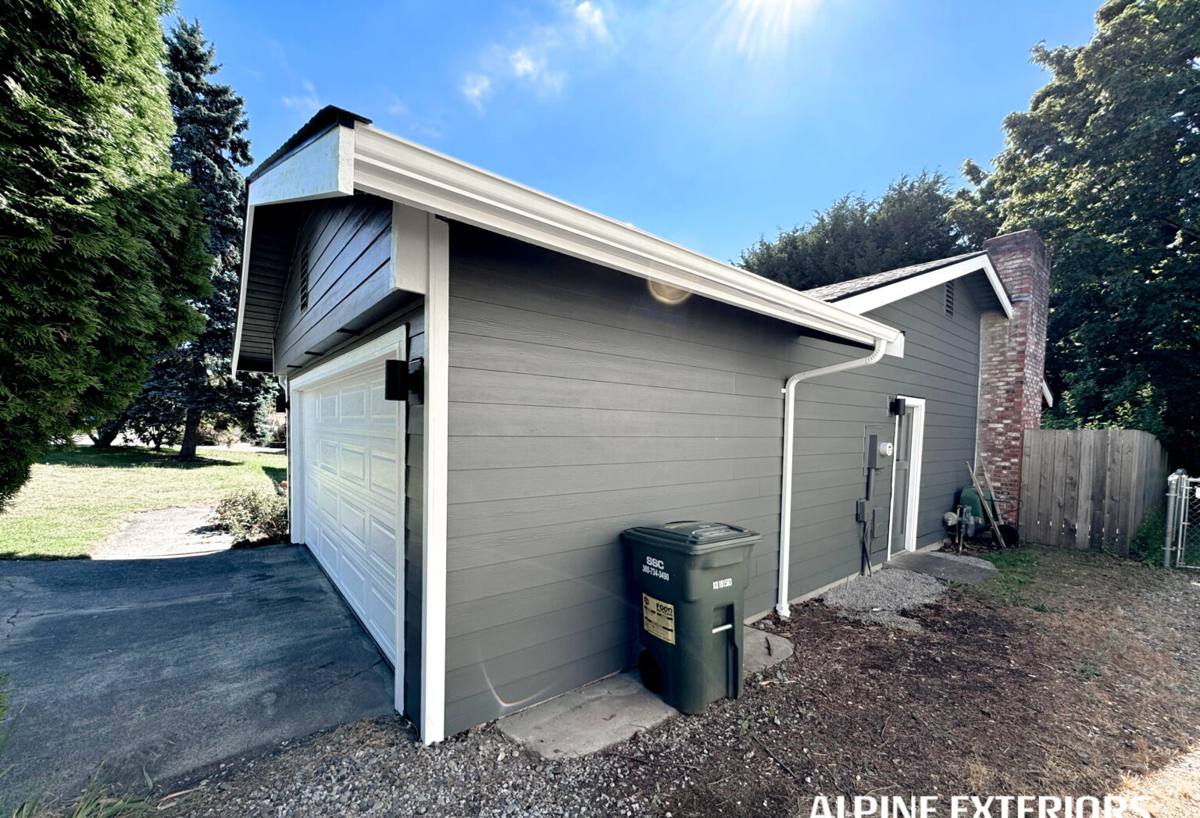
What Nooksack's Climate Actually Does to Siding
Moisture that doesn't dry out quickly
Whatcom County doesn't get the hardest rain in the state, but it gets a lot of it, spread across many months, with short windows of sun in between. Siding assemblies need those dry stretches to shed the moisture they've absorbed. When wet weather stacks up week after week, wood-based products and compromised caulk joints stay damp longer than they're designed to, which accelerates rot, delamination, and paint failure.
Moss and organic growth
The long moss season isn't just cosmetic. Moss and algae hold moisture against the siding surface, feed on the substrate in wood-based products, and can work into seams and butt joints where two pieces of siding meet. Left alone, that trapped moisture is one of the more common reasons we get called out for repairs that turn out to be bigger than the homeowner expected.
Marine air and material fatigue
Air moving in off the Sound carries more humidity and salt-tinged moisture than you'd get further inland or east of the Cascades. Over years, that steady moisture load is harder on caulking, fasteners, and any siding product that relies on paint film or factory coating to keep water out. Coatings that aren't engineered for this kind of exposure chalk, crack, and open up seams faster than the manufacturer's warranty language usually implies.
Signs a Nooksack Home Needs Siding Repair
Most homeowners call us after noticing one obvious problem, but a proper inspection usually turns up two or three related issues nearby. Here's what we look for and what you can check yourself before calling anyone:
- Soft or spongy spots when you press on the siding, especially near the bottom courses and around window trim
- Visible gaps or separation at butt joints, corners, or where siding meets trim boards
- Persistent moss or dark streaking that comes back within a few months of cleaning
- Peeling, bubbling, or chalking paint, particularly on north- and west-facing walls
- Warping, buckling, or panels that look wavy from an angle
- Water stains or discoloration on interior walls near exterior corners
- Fascia, trim, or soffit damage near a section of siding that's also failing
- Fastener heads popping through the surface or rust streaks running down from nail points
Any one of these can be a small fix. Several of them together, especially soft spots plus interior staining, usually mean water has been getting behind the siding for a while and the repair needs to address the water barrier, not just the visible panel.
Common Repair Scenarios We See in This Area
| Issue | Typical Cause in Nooksack's Climate | What the Repair Should Address |
|---|---|---|
| Rotted bottom courses | Splashback from grade, gutter overflow, or standing moisture combined with long wet seasons | Remove and replace affected boards, correct drainage/grading nearby, restore proper flashing |
| Failed caulk joints and gaps | UV and moisture cycling breaking down sealant faster than expected | Remove old caulk fully, reseal with a product rated for exterior exposure, check for movement causing the gap |
| Moss-driven panel damage | Shaded, north-facing walls staying damp for weeks at a time | Clean and treat surface, repair or replace affected material, address the moisture source rather than just cleaning |
| Warped or buckled panels | Moisture absorption in wood-based or improperly installed products | Replace affected sections, verify proper fastening and clearance so panels can handle seasonal movement |
| Trim and corner separation | Wood movement and water intrusion at joints | Rebuild flashing details, replace damaged trim, re-fasten to spec |
What a Correct Siding Repair Actually Involves
A siding repair is only as good as what happens underneath it. Swapping out a damaged board without checking the house wrap, flashing, and fastening behind it is how the same spot ends up failing again in a couple of years. Our approach on repair calls includes:
Diagnosing the water path, not just the damage
Before replacing anything, we trace where water is actually getting in. Sometimes the visible damage is several feet from the actual entry point, especially around window and door flashing.
Checking the weather-resistive barrier
If house wrap or building paper behind the damaged section is torn, sagging, or missing, replacing the siding without fixing that barrier just resets the clock on the same failure.
Matching material and finish honestly
Where existing siding is still sound, we match the repair as closely as the original product allows. Where the existing material is the reason for repeat failures, we'll say so plainly and lay out what replacing that section with a more durable product would involve, rather than patching something that's going to keep failing.
Correct fastening and clearance
A large share of the repair calls we take on trace back to fasteners driven too tight, too high, or into the wrong layer, which restricts the siding's ability to handle normal expansion and contraction. We fasten to manufacturer spec, not to whatever's fastest.
Repair or Replace? How We Help You Decide
Not every problem area needs a full re-side, and we don't push replacement when a repair will genuinely hold. The decision usually comes down to how much of the wall is affected and what's driving the damage.
| Factor | Favors Repair | Favors Replacement |
|---|---|---|
| Extent of damage | Isolated to one or two sections | Spread across multiple walls or elevations |
| Underlying material | Sound material with a localized failure point | Widespread rot, delamination, or a product with a history of repeat failure |
| Age of existing siding | Newer install, otherwise performing well | Near or past its expected service life |
| Water barrier condition | Wrap and flashing intact behind the damage | Wrap failing broadly, not just at the repair site |
| Budget timing | Targeted fix now, plan replacement later | Repair costs approaching a meaningful share of replacement cost |
Why the Original Siding Material Matters for the Repair
Whatcom County homes carry a mix of siding products, and what's already on the wall shapes what a repair can realistically achieve. Wood, primed spruce, and some engineered wood sidings absorb moisture more readily and can be difficult to patch invisibly once they've swelled or delaminated. Vinyl repairs are limited by discontinued color runs and the material's tendency to crack in cold snaps. These aren't reasons to panic about what's on your house now, but they're part of an honest conversation about whether a repair will actually last through another Nooksack winter or whether it's a stopgap.
This is also why, when a repair area is extensive enough that we're recommending a section be replaced rather than patched, we install James Hardie fiber cement and nothing else. It's non-combustible, holds its ColorPlus factory finish far longer than field-applied paint, and Hardie's HZ5 product line is engineered for exactly the wet, moderate Pacific Northwest climate Nooksack sits in. We're not going to patch a failing wall with a product we wouldn't put on a house ourselves, and we won't tell you a full re-side is necessary when a targeted repair will do the job.
Our Repair Process
- On-site inspection of the damaged area and a check of surrounding sections that share the same exposure
- Straight answer on what's driving the damage, whether it's moisture, installation, material, or normal wear
- Written estimate covering the repair scope, with replacement noted as a separate option if it's the more honest long-term call
- Removal of damaged material and inspection of the barrier and flashing underneath
- Repair or replacement performed to manufacturer fastening and clearance specs
- Final walk-through so you can see exactly what was done and why
Why Hiring a Crew That Already Works in Nooksack Matters
A repair crew that's spent time on homes in this specific area already knows which walls take the brunt of the weather, how moss tends to establish itself on shaded elevations here, and which older siding products in local homes tend to need real replacement versus a simple patch. That familiarity shows up in faster, more accurate diagnosis and fewer surprises once the old siding comes off. It also means we're not learning Whatcom County's climate on your dime.
If you're seeing soft spots, gaps, recurring moss, or paint failure on your Nooksack home, we're happy to take a look and give you a straight assessment of what it needs. Reach out for a free, no-pressure estimate — there's no obligation, and you'll walk away with a clear picture of your options either way.