 Lynden Siding
 Roof Repair for Laurel Homes, Built Around Local Weather
Laurel sits in the kind of Whatcom County climate that's hard on roofs in ways that aren't always obvious from the ground. Salt-tinged air drifting in off the Salish Sea, long stretches of driving rain through fall and winter, and a moss season that can run eight months out of the year all work on a roof at once. A shingle that would last two decades in a drier climate can start failing years early here if it's not maintained or repaired correctly. Roof repair in this area isn't just patching a leak — it's understanding how this specific climate attacks specific roofing materials, and fixing the problem in a way that holds up to the next wet season, not just the next dry spell.
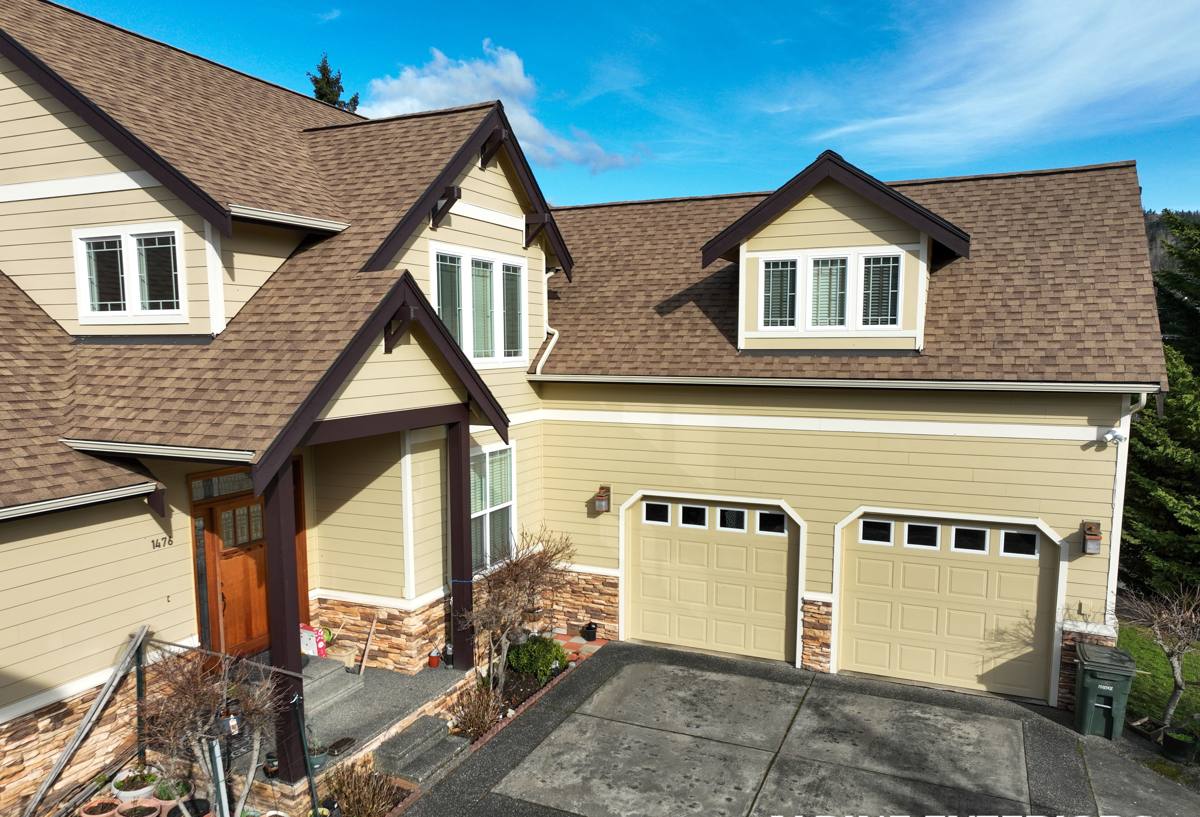
What Laurel's Climate Does to a Roof Over Time
Every roofing material has a failure pattern, and in Laurel that pattern is shaped by three things working together.
Moss and Organic Growth
Shade from mature trees, north-facing slopes, and long damp winters give moss everything it needs to take hold on asphalt shingles, cedar, and even some metal roofing details. Moss doesn't just sit on top of a roof — it holds moisture against the shingle surface, works its root structure under tab edges, and lifts granules loose over time. Once shingles start losing granules, they lose UV protection and start aging faster than the rest of the roof around them.
Driving, Wind-Driven Rain
Storms in this part of Whatcom County often bring rain sideways, not just straight down. That matters for repair work because wind-driven rain finds weaknesses that vertical rain never would — under-lapped flashing, nail heads that have backed out slightly, or a ridge cap that's a quarter-inch short of proper coverage. A roof can look fine from the driveway and still be taking on water at a valley or a chimney flashing during a hard blow.
Salt Air and Corrosion
Being close enough to the water to catch salt-laden air means metal roofing components — flashing, fasteners, gutters, and vent stacks — corrode faster than they would further inland. Once a fastener starts rusting, it loses grip, and a loose fastener is one of the most common hidden causes of a slow roof leak.
Common Roof Repair Issues We See Around Laurel
Most repair calls in this neighborhood fall into a handful of categories:
- Moss-damaged shingles — granule loss, lifted tabs, and soft spots where moss has held moisture against the roof deck
- Flashing failures around chimneys, skylights, and roof-to-wall transitions, often from corrosion or improper original installation
- Valley leaks where two roof planes meet and debris or moss builds up, redirecting water under the shingles instead of down the valley
- Wind-lifted or missing shingles after storm events, especially on exposed or higher-pitched sections
- Gutter and edge damage that lets water back up under the first course of shingles instead of draining away from the fascia
- Nail pops and fastener failure from age, corrosion, or original installation with the wrong nailing pattern
What a Correct Repair Actually Involves
A roof repair that's done right starts before anyone touches a shingle. It starts with figuring out why the damage happened, not just where it is. A leak stain on a ceiling can travel several feet from its actual entry point, so a repair that only addresses the visible spot often misses the real problem and the homeowner is back to square one within a year or two.
A proper repair process includes:
- Tracing the water path from the interior sign of damage back to the actual entry point on the roof
- Checking the roof deck underneath the damaged area for soft spots, rot, or delamination — not just replacing what's visible on the surface
- Matching repair materials to the existing roof as closely as possible, so the patch performs the same as the surrounding roofing, not just looks similar
- Re-flashing, not just re-sealing, any flashing that's failed — caulk and roofing cement are short-term fixes, not repairs
- Clearing moss and debris from the surrounding area so the repair isn't immediately undermined by the same conditions that caused the original damage
- Checking ventilation at the repair site, since poor attic ventilation accelerates moisture damage from the underside of the deck
Repair or Replace? Reading the Signs
Not every roof problem in Laurel needs a full replacement, but not every problem should be patched either. Here's how we think through that decision with homeowners:
| Condition | Usually a Repair | Usually Points to Replacement |
|---|---|---|
| Damage location | Isolated to one section — a valley, a flashing point, a small wind-damaged area | Spread across multiple slopes or the whole roof |
| Shingle condition nearby | Surrounding shingles are still flat, granulated, and flexible | Surrounding shingles are brittle, curling, or heavily granule-worn |
| Roof age | Well within the material's expected service life | At or past the typical lifespan for that roofing type |
| Deck condition | Solid, dry decking under the damaged area | Soft, rotted, or delaminated decking found during inspection |
| Repair history | First or second repair in that area | Same spot has needed repair more than twice |
When a roof is borderline, we'll say so plainly. A well-done repair on a roof with years of life left is a good use of money. A repair on a roof that's already failing broadly usually just delays a replacement while costing money that doesn't carry forward.
Materials and Methods We Use
Repair materials matter as much as workmanship. Using the wrong flashing metal, an incompatible sealant, or shingles that don't match the existing roof's granule and profile can create a repair that fails faster than the original problem did.
| Component | Our Standard Approach | Why It Matters in This Climate |
|---|---|---|
| Flashing | Corrosion-resistant metal, properly stepped and integrated with underlayment | Salt air and constant moisture accelerate corrosion on lower-grade or improperly lapped flashing |
| Underlayment | Synthetic or self-adhering membrane at vulnerable points | Wind-driven rain needs a secondary barrier, not just surface shingles |
| Shingles | Matched as closely as possible to existing product line and color | Mismatched patches age at different rates and stand out over time |
| Fasteners | Corrosion-resistant, correct length and placement per manufacturer specs | Under-driven or corroded nails are one of the most common causes of repeat leaks |
Why a Crew That Already Works Laurel Matters
Roofing generalists can fix a leak. What's harder to fake is knowing, before the ladder even goes up, which parts of a Laurel roof are likely to be the problem — because we've already seen it on the roof three streets over. A crew that regularly works this part of Whatcom County knows which roof orientations hold moss longest, which flashing details tend to have been under-built on homes from a certain era, and how fast a small leak can turn into deck damage during a wet Lynden winter if it sits unaddressed.
That local pattern recognition shortens the diagnostic part of a repair and reduces the chance of guessing wrong on the first visit. It also means we're not experimenting with materials or methods that sound fine on paper but don't hold up to this specific mix of rain, wind, and moss.
What to Expect From Our Process
We keep the repair process straightforward: an honest on-roof inspection, a clear explanation of what's actually wrong and why, a written scope before any work starts, and a repair that's built to hold — not just patched to get us off the roof. If a repair isn't the right call, we'll tell you that too, along with why.
Between-Repair Maintenance That Actually Helps
A repair lasts longer when the roof around it isn't fighting the same conditions that caused the original damage. A few habits make a real difference in this climate:
- Keep gutters and valleys clear of needles and debris, especially heading into fall rains
- Have moss treated or removed before it spreads across a full slope, not after
- Trim back overhanging branches that keep sections of the roof shaded and damp
- Have flashing points checked after any major windstorm, even if there's no visible leak yet
- Address small leaks quickly — deck damage from a slow, ignored leak is far more expensive than the original repair would have been
Get a Straightforward Estimate
If you're dealing with a leak, storm damage, or moss buildup on a roof in Laurel, we're happy to take a look and give you a clear, honest read on what's going on and what it'll take to fix it right. There's no pressure and no obligation — just fill out the form below to schedule a free estimate.