 Lynden Siding
 Why Birch Bay Roofs Wear on Their Own Schedule
Birch Bay sits close enough to the water that homes there deal with a different set of stresses than a roof a few miles inland in Lynden. Salt-laden air corrodes exposed metal faster, driving rain off the strait finds its way under loose or aging flashing, and the long, damp moss season here does more than make a roof look neglected — it holds moisture against the shingle mat and shortens the life of the roof underneath it. None of this means Birch Bay roofs are doomed to fail early. It means they need to be built and maintained with those specific conditions in mind, not treated the same as a roof in a drier, more sheltered part of Whatcom County.
A roof replacement done right in this area accounts for wind-driven moisture, salt exposure on fasteners and flashing, and a growing season for moss and algae that runs longer than most manufacturers assume when they write their installation guides. That's the lens we bring to every Birch Bay roof.
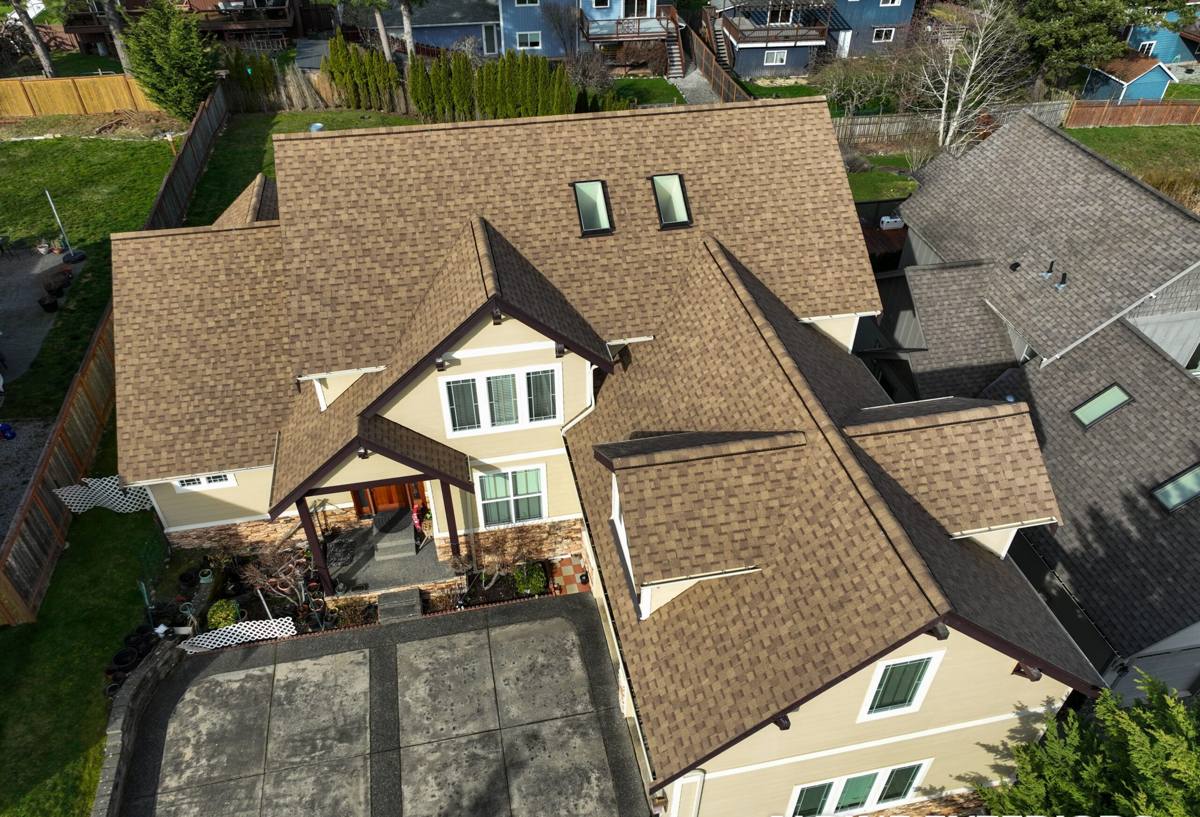
Signs a Birch Bay Roof Is Actually Due for Replacement
Not every roof with some moss or a few curling shingles needs a full tear-off. But there's a point where patching stops making sense and a full replacement becomes the honest recommendation. Here's what we look for:
- Granule loss heavy enough that you can see bare, shiny patches on multiple shingles, not just one or two
- Shingles that are cupping, curling, or cracking across large sections of the roof rather than an isolated spot
- Soft or spongy decking felt underfoot during inspection, which usually means moisture has already gotten past the shingle layer
- Persistent moss growth that returns within a season or two of cleaning, especially on north-facing slopes that stay shaded and damp
- Staining or daylight visible in the attic, particularly near valleys, chimneys, or vent penetrations
- A roof approaching or past the end of its material's realistic service life, especially if it was installed with minimal ventilation
- Repeated leak repairs in different spots each year rather than one recurring, fixable problem area
If a roof shows two or three of these at once, replacement is usually the more cost-effective path than continuing to chase individual repairs.
What a Correct Roof Replacement Actually Involves
Full Tear-Off, Not a Layover
We remove the existing roofing down to the deck rather than installing new shingles over old ones. A layover traps moisture between layers, hides deck damage, and works against the drainage the new roofing is designed to provide. On a coastal property already fighting extra moisture, that trapped layer is the last thing you want.
Deck Inspection and Repair
Once the old roofing is off, we inspect the sheathing for soft spots, delamination, or rot — issues that are invisible from above but common on older roofs that have been holding moisture longer than they should have. Any compromised decking gets replaced before anything new goes down. Skipping this step is one of the most common shortcuts in the trade, and it's the one most likely to cause a callback within a year or two.
Underlayment Built for Wind-Driven Rain
Standard felt underlayment can be adequate on a sheltered inland roof. On a property exposed to wind off the water, we favor synthetic or self-adhered underlayment at eaves, valleys, and other vulnerable areas, since wind-driven rain doesn't always run downhill the way gravity assumes it will.
Flashing That Won't Corrode Prematurely
Flashing around chimneys, vents, and roof-to-wall transitions takes the brunt of salt air exposure. We use flashing materials and fastener types chosen for that exposure rather than whatever is cheapest to install, since a rusted-through flashing detail is one of the most common sources of a "mystery leak" years down the line.
Choosing Roofing Materials for a Coastal Whatcom County Home
There isn't one universally correct roofing material — the right choice depends on the home, the budget, and how much long-term maintenance an owner wants to take on. Here's how the common options compare for a property in a moss-prone, salt-air environment like Birch Bay:
| Material | Typical Lifespan | Coastal / Moss Considerations | Relative Cost |
|---|---|---|---|
| Architectural asphalt shingle | 25–30 years | Algae-resistant granule options help significantly; needs good ventilation to hit full lifespan | $ |
| Standing seam metal | 40–50+ years | Sheds moss and moisture well; fastener and coating quality matter more near salt air | $$$ |
| Synthetic / composite shingle | 30–40 years | Resists moisture absorption better than wood-based products; less common locally, so verify local warranty support | $$ |
| Cedar shake | 20–30 years with upkeep | Attractive but the highest maintenance burden in a damp, moss-heavy climate; needs regular treatment | $$ |
For most Birch Bay homes, a quality architectural asphalt shingle with algae-resistant granules and proper attic ventilation offers the best balance of cost and performance. Metal earns its higher upfront cost on homes where the owner wants to minimize moss and maintenance calls for decades. We'll walk through the honest trade-offs for your specific roof rather than steering you toward whatever is easiest for us to install.
Ventilation: The Part of the Job That Gets Skipped Too Often
A roof replacement that doesn't address attic ventilation is an incomplete roof replacement, full stop. Poor airflow traps heat and moisture under the deck, which accelerates shingle aging from underneath — the exact opposite of what a new roof is supposed to buy you. In a climate with this much ambient moisture, an unbalanced intake-to-exhaust ratio can quietly undo years of the new roof's expected lifespan.
As part of every replacement, we evaluate soffit intake and ridge or roof-line exhaust together, not just the shingle count. If the existing ventilation is undersized or blocked, we address it as part of the project rather than leaving it as a known problem for the next contractor to find.
How Our Roof Replacement Process Works
- On-site inspection of the current roof, decking, and attic ventilation, with photos and a plain-English explanation of what we find
- A written estimate that separates material cost, labor, and any deck repair contingencies, so there are no surprise line items mid-project
- Material selection based on your budget and how much long-term maintenance you want to take on
- Scheduling that accounts for the local rain pattern, since a roof torn off without a tight weather window is a liability we won't take on
- Full tear-off, deck inspection and repair, underlayment, flashing, and shingle or panel installation
- Final walk-through covering ventilation, cleanup, and warranty paperwork before we consider the job finished
Why Hiring a Crew That Already Works in Birch Bay Matters
Roofing crews that only occasionally work near the water sometimes underestimate how much salt air and driving rain change the math on fastener selection, flashing details, and underlayment placement. A crew that regularly works Birch Bay and the surrounding Whatcom County coastline isn't guessing at those adjustments — it's routine. That familiarity also shows up in smaller ways: knowing which valleys and slopes tend to hold moss longest, recognizing early moisture damage before it becomes a structural repair, and scheduling around the weather patterns that actually affect this stretch of coastline rather than a generic regional forecast.
Local presence also means accountability. If a flashing detail needs a follow-up adjustment after the first real storm, a Lynden-based crew is a short drive away, not a company that did one job in the area and moved on.
Keeping a New Roof Performing Through Moss Season
A properly installed roof with the right materials and ventilation will handle Birch Bay's moss season far better than an older or poorly ventilated one, but a small amount of ongoing care still pays off. Keeping gutters and valleys clear of debris, trimming back overhanging branches that keep sections of roof shaded and damp, and having moss growth addressed promptly rather than left to spread all extend the practical life of a new roof. We're happy to walk any homeowner through a simple, realistic maintenance routine at the end of a project — not a sales pitch for annual service contracts, just what actually matters.
Get a Straight Answer on Your Roof
If you're weighing a repair against a full replacement, or just want an honest read on how much life is left in a Birch Bay roof, we're glad to take a look. Use the form below to request a free, no-pressure estimate — we'll tell you what we actually see, not what's easiest to sell.