 Lynden Siding
 Ferndale's Climate Puts Real Stress on Exterior Siding
Ferndale sits close enough to Bellingham Bay and the Strait of Georgia that salt-laden air is a daily fact of life, not an occasional nuisance. Add Whatcom County's long wet season — months of driving rain off the water, overcast skies, and short winter daylight that keeps siding damp for days at a stretch — and you get a set of conditions that punish the wrong exterior products. Homes tucked under tree cover or facing north also deal with a long moss season, where organic growth clings to siding for most of the year rather than a few weeks.
None of this is exotic weather. It's the normal rhythm of living near the water in northwest Washington. But it means siding installed in Ferndale has to handle sustained moisture exposure, salt exposure on wind-facing walls, and near-constant humidity that keeps moss, algae, and mildew viable almost year-round. A siding job that would hold up fine in a drier inland climate can fail early here if the product or the installation cuts corners.
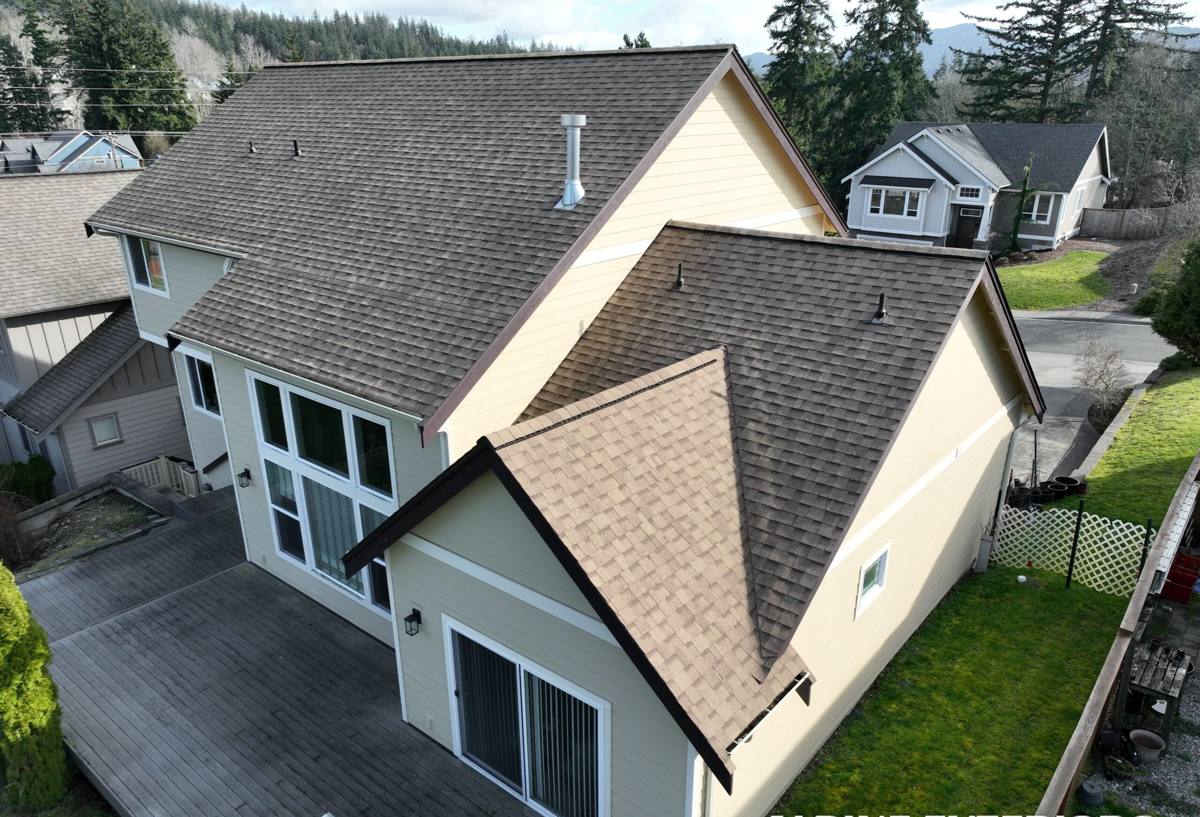
What Ferndale Homes Actually Need From Their Siding
Moisture Management First
The single biggest factor in siding longevity on this side of the county isn't the color or the profile — it's how the wall assembly handles water. Correct water-resistive barrier work, properly lapped house wrap, sealed penetrations, and a rainscreen or drainage gap behind the siding matter more here than in drier climates because the siding will be wet, or at least damp, far more often than it's bone dry.
Salt and Corrosion Resistance
Homes closer to the water or exposed to prevailing marine winds see salt deposit on exterior surfaces over time. Salt accelerates corrosion of fasteners and trim hardware, and it can degrade certain paint films and caulks faster than inland exposure would. Material choice and fastener choice both need to account for this, not just the visible siding panel.
Moss, Algae, and Mildew Resistance
A long moss season means siding on shaded elevations, under overhangs, or facing north needs a surface that resists organic growth and a finish that doesn't trap moisture against the substrate. Once moss establishes itself on a wall, it holds water against the siding continuously, which is exactly the condition that leads to rot, delamination, or coating failure in lesser products.
Why We Install James Hardie Fiber Cement — and Nothing Else
Lynden Siding Contractors made a deliberate decision years ago to install only James Hardie fiber cement siding. We don't install vinyl, LP SmartSide, Cemplank, Allura, primed spruce, or cedar. That's not a marketing position — it's a standard we hold because of what we've seen these products do, and not do, in Whatcom County's coastal-influenced climate.
Fiber cement is non-combustible, which matters for insurance and for peace of mind, but the bigger reason we standardized on it is moisture behavior. Hardie's HZ5 product line is engineered specifically for wetter, more variable climates like ours, with a formulation and factory finish designed to resist moisture intrusion, freeze-thaw cycling, and the kind of prolonged dampness Ferndale sees most of the year. The ColorPlus factory finish is baked on under controlled conditions, which gives it more consistent adhesion and weathering than field-applied paint, and it holds up better against the UV and moisture combination that breaks down lesser coatings over time.
Wood-based products — cedar and primed spruce among them — depend heavily on maintenance discipline to keep moisture out of the substrate. In a climate where the siding rarely gets a long stretch to fully dry, that maintenance burden is higher and less forgiving. Vinyl is inexpensive and low-maintenance but it can warp, fade, and doesn't offer the same fire performance or resale perception as fiber cement. We've made our peace with the fact that Hardie costs more up front than some alternatives — we think the long-term performance in this specific climate justifies it.
What a Correct Siding Installation Involves
Installing James Hardie siding correctly is not a simple panel-and-nail job, and rushing the underlying details is where most premature failures come from — not the product itself.
- Removal of old siding and inspection of sheathing for hidden rot or moisture damage before anything new goes up
- Repair or replacement of any compromised sheathing, framing, or trim found during tear-off
- Correctly lapped and sealed water-resistive barrier (house wrap) with all penetrations properly flashed
- Rainscreen or drainage gap installation where the wall assembly calls for it, to let incidental moisture drain and dry
- Proper flashing at windows, doors, and roof-to-wall intersections — the most common source of leaks behind siding
- Fastener placement, spacing, and type per James Hardie's published installation instructions
- Correct panel gapping, caulking, and painting of cut edges per manufacturer specification
- Final inspection of trim, corners, and joints for consistent sealing before cleanup
Skipping or rushing any one of these steps can void manufacturer warranty coverage and, more importantly, lets moisture get behind the siding where it does the most damage. This is true anywhere, but it's especially unforgiving in a climate that doesn't give a wall assembly much time to dry out between rain events.
Common Installation Mistakes We See and Correct
| Mistake | Why It Matters in Ferndale's Climate |
|---|---|
| House wrap installed with reverse or missing laps | Wind-driven rain off the water finds the gap and tracks behind the siding |
| No drainage gap behind siding | Trapped moisture has nowhere to go in a climate with few fully dry stretches |
| Fasteners driven flush or overdriven | Compromises the panel's water-shedding lap and accelerates fastener corrosion in salt air |
| Unpainted or unsealed cut edges | Exposed fiber cement edges absorb moisture faster, especially under heavy tree cover or shade |
| Poor flashing at window and door heads | The single most common leak point on any siding job, worse under sustained rain |
How Our Process Works
We start with an on-site walkthrough of the home, looking at sun and shade exposure on each elevation, proximity to trees or standing moisture, and any signs of past water intrusion around trim, windows, and the foundation line. That assessment shapes the plan for water-resistive barrier detailing, whether a rainscreen gap is warranted on certain elevations, and which James Hardie product line and profile fits the home.
From there we handle tear-off, sheathing repair where needed, house wrap and flashing installation, and the Hardie siding installation itself, followed by a final walkthrough with the homeowner. We install to James Hardie's published specifications as a baseline, not a minimum, because that's what keeps the manufacturer warranty intact and keeps the wall assembly performing the way it's designed to for decades, not just years.
Why Hiring a Crew That Already Works Ferndale Matters
A contractor who works Ferndale regularly already understands which elevations on a given lot tend to hold moisture longest, how much moss pressure a shaded north wall is likely to see, and how salt exposure varies depending on how close a property sits to open water versus more sheltered inland pockets of Whatcom County. That local pattern recognition shapes real decisions — where a drainage gap is worth the extra step, which trim details need extra sealing attention, and how a home's specific site conditions should inform the installation plan.
It also means faster, more informed estimates. We're not guessing at regional exposure from a spec sheet — we've seen how siding performs on homes with similar orientation and exposure nearby, and we bring that experience to every Ferndale project rather than treating it as generic siding work.
Maintenance Expectations After Installation
James Hardie siding installed correctly is low-maintenance, not no-maintenance. In a climate with a long moss season, periodic gentle washing of shaded or north-facing elevations helps keep organic growth from establishing, and an annual visual check of caulking and trim joints catches small issues before they become moisture problems. ColorPlus finish is designed to hold its appearance for years without repainting, but any deep scratches or damage exposing raw material should be touched up promptly, especially on elevations that stay damp longer.
What Influences Cost on a Ferndale Siding Project
| Factor | Why It Affects the Job |
|---|---|
| Extent of sheathing repair needed | Hidden moisture damage found during tear-off adds material and labor |
| Home size and number of elevations | More wall area and more corners, trim, and penetrations to detail |
| Product line and profile chosen | HZ5 lap, shingle, and panel options carry different material costs |
| Drainage gap or rainscreen inclusion | Added labor and materials, but often worth it on shaded or exposed elevations |
| Trim and accessory scope | Fascia, soffit, and trim replacement alongside siding adds to overall scope |
Every home is different, and the only way to get an accurate number is a walkthrough of the specific property. We're happy to talk through broad ranges once we've seen the home and its exposure.
If you're planning a siding project in Ferndale, we'd like to take a look at your home and give you a straightforward, no-pressure estimate. There's a form below — reach out and we'll set up a time to come by.