 Lynden Siding
 Siding Repair for Bellingham Homes
Bellingham sits close enough to the water and deep enough into Whatcom County's wet season that its siding takes a different kind of beating than homes twenty miles inland. Salt-tinged air off Bellingham Bay, wind-driven rain that hits walls sideways instead of straight down, and a moss and algae season that can run eight months or longer all work on siding in ways that show up as small problems long before they become big ones. We work on homes throughout the Lynden and Bellingham area, and the repair calls we get from Bellingham addresses tend to have a recognizable pattern tied directly to that exposure.
This page is about siding repair specifically — not full replacement, not a generic list of siding tips, but what actually needs attention when siding on a Bellingham home starts failing, and how a repair should be handled so it lasts instead of becoming a callback in two years.
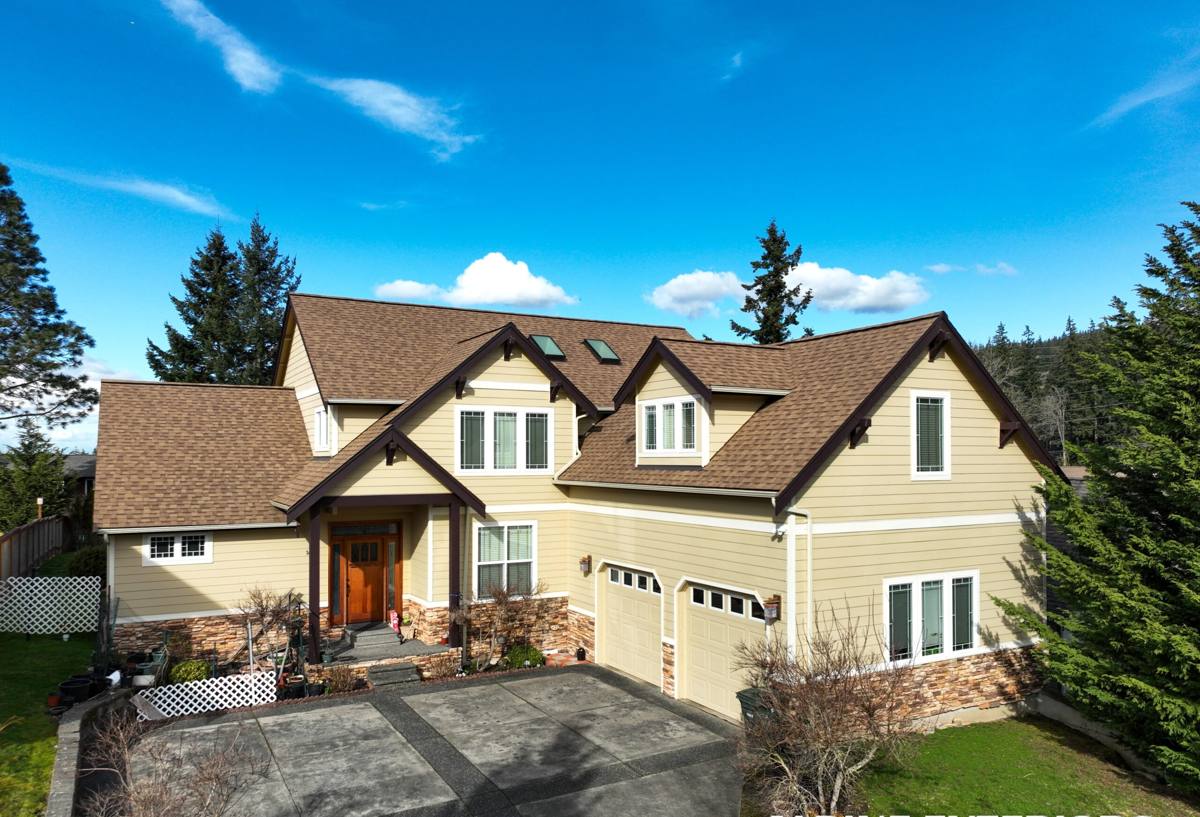
Why Bellingham's Climate Is Hard on Siding
Salt Air and Metal Fasteners
Homes closer to Bellingham Bay deal with a slow, steady corrosive effect on exposed fasteners, flashing, and trim. Nails and staples that were installed correctly on day one can still work loose over years as the metal corrodes and the wood or fiber cement around it swells and shrinks with moisture cycles. Once a fastener loses its grip, that spot becomes an entry point for water — which is where most repair calls start.
Driving Rain
Whatcom County doesn't get the heaviest rainfall totals in the state, but it gets a lot of wind-driven rain, especially in fall and winter storms. Rain that comes in at an angle finds every gap in caulking, every lifted lap joint, and every place where flashing was cut short. Siding that would hold up fine under straight-down rain in a drier climate can fail at the seams here simply because water is being pushed into them instead of running past them.
The Long Moss Season
Shade, moisture, and mild temperatures are exactly what moss and algae need, and Bellingham has all three for most of the year. Moss on a roof gets a lot of attention, but moss and algae growth on siding — especially on north-facing walls and areas shaded by mature trees — holds moisture against the surface far longer than it should sit there. Over time that constant damp contact softens caulk, degrades paint or factory finish, and on wood-based products can lead to rot underneath a surface that still looks intact from a distance.
Common Siding Problems We See in Bellingham
- Soft or spongy boards near the bottom edge of walls, usually from long-term moisture wicking
- Cracked or split boards where fasteners were driven too tight or too close to an edge
- Lap joints that have separated or curled, letting water track behind the siding
- Caulk that has shrunk, cracked, or pulled away at trim, window, and door edges
- Moss and algae staining on shaded or bay-facing walls that traps moisture against the surface
- Fastener pops and nail heads backing out as wood swells and shrinks seasonally
- Impact damage from storms, falling branches, or yard equipment
- Warping or bowing on older wood or engineered wood siding that has taken on repeated moisture
Most of these start small. A hairline gap at a joint doesn't look urgent, but given a full Bellingham winter of driving rain finding that gap over and over, it can turn into hidden rot behind the wall before anyone notices from the outside.
Repair or Replace? How We Actually Decide
Not every damaged section needs to become a full re-side. A lot of Bellingham homes we look at need targeted repair to a handful of areas, not a whole-house project. The decision comes down to how far the damage has spread and what's underneath it.
| Factor | Usually points to repair | Usually points to replacement |
|---|---|---|
| Extent of damage | Isolated boards or a single wall section | Damage spread across multiple elevations |
| Sheathing condition | Solid, dry sheathing behind the damaged area | Soft or rotted sheathing found during inspection |
| Siding age and material | Newer siding, or a material still performing well overall | Older wood-based or engineered siding nearing end of service life |
| Cause of damage | One-time event (impact, isolated fastener failure) | Ongoing moisture pattern affecting the whole assembly |
| Color/profile match | Matching material is available or the area is less visible | No reasonable match exists and mismatch would be obvious |
We'll tell you honestly which category your home falls into. If a repair will genuinely hold up, we're not going to talk you into a full re-side. If the damage points to a bigger moisture problem, we'll tell you that too, rather than patch over something that's going to come back.
What a Correct Siding Repair Actually Involves
A siding repair that's done right is not just pulling off a bad board and nailing up a new one. It's a small version of the same discipline that goes into a full installation.
1. Find the Water, Not Just the Damage
Damaged siding is a symptom. Before we touch a board, we're checking where the water is actually getting in — a failed caulk joint, missing flashing, a butt joint with no gap for drainage, or grade and gutter issues pushing splash-back onto the wall. Replacing the board without fixing the water path just buys a few more years before the same spot fails again.
2. Check What's Behind It
Once a section is opened up, we look at the sheathing, house wrap, and framing behind it. On homes near Bellingham Bay with a long history of salt air and moisture exposure, it's not unusual to find that damage has traveled further behind the wall than it appeared from outside. That gets addressed before anything new goes back on.
3. Match the Details, Not Just the Color
Lap exposure, joint spacing, and trim profile all have to line up with the surrounding siding, or a repair sticks out for the life of the house. This matters more on visible elevations and less on a side wall, but we treat it the same way regardless.
4. Flash and Seal Properly
Every repair is an opportunity to fix flashing and sealant details that may have been done poorly the first time. Correct flashing at joints, trim, and penetrations does more to prevent the next repair call than the siding material itself does.
Our Process for a Bellingham Repair Call
- On-site assessment — we look at the damaged area and the surrounding wall assembly, not just the spot you noticed
- Moisture check — we check for soft sheathing, staining, or hidden rot before quoting the scope
- Honest scope and quote — repair, partial section replacement, or a recommendation to consider full replacement, with our reasoning explained
- Source-of-water fix — flashing, caulking, or drainage corrections addressed as part of the repair, not skipped
- Repair execution — matched materials installed to spec, fastened and sealed correctly for this climate
- Cleanup and walkthrough — site cleaned and the repair reviewed with you before we consider the job done
Why the Repair Material Matters
We install James Hardie fiber cement siding exclusively — we don't install vinyl, LP SmartSide, Cemplank, Allura, primed spruce, or cedar. That standard applies to repair work too. When a repair section needs new material and matching Hardie board or plank is available, that's what goes back on. We're not going to patch a wall with a mismatched vinyl panel or an engineered wood product just because it's a faster fix, because those materials bring the same long-term trade-offs to a repair that they do to a full installation: higher moisture sensitivity in engineered wood products, and expansion, fading, and impact vulnerability in vinyl.
On homes where the existing siding is not Hardie and a small full match isn't realistic, we'll say so plainly and lay out the real options — a best-effort patch, a section replacement using Hardie on that wall, or a broader conversation about full replacement down the road. What we won't do is oversell a repair as a permanent fix when the underlying material is already past the point of holding up to another decade of Bellingham winters.
Local Considerations Specific to Bellingham
Two things come up repeatedly on Bellingham repair calls that are worth knowing about even if you're not ready to schedule anything yet. First, homes with more direct bay exposure tend to show fastener and trim corrosion earlier than homes further inland in Whatcom County — it's worth having those areas checked even if the siding field itself looks fine. Second, mature tree cover, common throughout the area, keeps north- and west-facing walls damp longer after storms, which accelerates moss growth and softens caulk faster than it would on a more exposed wall. Neither of these is a reason to worry, but they are reasons to have damage looked at sooner rather than later, since the gap between "small repair" and "hidden rot behind the wall" tends to close faster here than in drier parts of the state.
Keeping Repairs from Piling Up
A few habits go a long way toward keeping siding on a Bellingham home from needing repeated repair visits:
- Rinse moss and algae off shaded or bay-facing walls before it builds a thick mat
- Keep gutters clear so water isn't overflowing and splashing back onto the siding
- Trim back branches and shrubs that keep a wall section damp and shaded
- Re-caulk trim and joint gaps at the first sign of cracking, not after they've opened up
- Walk the exterior once or twice a year and note anything that looks different from the last check
- Address small impact damage promptly rather than letting water find its way into an open crack over a winter
None of this replaces a professional inspection when something looks off, but it does reduce how often that inspection turns into a repair call in the first place.
Get an Honest Look at Your Siding
If you're seeing soft spots, staining, cracked caulk, or damage anywhere on your Bellingham home's siding, it's worth having it looked at before another wet season works on it further. We'll give you a straightforward read on whether it's a repair, a partial replacement, or something bigger — and why — with no pressure either way. Request a free estimate using the form below and we'll take it from there.