 Lynden Siding
 One Climate, Two Sides of a Line
Aldergrove, BC sits just across the boundary from Lynden, Washington, and the two communities share the same weather system almost hour for hour. The same Pacific frontal storms that soak Whatcom County roll north into the Fraser Valley the same afternoon. The same low winter sun angle keeps north-facing walls shaded and damp for months. The same salt-tinged marine air drifts in off the Strait of Georgia and Puget Sound and settles on everything with a painted or wood surface. If you own a home on either side of that line, your siding is fighting the identical battle: driving rain, prolonged moss season, and slow, steady moisture intrusion that most homeowners don't notice until it shows up as a soft spot under a window or a stain that won't wash off.
This page is about one job, done right, in this one area: full siding replacement, not patchwork repair, for houses in and around Aldergrove, BC and Lynden. What the climate actually does to a wall system, what a correct replacement looks like from the sheathing out, and why it matters that the crew doing the work already knows this stretch of the border.
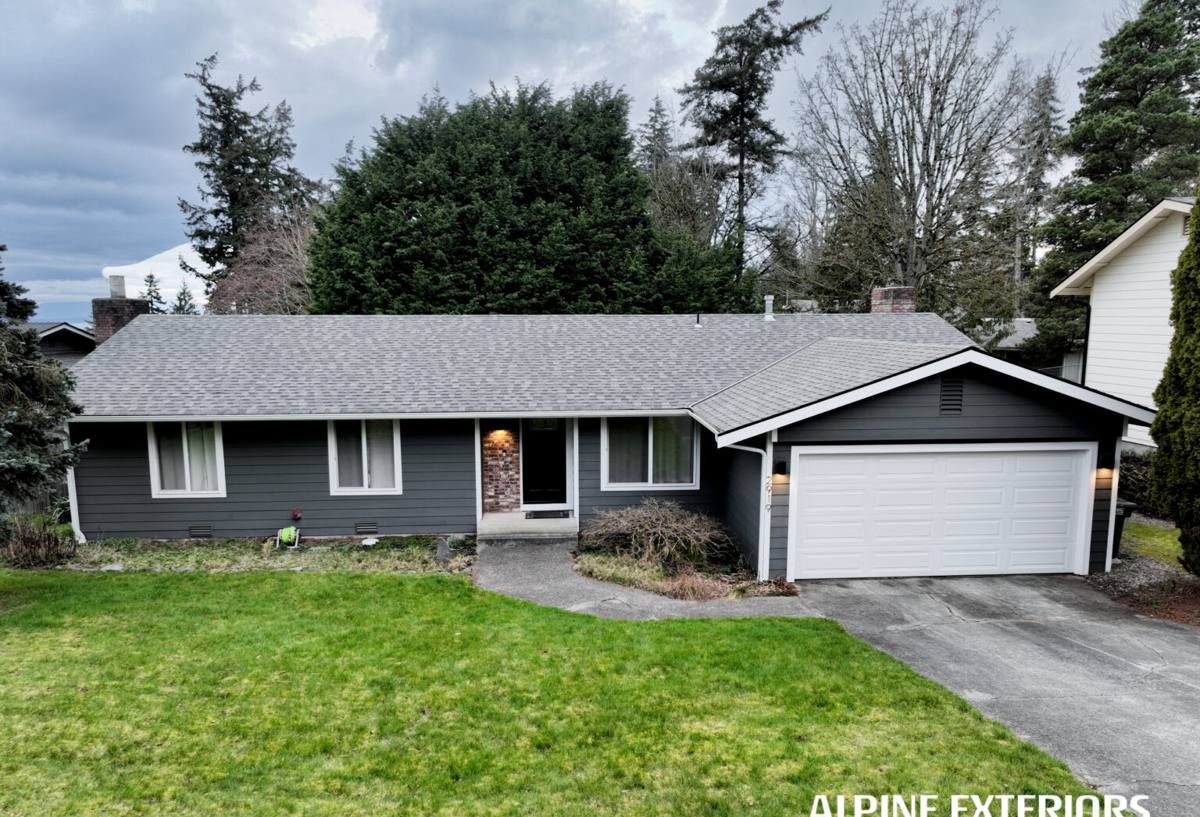
What This Climate Does to Siding Over Time
Moss and Shade
Between the tree cover common on rural and semi-rural lots around Aldergrove, BC and Lynden and the long stretch of overcast, low-angle-sun months, north and east walls often stay damp for weeks at a time. Moss and algae don't just look bad — they hold moisture against the siding surface far longer than open air would, which accelerates rot in wood-based products and breaks down paint film on anything that isn't factory-finished to resist it.
Salt Air and Coastal Exposure
Neither community sits directly on saltwater, but both are close enough to Puget Sound and the Strait of Georgia that airborne salt reaches painted surfaces, fasteners, and trim over time. Salt-laden moisture speeds up corrosion on exposed metal fasteners and degrades lower-quality paint and coatings faster than a purely inland climate would.
Wind-Driven Rain
Winter storms in this area rarely arrive as gentle vertical rain — they come sideways, driven by wind off open farmland and low terrain. That means walls facing the prevailing weather take on far more water than a manufacturer's average rating assumes, and any weak point in the water-shedding system — a bad lap joint, a missing flashing, a caulked seam that should have been left open — becomes a leak path much sooner here than it would in a drier region.
Signs Your Siding Needs Replacing, Not Just Patching
Not every siding problem calls for a full tear-off. But in this climate, a few warning signs mean patching is a temporary fix at best:
- Soft, spongy siding you can press in with a thumb, especially near the bottom courses or under windows
- Persistent black or green staining that returns within weeks of being cleaned
- Paint that's bubbling, peeling, or chalking heavily across multiple walls, not just one weathered spot
- Visible gaps or warping at butt joints and corners, letting daylight or drafts through
- Interior signs — musty smell, peeling interior paint, or damp drywall on an exterior wall
- Siding that's more than 20-25 years old and was never a fiber cement product to begin with
Any one of these on its own might be a repair. Several together, especially on a home that's never had a proper moisture barrier or rainscreen behind the siding, usually means the whole wall system needs to come off and be rebuilt correctly.
What a Correct Siding Replacement Involves
Replacing siding is not a cosmetic swap. In a climate this wet, what's behind the siding matters more than the siding itself. A correct job includes:
Full Tear-Off and Sheathing Inspection
Old siding comes off entirely so the sheathing underneath can be inspected for rot, delamination, or hidden water damage. Any compromised sheathing gets replaced before anything new goes up — covering damaged sheathing with new siding just seals the problem in.
Weather-Resistant Barrier and Rainscreen
A properly lapped weather-resistant barrier goes over the sheathing, and in a climate like this one we install a rainscreen gap behind the siding whenever the wall assembly allows it. That gap lets any moisture that does get past the cladding drain and dry out instead of sitting against the sheathing — which matters enormously given how many weeks a year these walls stay damp.
Flashing at Every Penetration
Windows, doors, hose bibs, light fixtures, and vents all need proper flashing integrated with the barrier, not just caulk over the top. Driving rain finds every gap eventually; flashing is what keeps water moving down and out instead of in.
Installation to Manufacturer Spec
Correct fastener placement, proper clearance from grade and roof lines, and the right gap at butt joints all affect how the siding performs over decades, not just how it looks the day it's installed. Rushed installation is the single biggest reason siding fails early, regardless of the product used.
Our Process for Aldergrove, BC and Lynden Homeowners
- Assessment: We walk the exterior, check the worst-exposed walls first, and look for signs of trapped moisture behind the current siding.
- Scope and product selection: We recommend the James Hardie product line suited to your home's exposure and confirm color and profile.
- Written estimate: A clear, itemized quote covering tear-off, sheathing repair allowances, barrier and rainscreen work, and installation — no vague lump sums.
- Tear-off and inspection: Old siding comes off, sheathing gets inspected and repaired as needed, and we show you what we find before covering it back up.
- Installation: Barrier, flashing, rainscreen, and Hardie siding installed to spec, with attention to the walls that take the worst weather.
- Final walkthrough: We go over the finished work together before calling the job done.
Because Aldergrove, BC and Lynden sit right on either side of the international boundary, we're upfront early in the estimate process about anything specific to your property's location — access, delivery logistics, or permitting — rather than assuming every job is identical.
Why We Only Install James Hardie Fiber Cement
We get asked regularly why we don't offer vinyl, LP SmartSide, or cedar as options. The honest answer is that in a climate that stays wet this long and moss-prone this many months of the year, those products carry real trade-offs we're not willing to install and then warranty:
| Product | How It Handles This Climate | Main Trade-Off |
|---|---|---|
| Vinyl siding | Sheds bulk rain but can warp or buckle with temperature swings and doesn't stop moisture at seams | Not fire-rated; seams and laps can let water behind the panel over time |
| LP SmartSide (engineered wood) | Treated to resist moisture but still wood-based at its core | Cut edges and joints need diligent sealing and upkeep in a wet climate or rot risk rises |
| Cedar / primed spruce | Traditional look but absorbs moisture readily | High maintenance — repainting, caulking, and moss removal on a recurring cycle |
| James Hardie fiber cement | Non-combustible, dimensionally stable, engineered moisture resistance | Higher install skill required; must be installed exactly to spec to perform |
James Hardie's ColorPlus factory finish resists the fading and chalking that plain-primed products struggle with here, and the HZ climate-engineered product lines are built specifically for regions like this one with sustained moisture exposure. It's not the cheapest material on the market, but it's the one we're willing to stand behind with a strong transferable warranty in a climate that doesn't give siding many breaks.
Why a Crew That Already Works This Border Area Matters
Siding crews unfamiliar with this specific stretch of the border often underestimate two things: how long walls stay wet here compared to drier parts of the Pacific Northwest, and how much moss and shade exposure varies house to house depending on tree cover and orientation. A crew that already works Aldergrove, BC and Lynden regularly knows which walls on a typical lot take the worst weather, has already seen what happens when a rainscreen gets skipped in this climate, and isn't guessing at material lead times or local supply. That local pattern-recognition is the difference between a replacement that looks right on day one and one that actually holds up through a decade of Pacific storms.
Cost Factors to Expect
Every home is different, but the line items that move the price on a siding replacement in this area are fairly consistent:
| Factor | Why It Matters Here |
|---|---|
| Sheathing condition | Hidden rot found during tear-off adds repair scope before new siding goes on |
| Wall complexity | Dormers, multiple gables, and cut-ins around windows add labor time |
| Rainscreen inclusion | Adding a drainage gap is worth the added cost in this rainfall pattern |
| Siding profile and trim detail | Lap width, board-and-batten accents, and trim style all affect material and labor |
| Access and lot conditions | Tree cover, fencing, and driveway access can affect setup time |
As a broad reference point, full James Hardie siding replacement in this region typically runs somewhere in the low-to-high double-digit dollars per square foot installed, depending on the factors above — we'll give you an exact number once we've actually looked at your home.
If your siding is showing its age or you're just not sure whether it's a repair or a replacement, we're happy to come take a look. Fill out the form below for a free, no-pressure estimate — we'll tell you honestly what your home needs.