 Lynden Siding
 Storm Damage Roof Repair in Sumas: What Local Homes Are Up Against
Sumas sits close enough to the water and low enough in the Whatcom County valley that roofs here take a beating most inland homeowners never have to think about. Salt-laden air off the Sound works into fasteners and flashing over time. Driving rain, the kind that comes in sideways during a fall or winter blow, finds every weak seam a roof has. And the long, damp moss season that stretches across much of the year keeps shingles and shakes wetter, longer, than they were ever designed to handle. None of these things alone destroys a roof overnight. Together, over years, they turn small weaknesses into real leaks — and a single storm is usually what exposes the damage that's already been building.
Storm damage roof repair isn't just patching a hole after a windstorm. Done right, it's an honest look at what a storm exposed, what was already failing underneath it, and what actually needs to happen so the same spot doesn't fail again next season.
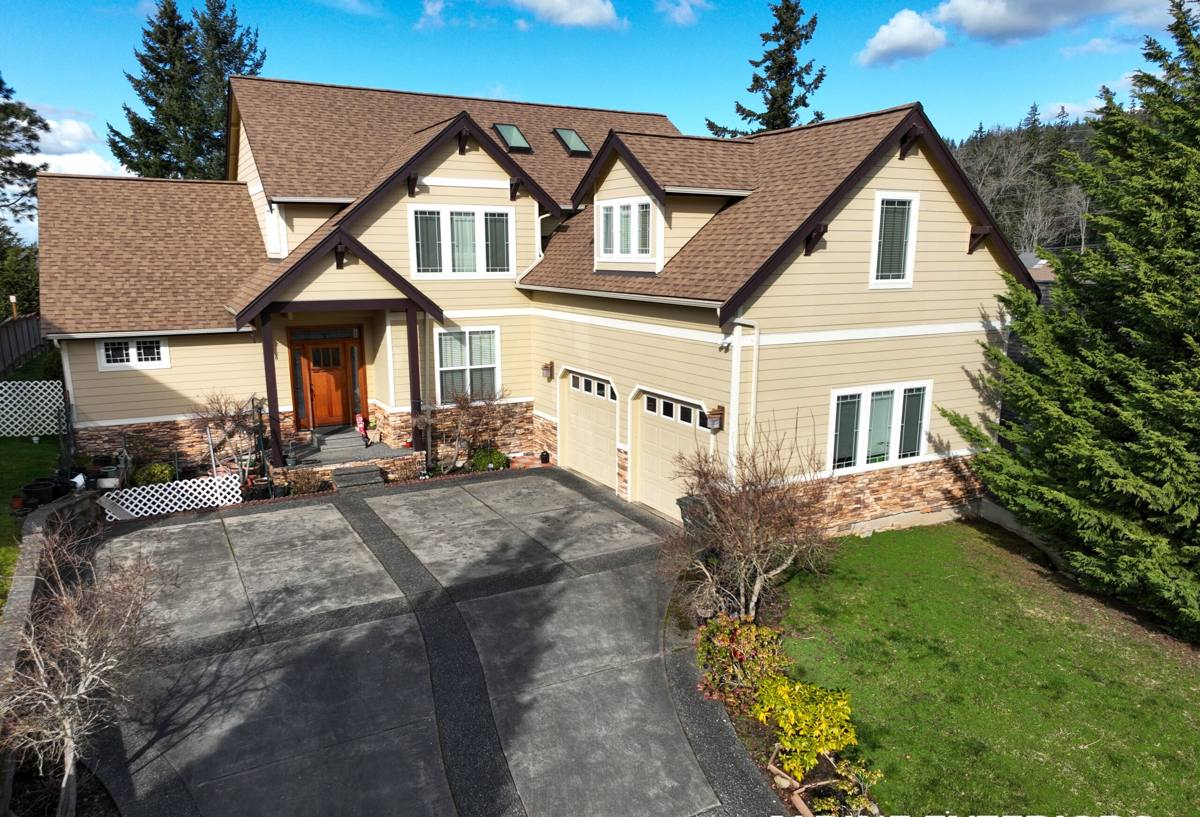
What Counts as Storm Damage on a Whatcom County Roof
Homeowners often picture storm damage as a dramatic event — a tree limb through the roof, a whole section of shingles peeled back overnight. That happens, but most of the storm damage we're called out for in the Sumas area is quieter and easier to miss from the ground.
Wind-Driven Damage
Sustained wind and gusts common to this part of Washington lift shingle tabs, break the sealant bond that keeps shingles flat, and work fasteners loose without necessarily blowing anything off. A shingle that's been lifted and re-settled by wind often looks fine from the driveway but no longer sheds water the way it should.
Impact and Debris Damage
Falling branches, wind-thrown debris, and hail (less common here, but not unheard of) can crack shingles, dent metal flashing, or puncture underlayment. Impact damage is usually localized, which is actually good news — it's often one of the more straightforward repairs when it's caught early.
Moisture Damage From Long Wet Seasons
This is the one that catches people off guard. A storm doesn't have to cause the damage directly — it can simply be the event that finally pushes water through a seam that's been slowly failing all moss season. Moss holds moisture against the roof surface, breaks down granule coating, and works its way under shingle edges. By the time a storm hits, some of that damage has been months in the making.
Why Responding Quickly Matters
A damaged roof doesn't wait for a convenient time to leak. Once wind or debris compromises the surface, every subsequent rain event pushes more water into the roof deck, insulation, and eventually the interior of the home. In a region with as much annual rainfall as Whatcom County, the gap between "roof has a weak spot" and "roof has a real leak" can close fast.
Waiting also makes repairs more expensive, not less. A single damaged shingle is a quick fix. That same shingle left through two or three more storms often means replacing rotted decking underneath it, dealing with insulation damage, or addressing interior drywall and paint. Prompt attention keeps a storm damage repair a roof repair — not a roof-plus-interior repair.
What a Proper Storm Damage Repair Involves
Inspection First, Not a Guess From the Ground
A correct repair starts with someone actually getting on the roof, not estimating damage from the yard with binoculars. Ground-level inspections miss lifted tabs, cracked flashing, and granule loss — all things that are obvious up close and invisible from below. We look at the full roof, not just the area the homeowner points to, because storm damage is rarely confined to one spot.
Temporary Protection
If a storm has left the roof deck exposed — a torn-off section, a puncture, missing shingles — the first priority is keeping water out until permanent repairs can be made. Tarping or temporary sealing isn't the fix itself, but skipping it while waiting on materials or scheduling is how a repairable problem turns into a rot problem.
Matching the Repair to the Damage
Not every storm-damaged roof needs full replacement, and not every roof can be saved with a patch. Part of doing this work honestly is telling a homeowner which situation they're actually in, based on the age and condition of the roof, the extent of the damage, and whether the surrounding material is sound enough to tie a repair into.
Flashing, Underlayment, and the Details That Get Skipped
Most roof leaks after a storm don't come from the field of the roof — they come from flashing around chimneys, vents, skylights, and valleys, or from underlayment that's been compromised. A repair that replaces surface shingles but ignores damaged flashing or underlayment underneath is a repair that will leak again. We check these areas specifically, every time, because they're the parts most homeowners can't evaluate themselves.
Repair or Replace? What Decides It
This is the question every homeowner with storm damage eventually asks, and the honest answer depends on a few concrete factors rather than a blanket rule.
| Factor | Leans Toward Repair | Leans Toward Replacement |
|---|---|---|
| Roof age | Under 12-15 years, materials still supple | Nearing or past expected lifespan |
| Extent of damage | Localized to one area or slope | Spread across multiple sections |
| Deck condition | Solid, dry decking under damaged area | Soft spots, rot, or repeated past leaks |
| Moss/moisture history | Minimal prior moss buildup | Heavy moss history with granule loss |
| Matching materials | Shingles still available/matchable | Discontinued or badly weathered/faded |
A roof that checks most boxes in the middle column is usually a good repair candidate. One that lands mostly in the right-hand column is often better served by replacement — patching an aging, moss-worn roof tends to buy a homeowner a year or two before the next storm exposes the next weak spot, rather than solving the underlying problem.
Our Process, Start to Finish
Homeowners dealing with storm damage are usually stressed and want to know what actually happens once they call. It's straightforward:
- Initial contact and a description of the damage, so we can prioritize urgent cases (active leaks, exposed decking) ahead of cosmetic issues.
- On-site inspection of the full roof, documenting what the storm caused versus pre-existing wear.
- Temporary protection if the roof is currently exposed to weather.
- A written explanation of what we found and a repair (or replacement) recommendation, in plain language — including if we think a repair is genuinely sufficient rather than upselling a full replacement.
- Scheduling and completing the work, with attention to flashing, underlayment, and ventilation, not just the visible surface.
- A final walkthrough so the homeowner sees what was done and why.
Storm Damage and Insurance Claims
Many storm damage repairs in this region involve a homeowner's insurance policy. We're not adjusters and don't represent the insurance company, but we can provide the same kind of documentation an adjuster looks for: photos of the damage, a written description of what happened and what it will take to correct it, and an honest assessment of what is storm-related versus what is ordinary wear. That documentation is often the difference between a smooth claim and a disputed one. Homeowners should always review their own policy for filing deadlines and coverage specifics — those details vary by carrier and policy, and we're not in a position to advise on them.
Why a Crew That Already Works in Sumas Matters
Roofing crews who mainly work drier, milder climates sometimes underestimate how much moss, salt air, and near-constant moisture change the math on a Whatcom County roof. A repair approach that would hold up fine in a low-rainfall region can fail here within a season if it doesn't account for how long this roof surface stays wet and how aggressively moss reestablishes itself.
Working in and around Lynden and Sumas regularly also means knowing what materials and repair methods actually perform in this specific environment over years, not just what looks correct on installation day. It means recognizing the difference between damage this storm caused and damage the last several wet seasons already set in motion — and being straightforward with a homeowner about which is which, rather than treating every call as a full-replacement opportunity.
Checklist: Signs Your Sumas Roof Needs a Storm Damage Inspection
After any significant wind or rain event, it's worth checking for these signs — or having someone check for you, since several of them aren't visible from the ground:
- Shingles that look lifted, curled, or out of alignment compared to the surrounding roof
- Granules collecting in gutters or at downspout outlets after a storm
- Visible cracks, dents, or displaced flashing around chimneys, vents, or skylights
- New or worsening moss growth, especially in shaded or north-facing sections
- Water stains or discoloration on interior ceilings, especially near exterior walls
- Debris on the roof surface that hasn't been cleared, which can trap moisture underneath it
- Sagging or uneven roof lines, which can indicate deck-level moisture damage
- Gutters pulling away from the fascia or showing new dents from wind or debris
If more than one or two of these apply, it's worth having the roof looked at before the next storm rolls through — not after.
If a recent storm has left your Sumas home with roof damage — or you're just not sure whether what you're seeing is worth worrying about — we're happy to take a look. Use the form below to request a free, no-pressure estimate, and we'll tell you honestly what we find.