 Lynden Siding
 Roof Repair Built for Sumas Conditions
Sumas sits out on the edge of Whatcom County, close enough to the water and open farmland that roofs here take a steady beating from moving air, driving rain, and long stretches of overcast, damp weather. None of that damage happens all at once. It shows up as a soft spot near a chimney, a shingle that lifted in a windstorm, or a slow stain spreading across a ceiling months after the leak actually started. Roof repair in this area isn't just patching a hole — it's understanding how water, wind, and organic growth work together over a Whatcom County winter and spring to find the weak point in a roof system and get through it.
We work on homes across Sumas and the surrounding Lynden area regularly, which means we're not guessing at what the local climate does to a roof. We're repairing the same patterns over and over: valleys that trap moisture, moss that holds water against shingles for weeks at a time, and flashing that was installed correctly the day it went on but has since moved, corroded, or opened a hairline gap that's all it takes to let water in.
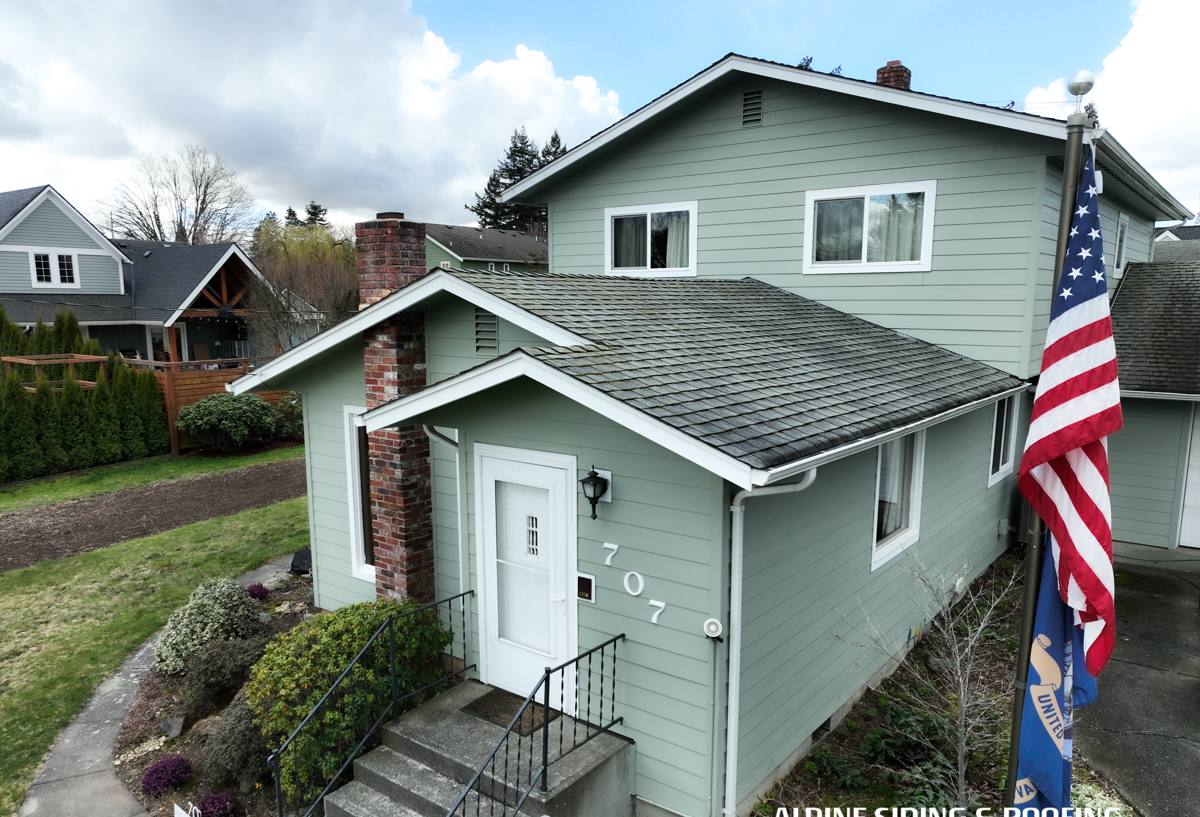
Common Roof Problems We See on Sumas Homes
Moss and Organic Growth
This region's long moss season is one of the biggest slow-motion threats to a roof. Moss doesn't just look bad — it holds moisture against the shingle surface far longer than open air would, which accelerates granule loss and can lift shingle edges as the moss mat grows. On north-facing slopes and anywhere a roof stays shaded most of the day, moss can establish itself within a couple of seasons if it's never removed. Left alone long enough, it works its way under shingle tabs and creates channels for water to travel sideways instead of running off.
Wind-Driven Rain and Flashing Failures
Rain that falls straight down is rarely the problem. Rain pushed sideways by wind is what finds every small gap — around chimneys, skylights, dormers, and roof-to-wall transitions. Flashing is the metal that's supposed to seal those transitions, and it's the single most common source of leaks we diagnose. Sealant dries out, metal shifts slightly with the structure over time, or a step-flashing piece was never properly integrated with the siding above it in the first place.
Cold Snaps and Ice Damming
Whatcom County doesn't see extreme cold often, but when a hard freeze does hit after a wet stretch, poorly ventilated attics can let heat escape through the roof deck, melt snow or frost from underneath, and refreeze at the eaves. That ice dam backs water up under the shingles above it. It's not a constant threat here the way it is further inland, but it's common enough that we check attic ventilation and insulation whenever we're diagnosing a leak near the eaves.
What a Correct Roof Repair Actually Involves
Diagnosis Before Anything Else
A leak almost never shows up directly above where the water is actually entering the roof. Water travels along the underside of the roof deck, follows a rafter or a piece of underlayment, and drips somewhere downstream of the actual failure point. Repairing the visible stain without tracing the water back to its source is the most common reason a "fixed" roof leaks again the following winter. We start every repair by getting on the roof and into the attic when possible, not just patching from the ground based on where the ceiling stain appeared.
Matching Materials and Technique
A repair should blend into the surrounding roof, both in material and in how it's installed. That means using shingles, underlayment, and flashing compatible with what's already there, and installing them with the same layering logic — each course overlapping the one below it, flashing integrated under the siding or roofing above it, never just caulked over the top as a shortcut. Sealant has its place, but it's a supplement to correct layering, not a substitute for it.
Ventilation Checks
Because moisture and heat buildup drive so many of the problems we see, we look at ridge vents, soffit vents, and attic airflow as part of a repair, not as a separate service. A roof can be watertight on the surface and still fail early if trapped moisture is rotting the deck from underneath.
Our Repair Process, Start to Finish
- Inspection: We examine the roof surface, flashing points, attic (when accessible), and gutters to trace the actual path of the water, not just the visible symptom.
- Honest assessment: We tell you what's actually failing, what it will take to fix it correctly, and whether a repair makes sense or a section of the roof has reached the point where patching it further is throwing money at a losing fight.
- Written estimate: You get a clear scope of work and price before anything is touched, with no surprise add-ons once we're on the roof.
- The repair itself: Damaged materials are removed back to solid decking or sound shingle, not just covered over. Flashing, underlayment, and shingles go back in the correct order.
- Cleanup and check: Debris is cleared from the roof and gutters, and we walk you through what was done and what to keep an eye on going forward.
Repair or Replace? How We Help You Decide
Not every roof problem in Sumas needs a full replacement, and not every leak can be permanently solved with a patch. The honest answer depends on the roof's age, how widespread the damage is, and what's happening underneath the surface.
| Factor | Repair Usually Makes Sense | Replacement Is Likely the Better Call |
|---|---|---|
| Roof age | Well within its expected lifespan | At or beyond the material's typical service life |
| Extent of damage | Isolated to one area or feature | Spread across multiple slopes or repeated leak sites |
| Deck condition | Solid, dry decking under the damaged section | Soft, rotted, or repeatedly wet decking |
| Shingle condition overall | Granule loss and wear limited to the damaged spot | Widespread granule loss, curling, or brittleness |
| Repair history | First or second repair on this roof | Same area has already been patched more than once |
When a repair is the right call, we do it properly and stand behind it. When it isn't, we'll say so plainly rather than selling a patch we know won't hold.
Why a Crew That Already Works in Sumas Matters
Roofing product behavior isn't identical everywhere — the same shingle performs differently under constant damp and moss pressure than it does in a drier climate, and flashing details that hold up fine elsewhere can fail faster here if they're not adapted for driving rain and long wet seasons. A crew that works Sumas and the surrounding Lynden area regularly already knows which roof features tend to fail first in this climate, which materials hold up, and how to sequence a repair so it doesn't just move the water problem somewhere else. That local pattern recognition is the difference between a repair that lasts and one that's back on the schedule next winter.
It also means faster response. A roof leak found during a storm doesn't wait for a convenient time, and having a crew based nearby matters when water is actively getting into your attic or ceiling.
Between-Visit Roof Maintenance Checklist
A few habits go a long way toward stretching the life of a repair and catching new problems early, between the times we're out to inspect or work on your roof.
- Clear gutters and downspouts at least twice a year, more often if you have overhanging trees
- Remove moss buildup before it spreads across a slope, rather than after
- Watch for granules collecting in gutters or at downspout outlets — a sign of shingle wear
- Check ceilings and attic spaces after major windstorms for new stains or moisture
- Keep tree branches trimmed back from roof edges to reduce shade, debris, and physical wear
- Note any daylight visible through the attic roof deck and have it checked promptly
Get a Straightforward Look at Your Roof
If you've got a leak, a soft spot, missing shingles after a windstorm, or just want an honest read on how much life is left in your roof, we're glad to come take a look. We'll give you a clear, no-pressure estimate for what we find — whether that's a straightforward repair or a bigger conversation about the road ahead. Use the form below to request your free estimate.