 Lynden Siding
 Siding Replacement in Sumas: Built for This Specific Climate
Sumas sits right up against the Canadian border in Whatcom County, and homes here take a different kind of beating than siding twenty miles south. You've got driving rain off the Fraser Valley, a long damp season that keeps moss and algae going on north-facing walls almost year-round, and enough coastal moisture in the air to matter even this far inland. Siding that looks fine in a showroom in a dry climate can fail fast here if it's the wrong material or the installation cuts corners on moisture management.
We're a Lynden-based crew, and Sumas is part of our regular service area — not a place we drive into occasionally for a one-off job. That matters more than most homeowners realize, and we'll get into why later on. First, let's talk about what siding replacement actually needs to accomplish on a home in this part of Whatcom County.
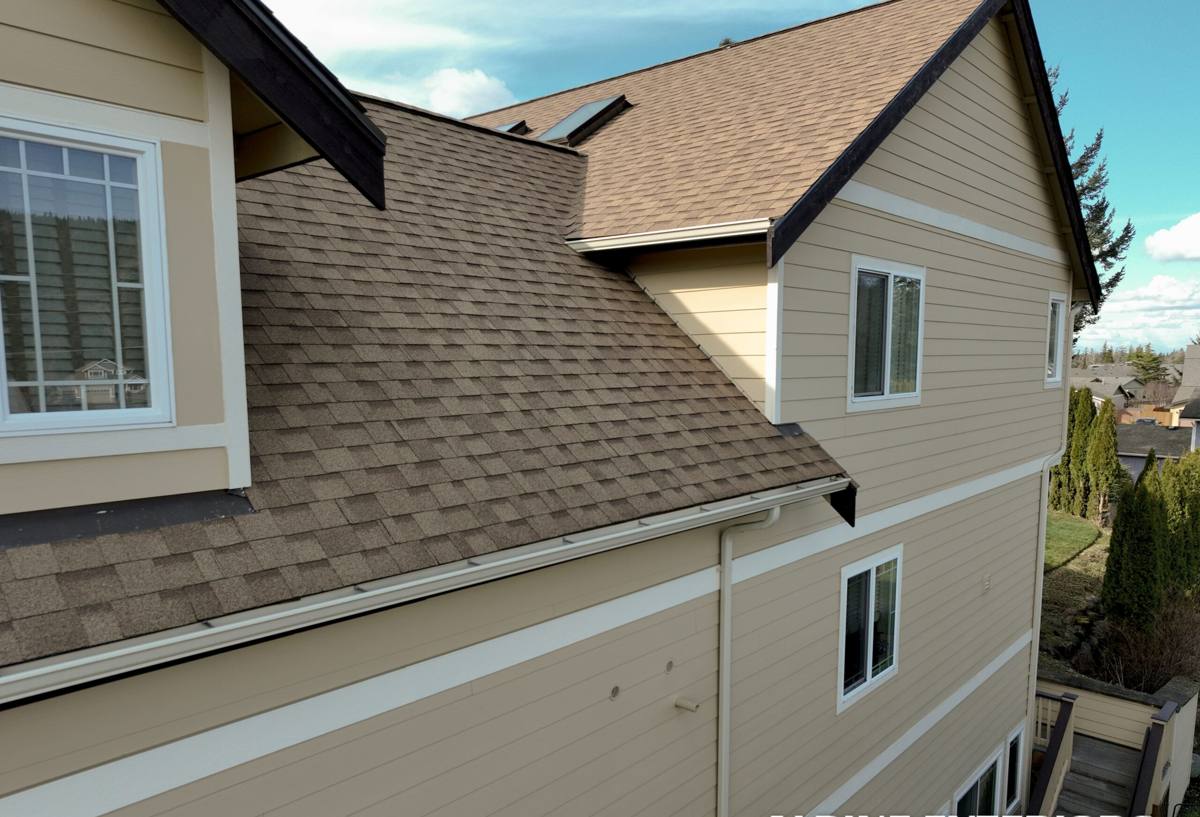
What This Climate Does to Siding Over Time
Driving rain and wind-driven moisture
Storms here don't just fall straight down — wind pushes rain sideways into wall assemblies, especially on exposed gable ends and second-story walls with no overhang protection. Siding and the water-resistive barrier behind it need to shed that water, not just block it. Lap siding with poor overlap, cracked caulk joints, or gaps at trim can let moisture track behind the cladding for years before anyone notices a problem.
Moss, algae, and constant dampness
Long stretches of overcast, damp weather mean siding rarely gets a chance to fully dry out, particularly on shaded north and east walls or under mature trees. That's ideal growing conditions for moss and algae, which hold moisture against the surface and accelerate whatever degradation is already happening underneath. Wood-based products are especially vulnerable here because they can absorb and hold water inside their fiber structure.
Salt air, even inland
Sumas isn't beachfront, but this region still sees enough airborne salt and moisture drift to accelerate corrosion on fasteners, flashing, and any exposed metal trim over the years. It's a slower effect than what you'd see right on the water, but it adds up over a 20-30 year siding lifespan, and it's a factor we plan for in fastener and flashing choices.
Signs a Sumas Home Actually Needs Siding Replacement
Not every issue means a full replacement, but these are the signs we take seriously when we walk a property in this area:
- Soft, spongy, or crumbling siding when pressed — usually a sign moisture has already gotten into the substrate
- Persistent moss or algae staining that comes back within weeks of cleaning
- Paint that's peeling or bubbling rather than just fading, which points to moisture pushing out from behind
- Visible gaps, warping, or cupping in lap boards, especially on the weather-exposed sides of the house
- Rot at the bottom edges of siding near grade, decks, or downspout discharge points
- Interior signs — musty smells, discoloration, or soft drywall near exterior walls — that suggest moisture is already past the cladding
- Siding that's simply reached the end of its practical service life, even if it looks okay from the street
If you're seeing more than one or two of these, it's worth having someone look at the wall assembly itself, not just the surface material.
What a Correct Siding Replacement Actually Involves
Siding replacement done right is not just stripping old boards and nailing up new ones. In a climate like this, the work that happens between the studs and the finished siding matters as much as the siding itself.
Full tear-off and inspection
We remove the old siding entirely rather than installing over it. That lets us actually see the sheathing underneath, catch any hidden rot or water damage early, and address it before it's sealed behind new material.
Water-resistive barrier and flashing
A correctly lapped weather-resistive barrier, properly integrated window and door flashing, and careful detailing around penetrations (vents, hose bibs, electrical) are what actually keep driving rain out of the wall — the siding is the second line of defense, not the only one.
Proper fastening and clearances
Fastener spacing, type, and depth matter for long-term performance, and so does keeping the right clearance between siding and grade, decks, roof lines, and other surfaces where water and debris can collect. Skipping these details is exactly what shows up as rot five to ten years down the road.
Factory-finished material
We install James Hardie fiber cement siding with the factory ColorPlus finish. That finish is baked on and warrantied against peeling and fading in a way field-applied paint on wood or fiber cement can't match — a real advantage in a climate where surfaces stay damp for long stretches.
Why We Only Install James Hardie Fiber Cement
We don't install vinyl, LP SmartSide, primed wood, cedar, or other fiber cement brands. That's a deliberate standard, not a marketing line, and it comes down to how these materials actually perform over decades of Whatcom County weather rather than in a sales brochure.
Vinyl is affordable and low-maintenance, but it expands and contracts with temperature swings, can crack in cold snaps, and isn't the same class of moisture-resistant material as fiber cement — water can still find its way behind and around panels over time. Wood-based composite siding products can perform well when maintained perfectly, but they rely on an engineered wood core that is more sensitive to sustained moisture exposure, and this region doesn't give surfaces much of a chance to dry out. Primed wood and cedar are honest, traditional materials, but they require an ongoing paint and sealing schedule that most homeowners underestimate — skip a cycle or two in a damp climate and you're looking at accelerated rot.
James Hardie fiber cement is engineered from cement, sand, and cellulose fiber. It doesn't absorb water the way wood-based products can, it's non-combustible, and it holds its factory finish for years without the repainting cycle wood siding demands. Hardie also builds region-specific HZ formulations for exactly this kind of moisture and freeze-thaw exposure, which is part of why we standardized on it rather than offering a menu of options.
How the Main Siding Options Actually Compare Here
| Factor | Vinyl | Wood / LP-style composite | James Hardie Fiber Cement |
|---|---|---|---|
| Moisture resistance | Moderate — seams and edges vulnerable | Lower — engineered wood core absorbs moisture | High — cement-based, doesn't wick water like wood |
| Moss/algae resilience | Surface growth, easy to clean but recurs | Growth can trap moisture against wood core | Surface growth cleanable, core unaffected |
| Finish longevity | Color can fade, doesn't chip like paint | Requires repainting on a maintenance cycle | Factory ColorPlus finish, warrantied against peeling/fading |
| Fire resistance | Combustible | Combustible | Non-combustible core material |
| Typical lifespan (installed to spec) | 20-30 years | 15-25 years with maintenance | 30-50 years |
Our Process for a Sumas Siding Replacement
Every project starts with a walk-around inspection, not a quote pulled from a photo. We're looking at wall orientation relative to prevailing wind and rain, existing moisture damage, trim and flashing condition, and anything specific to the lot — tree cover, drainage, proximity to grade — that affects how the new siding needs to be detailed.
From there we handle tear-off, sheathing repair where needed, WRB and flashing installation, and the Hardie siding install itself, followed by trim, caulking, and touch-up. We walk the finished job with the homeowner before calling it done, and we're upfront about anything we find mid-project — hidden rot doesn't get discovered and then quietly ignored.
Why a Crew That Already Works Sumas Matters
Siding contractors who occasionally drive up from further south tend to install the same way regardless of where the house sits. A crew that regularly works Whatcom County communities like Sumas has already seen what this specific weather pattern does to a wall assembly over ten or twenty years — which details actually fail first, where moss takes hold, which flashing details hold up and which don't. That's not something you can fully substitute with a generic install checklist, and it shows up in how the small details get handled: fastener choices, flashing laps, clearance at grade, and how the job is sequenced around actual weather rather than a generic schedule.
Being local also means straightforward warranty and service follow-up. If something needs a look five years from now, you're not tracking down a crew that worked in the area once.
What to Expect for Maintenance After Installation
Correctly installed Hardie siding is genuinely low-maintenance compared to wood, but "low-maintenance" isn't "no-maintenance" in this climate.
- Rinse off moss and algae buildup on shaded walls once or twice a year — a garden hose and soft brush is usually enough
- Keep gutters clean and downspouts directed away from the foundation to reduce splash-back onto lower siding courses
- Check and refresh exterior caulking at trim and penetration points periodically — caulk wears out well before the siding does
- Keep vegetation trimmed back from walls so surfaces get some airflow and sun exposure
- Have any impact damage or cracked boards repaired promptly rather than left open to moisture
Get a Straightforward Estimate
If your Sumas home is showing signs of siding wear, or you're just planning ahead, we're happy to come take a look and give you an honest read on what's actually needed — no pressure, no inflated scope. Use the form below to request a free estimate.