 Lynden Siding
 A Deck Built for Life at Wiser Lake
Wiser Lake sits in a quieter corner of Whatcom County, just outside Lynden, where homes back up to water, mature trees, and a lot more shade than you'd get on an open lot in town. That's part of the appeal — but it also means a deck here has to deal with things a deck on a sunny in-town lot doesn't: standing moisture under tree cover, algae and moss that never fully dry out between rains, and soil that stays damp longer because it's close to the water table. A deck built without accounting for that will look fine the first summer and start showing problems by the third or fourth winter.
We build and repair decks around Lynden regularly, and the lake-adjacent lots are their own category. The framing, footing, and material choices that hold up on a dry, open lot aren't automatically the right call fifty feet from the water.
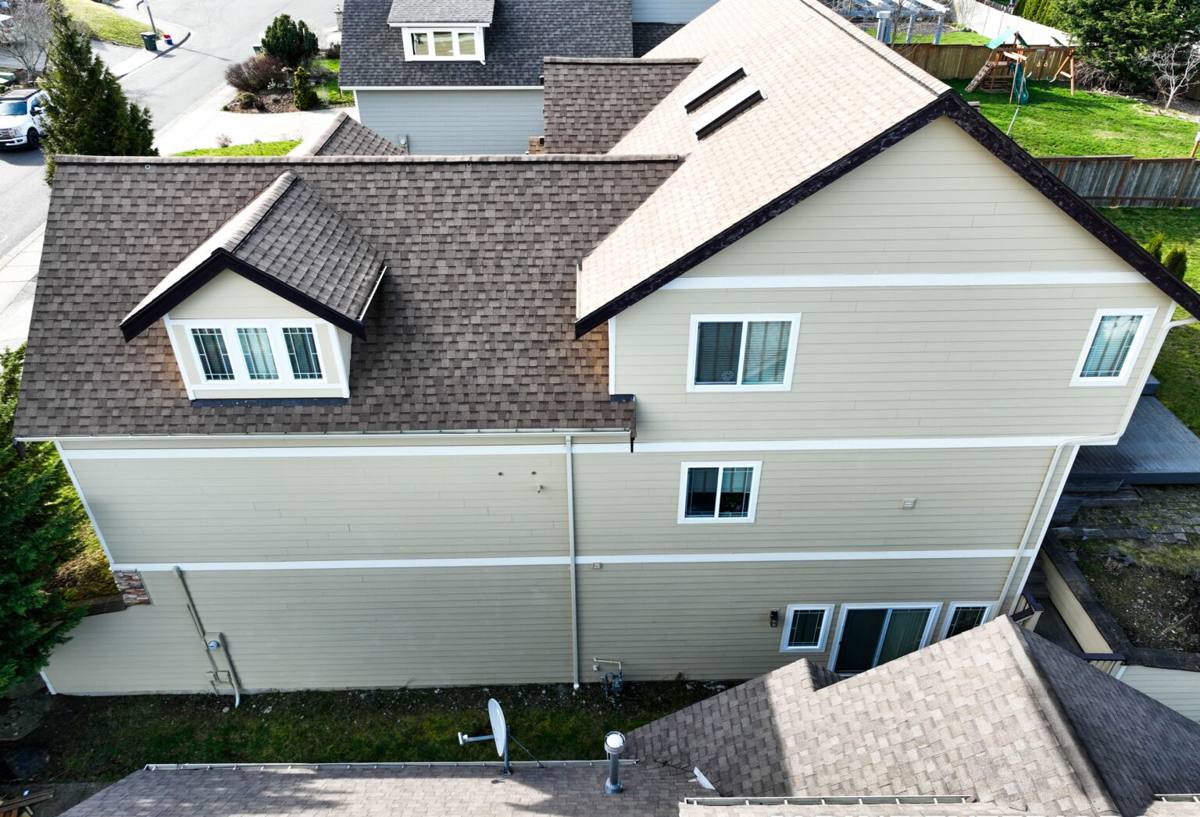
What Wiser Lake's Setting Actually Does to a Deck
Whatcom County's marine climate means driving rain, salt-tinged air moving in off the water, and a moss season that can run from fall through spring. Around Wiser Lake specifically, tree cover and lake humidity add to that baseline:
- Shaded decking stays damp longer after rain, which is exactly what moss, algae, and mildew need to take hold.
- Fallen leaves and needles collect in board gaps and under railings, holding moisture against the wood or composite surface.
- Ground near the lake tends to stay wetter later into the season, which affects how footings should be set.
- Wildlife activity near water — insects in particular — is more of a factor for untreated or poorly sealed wood.
None of this makes a deck at Wiser Lake harder to build well. It just means the details matter more than they would on a drier lot in town.
Getting the Foundation Right
The footing is the part of a deck nobody sees and everybody eventually notices when it's wrong — that's where a deck near water gets tricky. Damp, softer soil doesn't hold a footing the same way well-drained soil does, and if the water table sits higher than expected, standard footing depth and spacing may not be enough.
Footing Options Near the Water
Poured concrete footings are still the standard approach for most lots, but they need to be sized and set to account for local soil conditions, not just poured to a generic depth. On lots where soil is consistently damp or soft, helical piles are worth discussing — they don't rely on concrete curing in wet ground and can be a better fit depending on what a site inspection shows. We don't default to one option; we look at the actual lot first.
Post-to-footing connections also deserve attention here. Standard fasteners corrode faster in a moisture-heavy, marine-air environment, so we use stainless steel or hot-dip galvanized hardware rated for exterior and ground-contact use rather than the cheaper coated fasteners that are fine in drier parts of the state.
Choosing Decking Material That Actually Holds Up
Every decking material handles moisture differently, and at Wiser Lake that difference shows up faster than it would on a dry, sun-exposed lot. Here's how the common options compare for this kind of setting:
| Material | Moisture Behavior | Maintenance | Best Fit |
|---|---|---|---|
| Cedar | Naturally rot-resistant but still needs sealing to shed water in shaded areas | Re-stain/seal every 2-3 years | Homeowners who want a natural wood look and will keep up on sealing |
| Pressure-treated lumber | Resists rot well when properly sealed; can trap moisture if boards are laid tight | Annual inspection, periodic sealing | Budget-conscious builds where upkeep is expected |
| Composite decking | Doesn't rot, but can grow surface algae/moss in constant shade if not cleaned | Occasional cleaning, no sealing | Shaded lake lots where low maintenance matters most |
| PVC decking | Fully moisture-resistant, sheds water well | Occasional cleaning | Highest moisture exposure areas, dock-adjacent decks |
We don't push one material as universally "best" — a cedar deck maintained on schedule can outlast a neglected composite deck, and vice versa. What matters is being honest about the upkeep each option actually requires in a shaded, damp setting, not just how it looks on day one.
Fasteners, Framing, and Airflow
A correct deck build at Wiser Lake isn't just about the decking surface. Joist tape over framing lumber keeps water from sitting directly on wood at the fastener points, which is one of the most common places rot starts. Proper board spacing and airflow underneath the deck matter more here than on a dry lot, since shaded, damp ground doesn't let trapped moisture evaporate the way it would in full sun. We also account for gaps around posts and railings where debris tends to collect — those are the spots that get missed on a rushed build and turn into moss and soft wood two or three years later.
Permits, Setbacks, and Working With the County
Building near a lake in Whatcom County can involve setback rules and shoreline-related permitting depending on your specific lot and its distance from the water. These requirements vary lot to lot, so we don't assume anything — we check what applies to your property with the county before design work goes final. Homeowners are sometimes surprised there's a permit step at all for a deck; near water, it's worth confirming early rather than finding out mid-project.
Our Process From Estimate to Finished Deck
- Site visit: We look at soil condition, tree shade, drainage patterns, and how close the build is to the water.
- Design and permit check: We confirm what Whatcom County requires for your specific lot before finalizing plans.
- Footing plan: Concrete or helical piles, sized to what the soil actually is on your lot — not a generic default.
- Framing: Corrosion-resistant fasteners, joist tape, and spacing that allows airflow under the deck.
- Decking and railing installation: Material chosen based on your shade exposure, maintenance preference, and budget.
- Final walkthrough: We go over what upkeep your specific materials will need given the site conditions.
What Drives the Cost
Deck pricing depends on more than square footage. Near Wiser Lake, a few factors move the number more than they would on a typical in-town lot:
| Factor | Why It Matters Here |
|---|---|
| Footing type | Helical piles cost more upfront than concrete but can be the right call on soft, damp soil |
| Decking material | PVC and composite cost more than wood initially but reduce long-term maintenance |
| Site access and grading | Shaded, sloped, or lakeside lots sometimes need extra grading or drainage work |
| Railing style | Cable, glass, and metal railings vary widely in price versus standard wood or composite |
| Permitting | Lots requiring shoreline setback review may add time before construction starts |
We give a broad range on the first visit and a firm number once we've actually looked at your soil, access, and material choice — not a phone-quote guess.
Keeping Your Deck Ahead of the Moss Season
Even a well-built deck needs some seasonal attention at Wiser Lake, especially under tree cover. A short annual routine goes a long way:
- Clear leaves and debris from between boards and along railings before fall rains set in.
- Rinse or lightly scrub surfaces showing early moss or algae growth — it's much easier to remove early than after it's established.
- Check fastener heads and post connections yearly for rust or movement.
- Reseal wood decking on schedule rather than waiting until it visibly needs it.
- Confirm gaps between boards haven't closed up from swelling, which blocks drainage and airflow.
Why a Crew That Already Works Wiser Lake Matters
A deck builder who mostly works dry, in-town lots will often use the same footing depth, the same fastener grade, and the same material defaults everywhere — because that's what works where they usually build. At Wiser Lake, that approach shows up as problems within a few years: soft footings, corroded hardware, moss that never gets ahead of. A crew that's already built and repaired decks in this specific setting knows what the soil does, what the shade does, and what actually holds up against Whatcom County's driving rain and long wet season — before the first footing goes in, not after the first callback.
If you're planning a new deck or replacing one that didn't hold up at Wiser Lake, we're happy to come take a look and walk you through what your specific lot needs. There's a form below to request a free, no-pressure estimate.