 Lynden Siding
 Building a Deck That Actually Holds Up in Blaine
Blaine sits right on the water at the northern edge of Whatcom County, and that location shapes everything about how a deck ages here. Homes close to Semiahmoo Bay and Drayton Harbor deal with salt-laden air moving off the water, long stretches of driving rain through fall and winter, and shaded, damp corners where moss and algae take hold and never really let go. A deck built without those conditions in mind will show it within a few seasons — soft spots, streaking, corroded fasteners, and a surface that stays slick long after the rain stops. Composite decking, installed correctly, is one of the more reliable answers to that combination of problems. This page walks through what Blaine homes actually need from a composite deck, what a correct installation involves, and how our process addresses the specific conditions of this stretch of coastline.
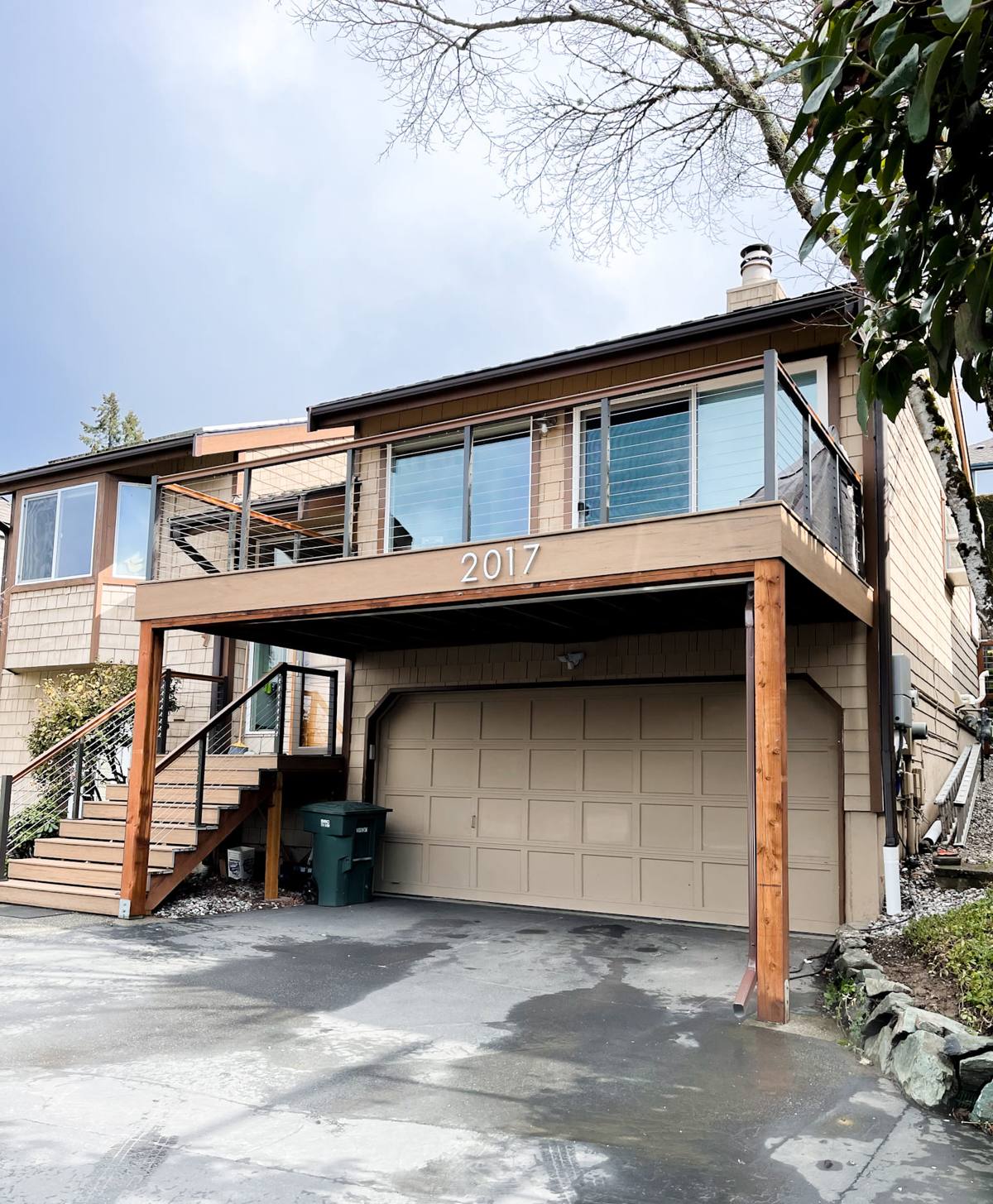
Why Blaine's Climate Is Hard on Decking
Every coastal town in Whatcom County deals with moisture, but Blaine's exposure to open water adds a layer that inland Lynden properties don't face as much.
Salt Air and Metal Fasteners
Airborne salt accelerates corrosion on any exposed metal — screw heads, joist hangers, railing brackets. Standard hardware that would last decades in a drier inland yard can start rusting and staining a deck surface within a few years this close to the bay. This matters more with decking than with siding, because fasteners on a deck are horizontal and constantly exposed to standing moisture, not just wind-driven rain.
Driving Rain and Standing Water
Blaine gets the same wet-season rainfall pattern as the rest of northwest Washington, but wind off the water often drives that rain sideways, pushing moisture into gaps, end cuts, and fastener holes that a calmer inland site wouldn't see as much. Decks with poor drainage underneath, or boards installed tight with no expansion gap, end up holding water against the substructure long after a storm passes.
The Long Moss Season
Shaded decks, north-facing decks, and anything under mature trees stay damp for months at a time here. That's exactly the environment moss, algae, and mildew need. On a wood deck, that dampness works its way into the grain and starts breaking the wood down from the inside. On a poorly chosen composite product, it can still stain the surface even if it isn't degrading the board itself.
Why Composite Decking Fits Blaine Homes
Composite decking isn't automatically the right answer for every project, but for Blaine's combination of salt air, rain, and moss, it solves problems that wood decking simply can't.
- Composite boards don't absorb water into a grain structure the way wood does, so they don't swell, cup, or rot from prolonged dampness the same way.
- They don't need annual staining or sealing to keep moisture out — a real advantage for a waterfront property where upkeep can slide.
- Quality composite products resist mold and mildew growth on the surface far better than untreated or even pressure-treated wood.
- Color runs through the board (or through a capped outer shell), so surface scratches and light wear don't expose bare, unprotected material the way a scratch through paint or stain does on wood.
None of that means composite decking is maintenance-free. It still needs periodic cleaning, and the substructure underneath still needs to be built to shed water — composite boards don't fix a poorly framed or poorly ventilated deck on their own.
What a Correct Composite Deck Build Involves
The board itself is only part of the job. Most composite deck failures we get called to inspect trace back to the substructure or the details underneath, not the decking material.
Framing and Ledger Attachment
The ledger board — where the deck attaches to the house — needs proper flashing to keep water from working behind the siding and into the wall framing. This is one of the most common failure points on older decks in wet climates, and it's invisible until there's already damage.
Joist Protection
Pressure-treated joists still absorb moisture and can rot from the top down, even under composite boards. Covering joists with a purpose-made joist tape creates a barrier at the exact point where water sits longest — directly under the fastener line — which is especially important given how much rain Blaine sees over a typical winter.
Fastener Selection
Given the salt air, we use corrosion-resistant, coated or stainless hardware rated for coastal exposure, along with hidden fastener systems where the product allows. Hidden fasteners also mean fewer exposed metal points on the walking surface, which reduces both corrosion staining and trip hazards over time.
Airflow Underneath
A composite deck built low to the ground or over poorly draining soil traps humidity underneath, which slows drying after every rain event and gives moss and mildew a head start. Adequate clearance and, where needed, ventilation gaps or grading adjustments keep air moving under the deck.
Expansion Gaps and Cutting
Composite boards expand and contract with temperature more than wood does. Gaps between boards and at butt joints have to be sized correctly, and any factory-capped board that gets cut on site needs the cut end treated or capped appropriately so the exposed core isn't left open to water absorption.
Comparing Composite Board Types
Not all composite decking is built the same way, and the differences matter more in a climate like Blaine's than they would somewhere drier.
| Board Type | Moisture Resistance | Maintenance | Best Fit |
|---|---|---|---|
| Capped composite | High — full polymer shell resists moisture and staining | Occasional washing | Waterfront and shaded lots, high moss exposure |
| Uncapped composite | Moderate — wood fiber content can absorb some moisture over time | Periodic cleaning, more attention to cut ends | Covered decks, lower moisture exposure |
| PVC (cellular composite) | Very high — no wood fiber content at all | Low | Areas with heavy, prolonged dampness or standing water risk |
For most Blaine properties near the water or under tree cover, we steer homeowners toward capped composite or PVC options specifically because of the moss and moisture exposure — an uncapped board can still perform well, but it asks more of the homeowner in terms of upkeep.
Our Installation Process
- On-site assessment. We look at drainage, sun exposure, shade patterns, existing moss growth, and how close the deck sits to salt air exposure to figure out which board type and hardware make sense for that specific lot.
- Substructure inspection or build. On a rebuild, we evaluate existing framing for rot or corrosion before deciding what can stay and what needs to be replaced. On new construction, we frame to correct spacing for the chosen composite product's span ratings.
- Ledger flashing and waterproofing. Every ledger attachment gets proper flashing before any decking goes down — this step doesn't get shortcuts.
- Joist tape and fastening. Joists are taped, and hardware is selected for coastal corrosion resistance.
- Decking installation. Boards are laid with correct expansion gaps, hidden fasteners where the product supports them, and cut ends treated as needed.
- Railings and finish details. Railing systems are matched to the same coastal-hardware standard as the decking itself.
- Final walkthrough. We go over basic cleaning expectations and what to watch for seasonally, particularly around moss-prone areas of the deck.
What Affects the Cost of a Composite Deck
Every deck is priced around the specifics of the lot and the board selected, but a few factors consistently move the number up or down.
| Factor | Effect on Cost |
|---|---|
| Board tier (uncapped vs. capped vs. PVC) | Higher-moisture-resistance boards cost more per square foot but reduce long-term upkeep |
| Substructure condition | Rotted or corroded existing framing adds demo and rebuild cost before decking can go on |
| Deck height and railing requirements | Taller decks need code-compliant railings and stairs, adding labor and material |
| Site access and drainage grading | Poor drainage under a low deck may need grading work to protect the substructure long-term |
| Fastener and hardware spec | Coastal-grade, corrosion-resistant hardware costs more than standard hardware but matters near the water |
We give straightforward, itemized estimates so homeowners can see where the cost is actually going rather than a single lump number.
Keeping a Composite Deck Clean in a Moss-Prone Climate
Composite decking resists moss and mildew far better than wood, but "resists" isn't "immune." A little seasonal attention keeps a Blaine deck looking right through the wet months.
- Sweep debris and organic buildup off the surface regularly, especially in fall when leaf litter accumulates in corners and against railings.
- Rinse the deck periodically with plain water to keep salt residue and airborne grime from settling into the board texture.
- Use a soft-bristle brush and a manufacturer-approved cleaner on any spots showing early moss or algae growth — don't wait until it's established.
- Keep gutters and downspouts near the deck clear so runoff isn't dumping extra water onto the deck surface or the framing below.
- Trim back overhanging branches where possible to reduce shade and speed up drying after rain.
- Check railing hardware and fastener points once or twice a year for early corrosion signs, particularly on decks closest to the water.
Why Hiring a Crew That Already Works in Blaine Matters
A deck built to a generic spec sheet doesn't account for what a specific lot actually deals with. A crew that regularly works Blaine properties already knows which streets sit in near-constant shade, which lots catch the worst of the wind off the bay, and which framing details tend to fail first in this environment because they've replaced that framing before. That local pattern recognition shows up in small decisions — hardware selection, joist protection, board type — that don't show up on a quote but show up in how the deck performs five and ten years out. We work throughout Whatcom County, including Lynden and the surrounding coastal communities, and we bring that same climate-specific approach to every composite deck we build.
If you're planning a new deck or replacing one that hasn't held up to Blaine's weather, we're happy to walk the site with you and put together a straightforward, no-pressure estimate. Use the form below to get started.