 Lynden Siding
 Homes in the Laurel area near Lynden face a specific combination of weather that most window manufacturers never test for: salt-tinged marine air drifting in off the Salish Sea, long stretches of driving horizontal rain, and a moss season that can run six months or more in a wet year. Windows here don't just need to look good and cut heating bills — they need to survive constant moisture cycling without their seals, frames, or hardware breaking down early. This page covers what that actually requires, what a correct installation looks like, and how our process works for Laurel homeowners specifically.
What Laurel's Climate Does to Windows
Whatcom County sits in a transitional zone between coastal marine climate and the drier interior, and Laurel gets a good dose of both. That means window systems here are dealing with several stresses at once, not just one.
Moisture Load
Extended damp weather keeps window sills, frames, and the surrounding wall assembly wet for days at a time during fall and winter. Any gap in flashing or a weak seal doesn't just let in a draft — it gives water a path into the wall cavity, where it can sit for weeks before anyone notices.
Wind-Driven Rain
Storms coming off the water push rain sideways, not straight down. That means water is testing the window's weatherstripping and drainage path constantly, not just when it's raining hardest. A window that passes a basic rain test in calm conditions can still leak under sustained wind pressure.
Salt Air and Corrosion
Being close enough to the coast to catch salt-laden air matters for hardware. Cheap fasteners, uncoated hinges, and low-grade balance systems corrode faster here than they would further inland, which shows up years later as windows that won't stay latched or won't operate smoothly.
Moss and Organic Growth
Long wet seasons mean moss and algae find a foothold anywhere moisture lingers — window sills, tracks, and the caulk lines around frames. Beyond the cosmetic issue, trapped organic growth holds moisture against the frame and accelerates wear on wood components and sealants.
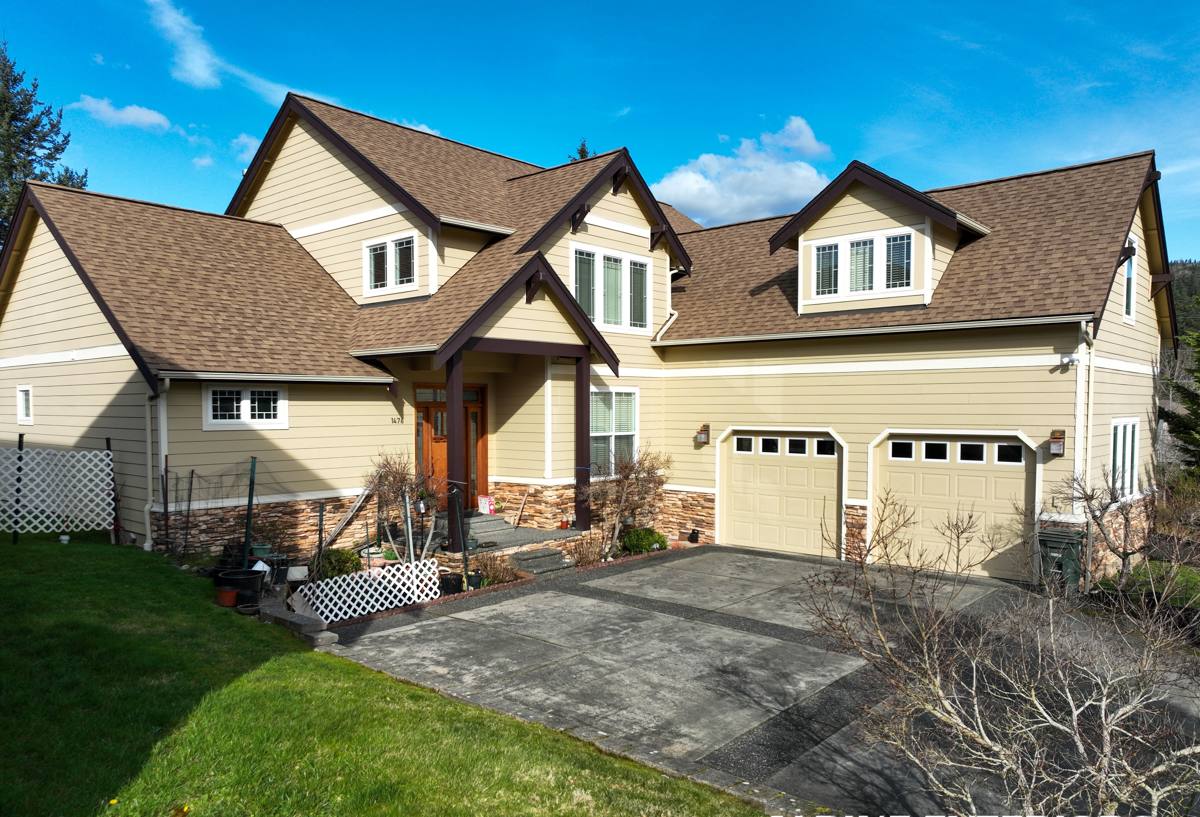
What a Correct Energy-Efficient Window Job Requires Here
"Energy-efficient" gets used loosely in this industry. For Laurel homes, efficiency and weather durability are the same problem — a window that manages moisture correctly is also the one that holds its insulating performance over time.
- Frame materials that resist moisture absorption and don't require frequent repainting or resealing
- Multi-point locking hardware in corrosion-resistant finishes, not just standard latches
- Warm-edge spacer systems between glass panes to reduce condensation at the edges, which is where moisture problems usually start
- Low-E glass coatings tuned for our climate — cutting winter heat loss without over-darkening rooms during our already-limited sunny days
- Proper flashing integration with the existing wall assembly, not just caulk around the new frame
- Drainage paths (weep holes) that are clear and correctly sloped so wind-driven rain has somewhere to go
Glass and Frame Options: How They Compare
There's no single "best" window for every home — the right choice depends on budget, the home's age, and how exposed the wall is to weather. Here's how the common options stack up for this specific climate.
| Option | Moisture Performance | Maintenance | Typical Cost Position |
|---|---|---|---|
| Vinyl frame, double-pane Low-E | Good — won't rot, handles damp cycling well | Low | Entry to mid |
| Fiberglass frame, double or triple-pane | Very good — dimensionally stable in temperature and moisture swings | Low | Mid to upper |
| Wood frame, clad exterior | Depends heavily on cladding quality and installation; interior wood needs protection from any leaks | Higher — periodic finish upkeep | Upper |
| Aluminum frame | Prone to condensation and heat transfer unless thermally broken; we're selective about where we use it | Moderate | Varies |
For most Laurel homes, we lean toward vinyl or fiberglass frames because they hold up to sustained moisture exposure without the upkeep that wood cladding demands. Where a homeowner wants a wood interior look, we're careful about product selection and installation detail, since that's exactly where moisture problems tend to originate if it's not done right.
Why We're Selective About Certain Products
We don't install every window system on the market, and that's a deliberate standard, not a limitation of what's available. Some frame and glazing combinations that perform fine in drier climates are a poor match for sustained coastal moisture — either because the seal design isn't forgiving of installation tolerances, the warranty structure doesn't hold up well against long-term moisture claims, or the maintenance burden ends up higher than what we think is fair to ask a homeowner to take on. We'd rather steer a Laurel homeowner toward a system that's going to perform for two decades than one that looks similar on a spec sheet but behaves differently after five wet winters.
Our Installation Process
1. On-Site Assessment
We start by looking at the actual condition of the existing window openings — checking for signs of past moisture intrusion, sill rot, or flashing that's already failing. This tells us whether it's a straight window swap or whether the opening needs repair work before new windows go in.
2. Product Selection
Based on that assessment plus the home's orientation and exposure, we recommend frame and glass options that fit the budget and hold up to the specific conditions of that wall — a west-facing wall catching storm winds needs a different level of weatherization detail than a sheltered side of the house.
3. Removal and Opening Prep
Old windows come out carefully to avoid damaging the surrounding siding or trim. We address any rot or compromised framing we find before anything new goes in — sealing a new window into a damaged opening just hides the problem.
4. Flashing and Weatherproofing
This is the step that matters most for long-term performance in our climate. Proper flashing integration, correctly lapped house wrap, and sealant applied at the right points (not just around the visible frame edge) are what actually keep wind-driven rain out.
5. Installation and Adjustment
Windows are set plumb and level, shimmed correctly, and hardware is adjusted so locks engage fully — a window that doesn't latch tight loses efficiency and lets moisture in around the sash.
6. Final Check and Cleanup
We test operation, check seals, and walk the job with the homeowner before we consider it finished.
Signs Laurel Homeowners Should Watch For
Some warning signs are easy to miss until a window has been failing for a while. Worth checking for periodically:
- Condensation forming between the panes (a sign the seal has failed, not just a humidity issue)
- Difficulty locking or latching, especially after a cold snap
- Soft or discolored trim or sill wood around the frame
- Visible moss or algae buildup in the tracks or sill
- Drafts noticeable even when the window is fully closed and locked
- Noticeably higher heating costs compared to similarly sized homes nearby
What Affects Cost
Every home is different, so we don't quote sight-unseen, but the main cost drivers for a Laurel window project are consistent:
- Number of openings and their size
- Frame material chosen (vinyl and fiberglass vs. clad wood)
- Whether the openings need repair before new windows can go in
- Glass package — standard Low-E vs. triple-pane or specialty coatings
- Access and complexity, such as second-story or hard-to-reach openings
Broadly, straightforward vinyl replacements sit at the lower end of the range, while larger openings, repair work, or upgraded glass packages move the number up. We'll walk through the specifics for your home during the estimate rather than guessing at a number that may not apply.
Why a Crew That Already Works in Laurel Matters
Window installation isn't a one-size-fits-all job, and it shows in the details that don't show up on a brochure. A crew that already works this part of Whatcom County knows how exposed a given street or wall orientation tends to be to storm winds off the water, understands how long moss season typically runs and what that means for maintenance timing, and has already seen how different products hold up locally over several winters rather than just on paper. That local track record shapes which products we recommend and how we detail the flashing and drainage on every job — not guesswork, but experience with this exact climate.
Get a Free, No-Pressure Estimate
If your Laurel home has windows that are drafty, fogging between the panes, or just old enough that you're wondering whether it's time, we're happy to take a look. There's no pressure and no obligation — just an honest assessment of what your home actually needs and straightforward options to fit your budget. Fill out the form below to schedule a free estimate.